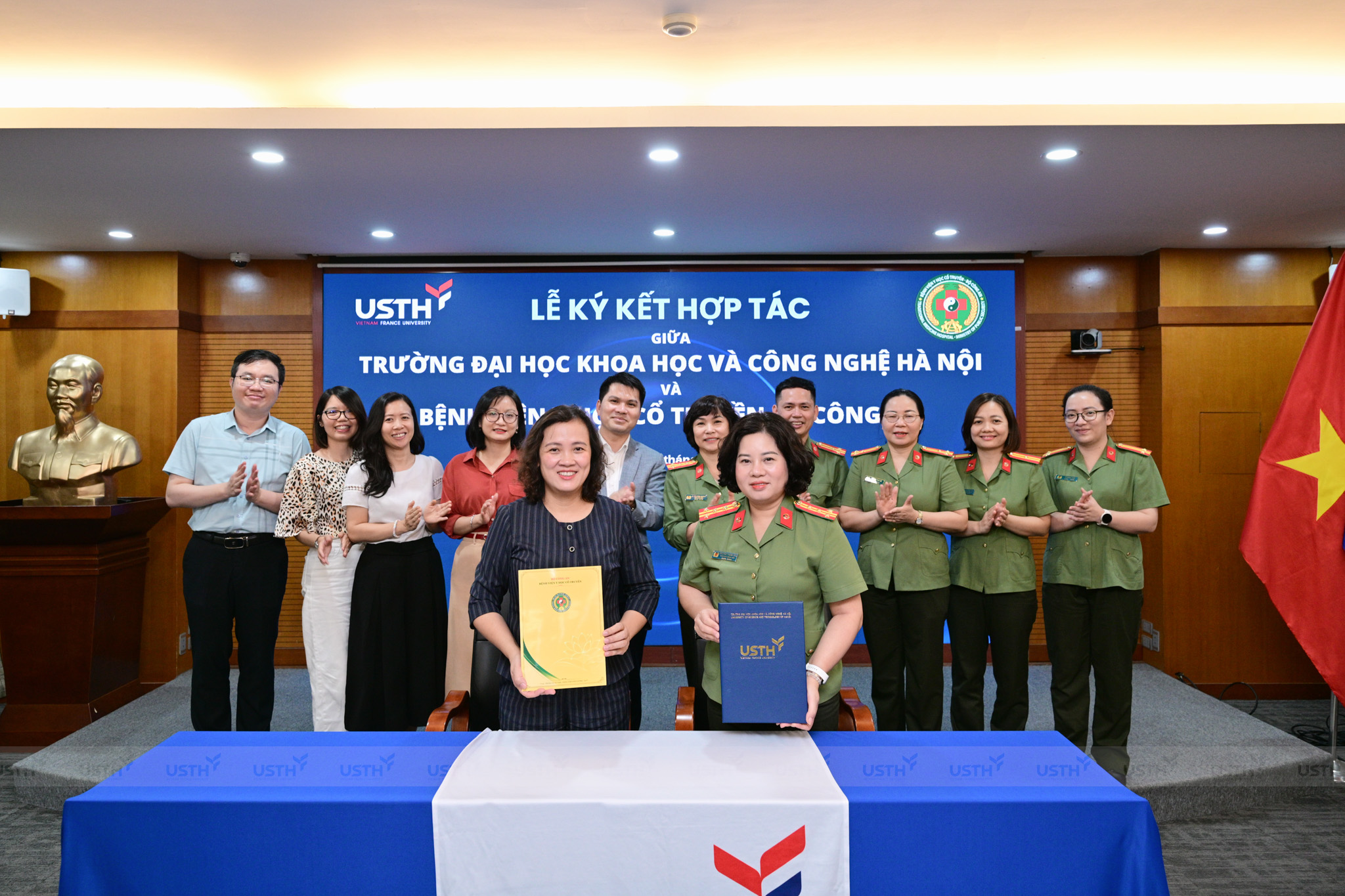
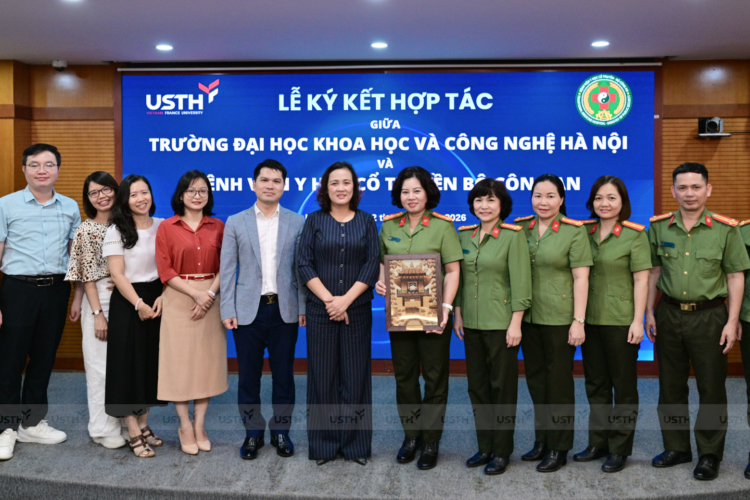
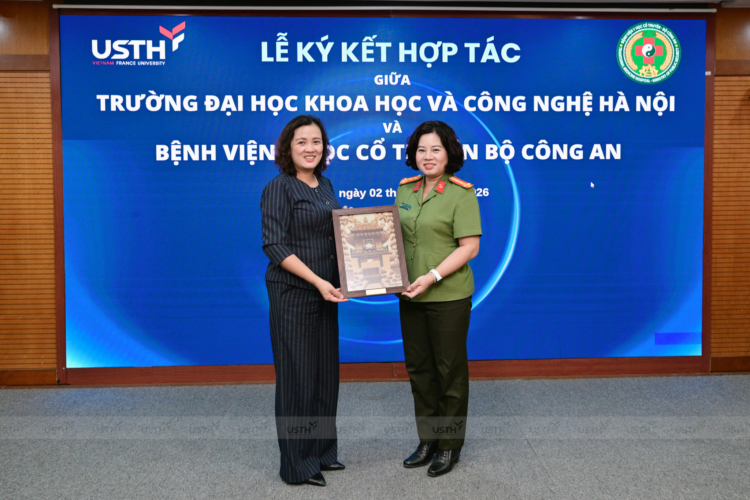
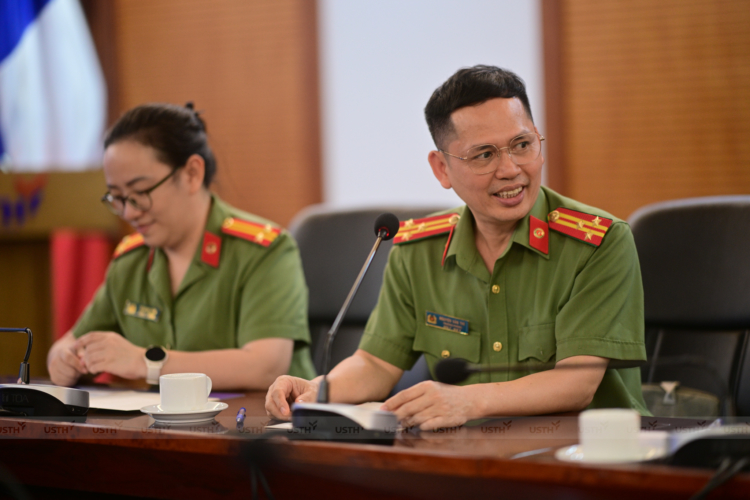
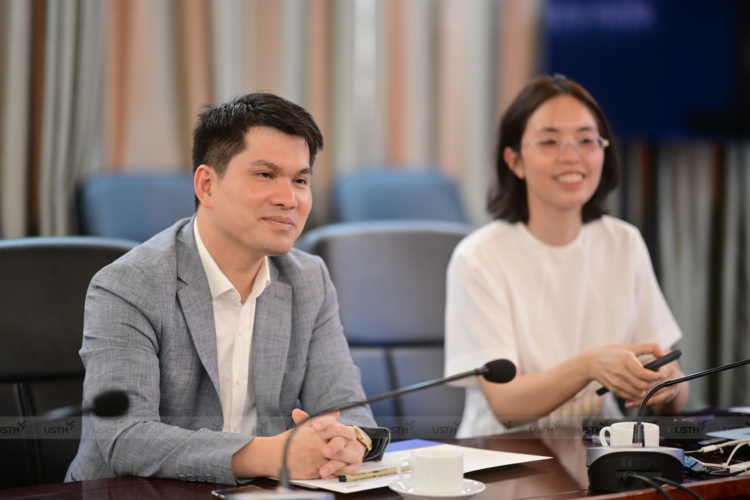
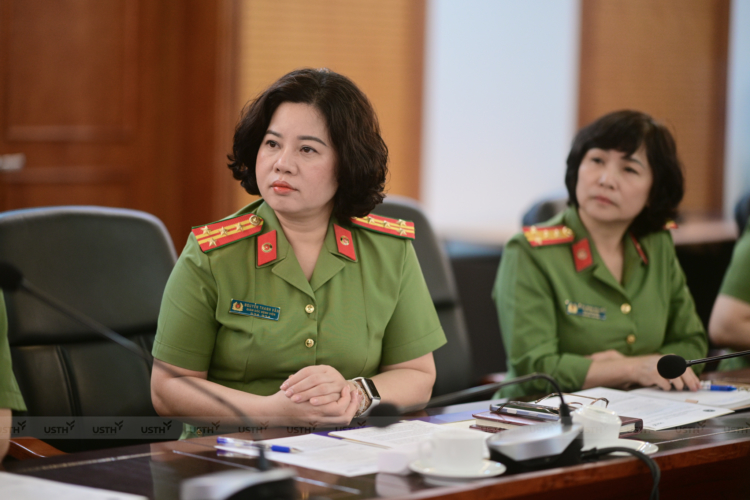
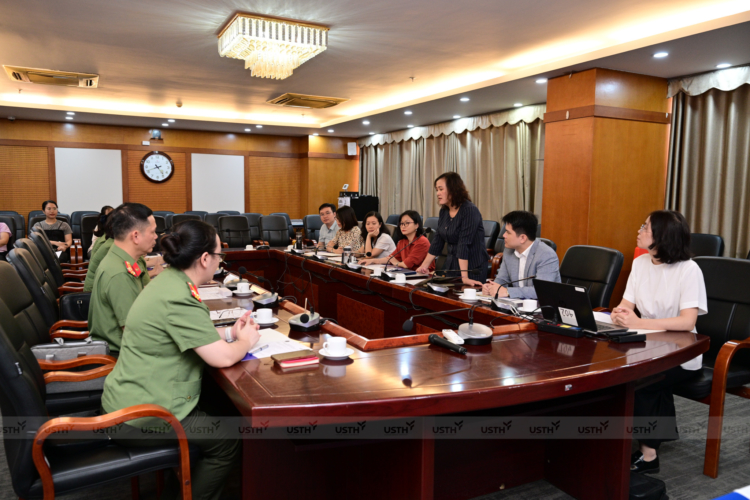
On the afternoon of 2 November 2026, the University of Science and Technology of Hanoi (USTH) and the Public Security Hospital of Traditional Medicine signed a Memorandum of Understanding (MoU) on cooperation in education and training, scientific research and professional development. The MoU opens up new possibilities for the wealth of traditional medical and pharmaceutical knowledge to be explored through modern research methods, while bringing students of USTH’s Department of Medicine and Pharmacy closer to clinical practice.
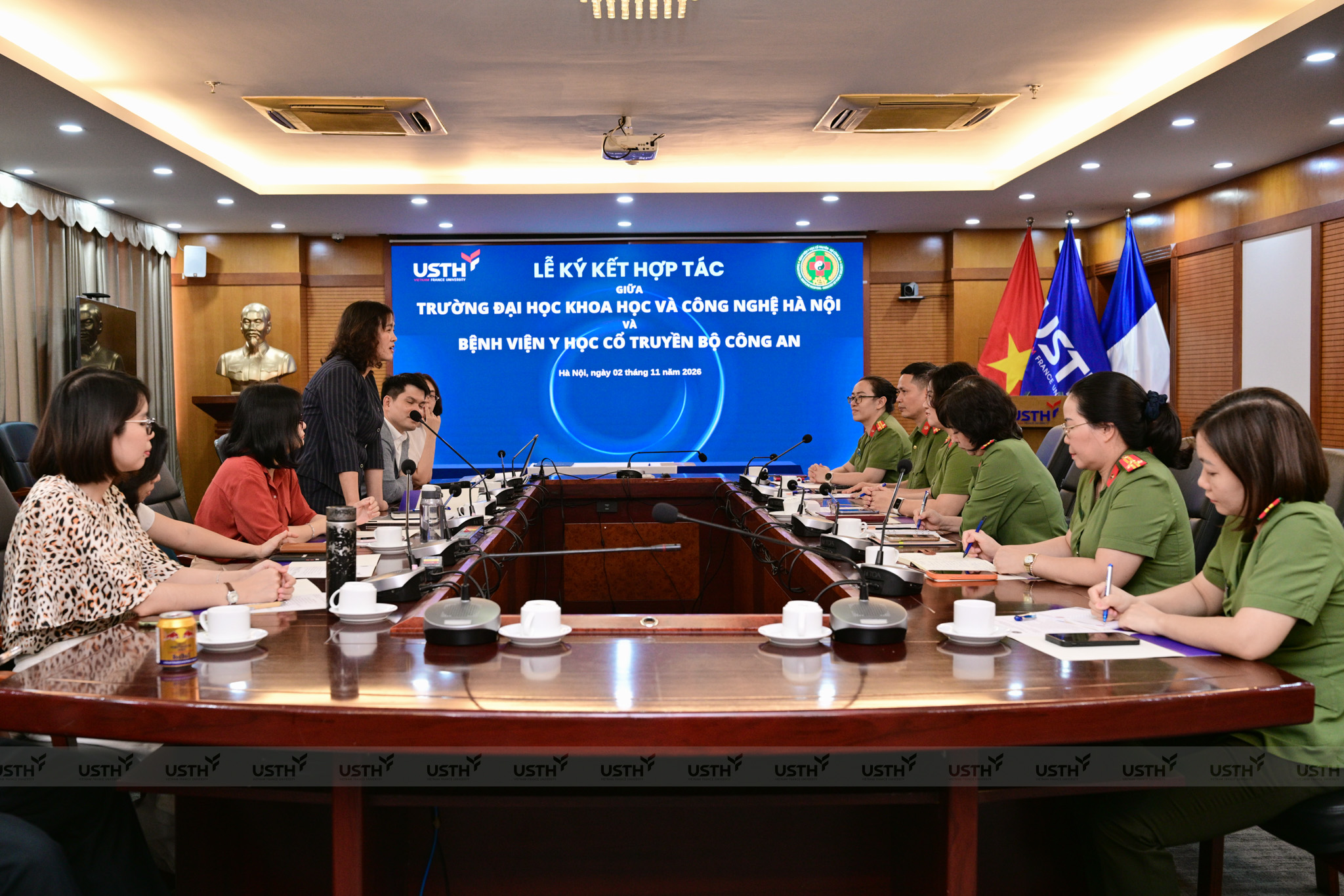
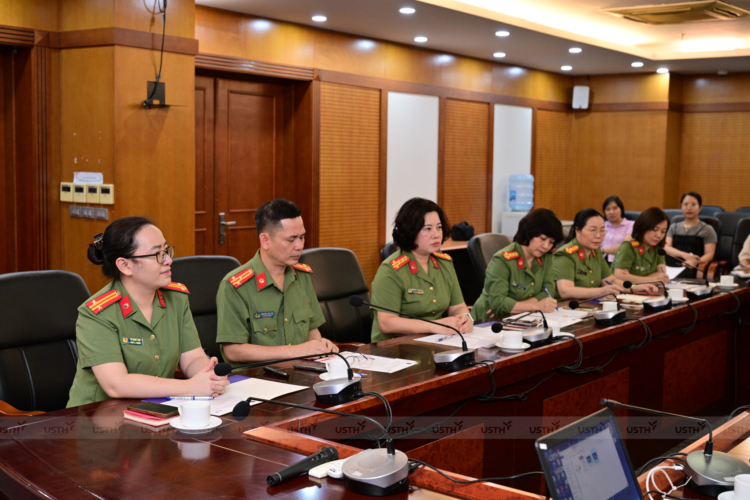
Representing the Public Security Hospital of Traditional Medicine were Colonel Nguyen Thanh Van, Director of the Hospital; Colonel Le Thi Minh Nguyet, Deputy Director of the Hospital; and the heads of the Hospital’s functional and clinical departments.
Representing USTH were Prof. Dinh Thi Mai Thanh, Rector; Assoc. Prof. Pham The Hai, in charge of the Department of Medicine and Pharmacy; academic staff of the Department; and representatives of the Department of Research, Innovation, and International Affairs.
The Public Security Hospital of Traditional Medicine is a healthcare facility under the Ministry of Public Security. It provides outpatient and inpatient care, as well as healthcare and health protection, for officers and personnel of the public security forces and for the general public. The Hospital’s professional identity lies in integrating traditional medicine with modern medicine. Alongside its clinical services, the Hospital places strong emphasis on pharmacy and drug preparation, continuously researching and producing traditional medicinal preparations. It is also stepping up the development of high-quality human resources, scientific research and both domestic and international cooperation. This clinical depth and outward-looking orientation provide a solid foundation for a substantive partnership between the two institutions.
Under the MoU, the two Parties agree to promote cooperation in education and training, scientific research and professional development, consistent with their respective needs, functions, capacities and available resources.
In education and training, the Hospital will host USTH undergraduate students, master’s students and doctoral candidates for internships, practical training and research. The two Parties will coordinate the involvement of professional staff in teaching and supervising practical training and research. Hospital staff may also take part as visiting lecturers, concurrently appointed lecturers or jointly appointed faculty members, subject to applicable regulations. The Parties will also jointly design, develop and implement training programmes.
In research, cooperation will cover areas of mutual interest, including but not limited to traditional medicine and its integration with modern medicine; biomedical sciences; medicinal materials, traditional medicines and drug development; clinical pharmacy; and the rational, safe and effective use of medicines.
To broaden the Hospital’s partnerships, USTH will support it in connecting and collaborating with its partner network in France and other countries, in line with the Hospital’s priorities and needs and USTH’s capacity and available resources. In addition, the two Parties will jointly organise scientific events, cooperate in communication activities to enhance and promote the image and reputation of both institutions, and pursue other cooperative activities as mutually agreed.
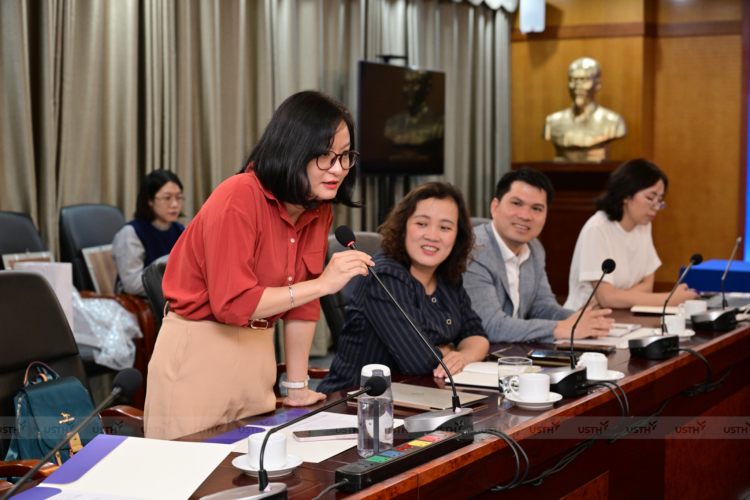
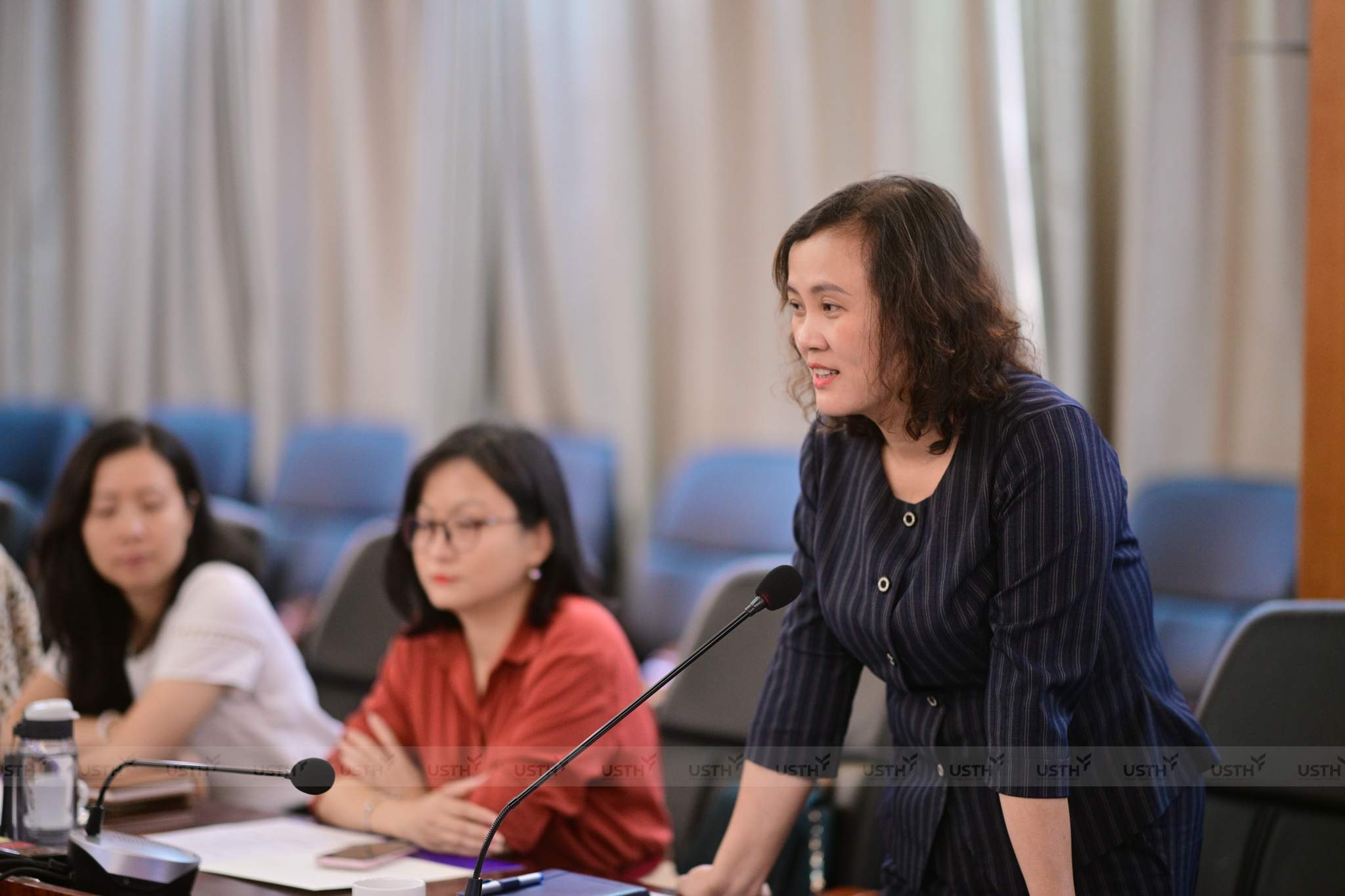
Speaking at the ceremony, Prof. Dinh Thi Mai Thanh affirmed that the quality of its students is what makes USTH an attractive partner for healthcare institutions. In response to the growing demand for high-quality human resources, many hospitals have approached the University directly, offering students opportunities for practical training and standing ready to support them throughout their training and in recruitment upon graduation.
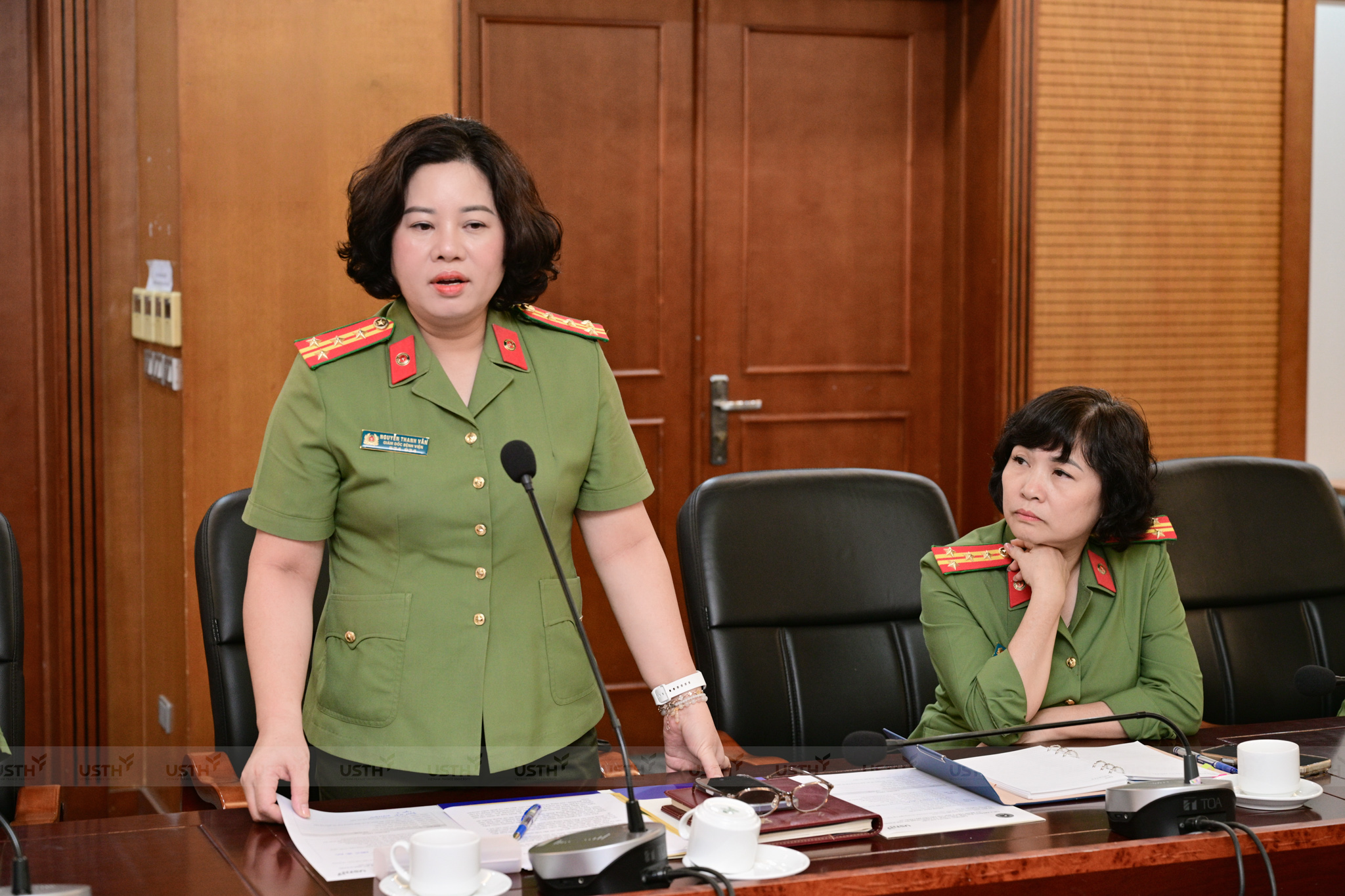
Colonel Nguyen Thanh Van noted that the MoU comes at a particularly opportune moment. In recent years, the Government and the Ministry of Public Security have paid special attention to traditional medicine, as reflected in numerous directives and resolutions. She described this as a significant opportunity for the Hospital’s development, including in medicine and pharmacy, and expressed her hope that USTH would also grow on this favourable foundation. Notably, the Hospital takes pride in being one of the few models offering an almost comprehensive environment for pharmacy practice, with both modern and traditional medicines, drug manufacturing, and the cultivation, processing and conservation of medicinal plants.
The signing with the Public Security Hospital of Traditional Medicine further expands USTH’s network of partners in medicine and pharmacy, following recent partnerships with healthcare institutions in Hanoi. Each commitment marks a concrete step along the path the University has steadfastly pursued: turning knowledge into value that serves human health.