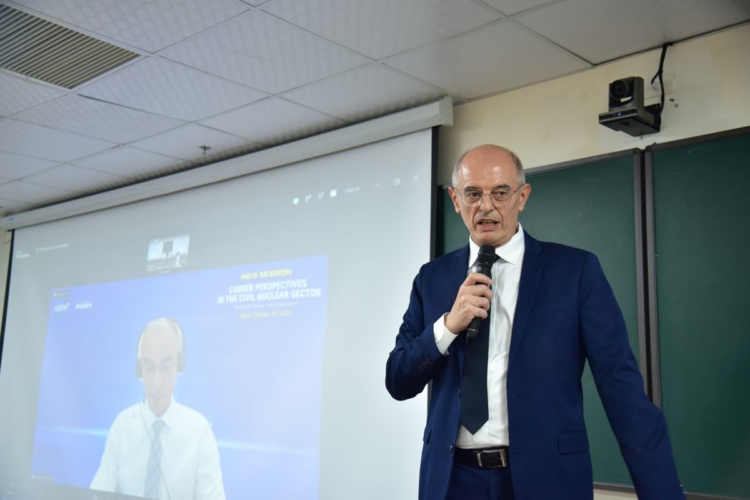
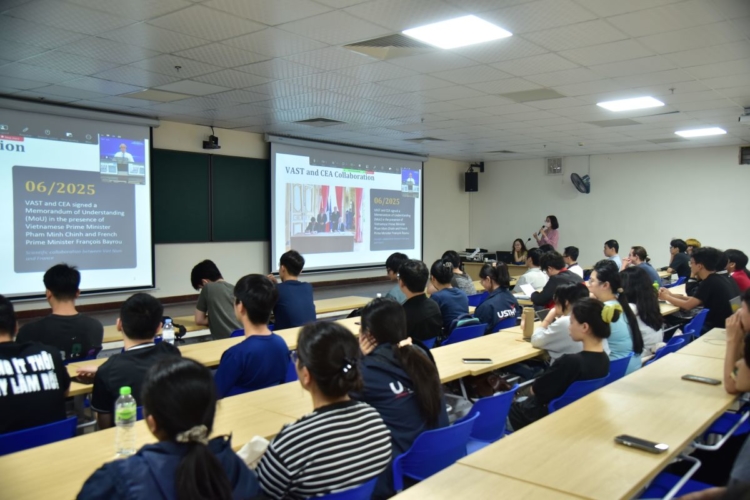
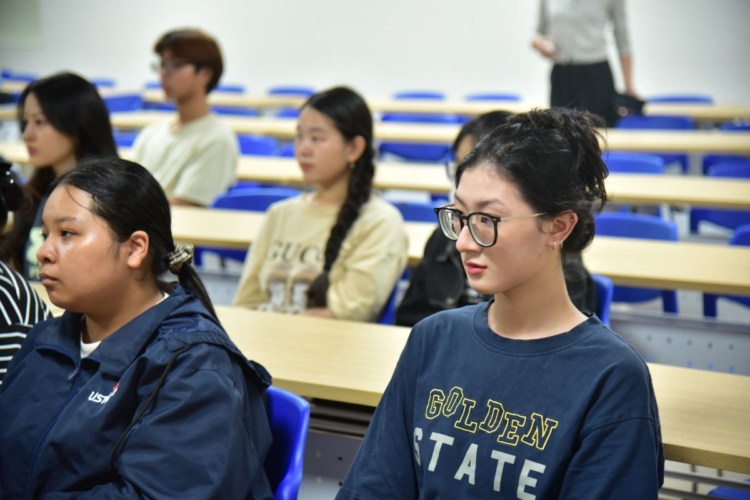
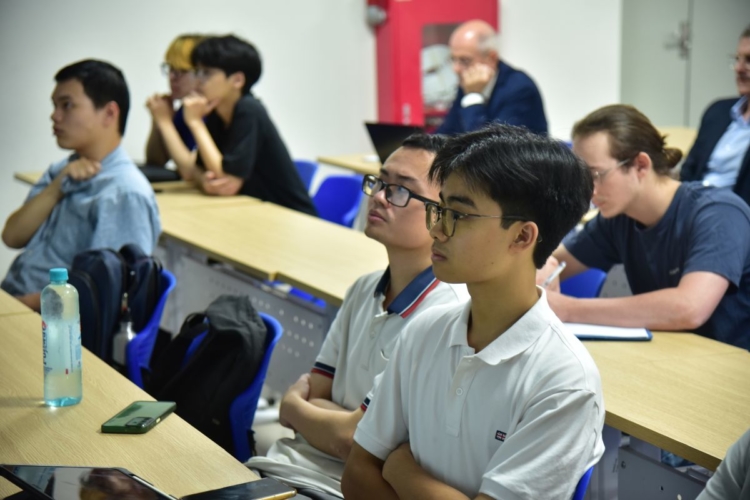
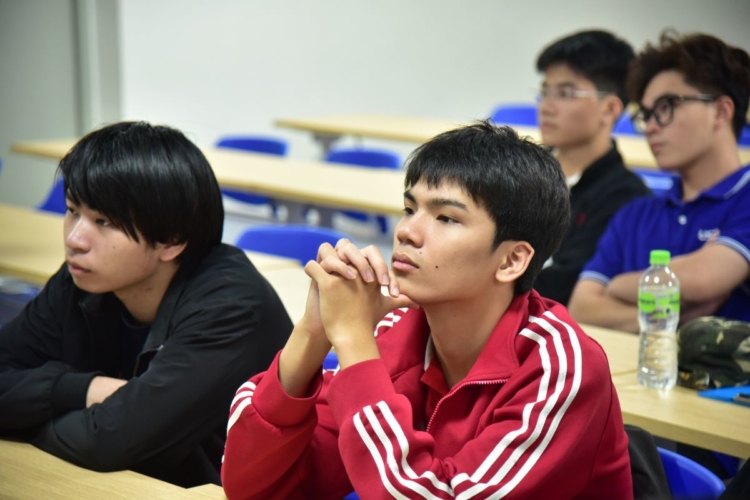
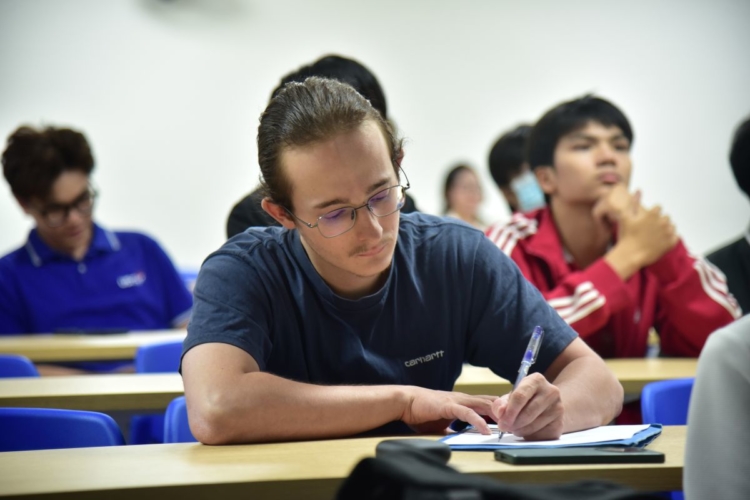
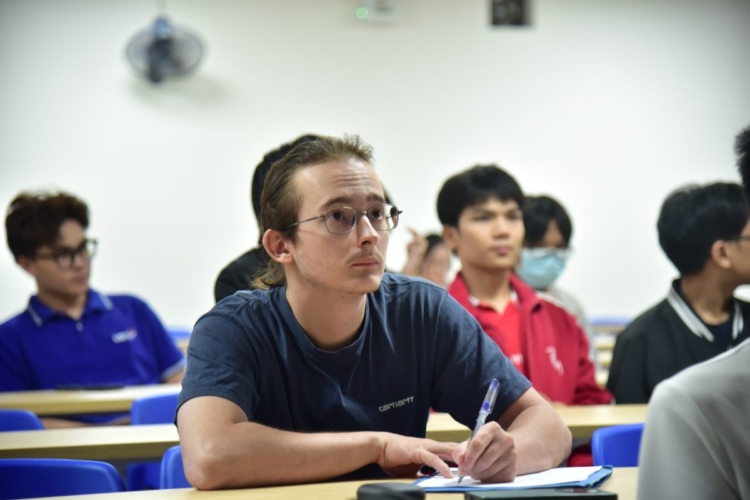
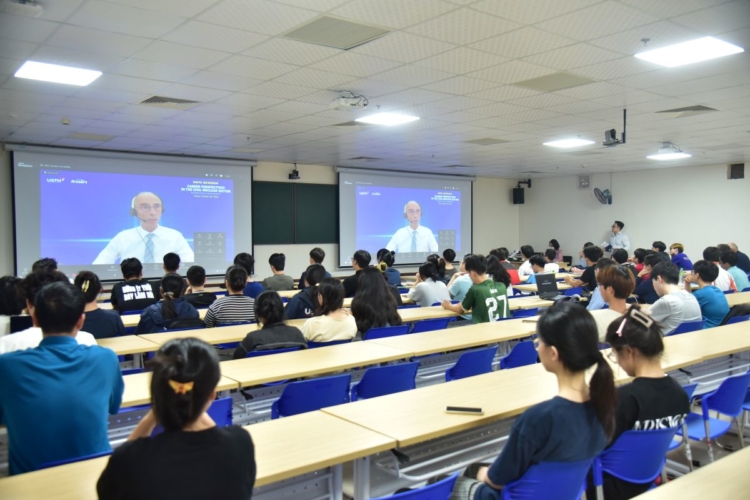
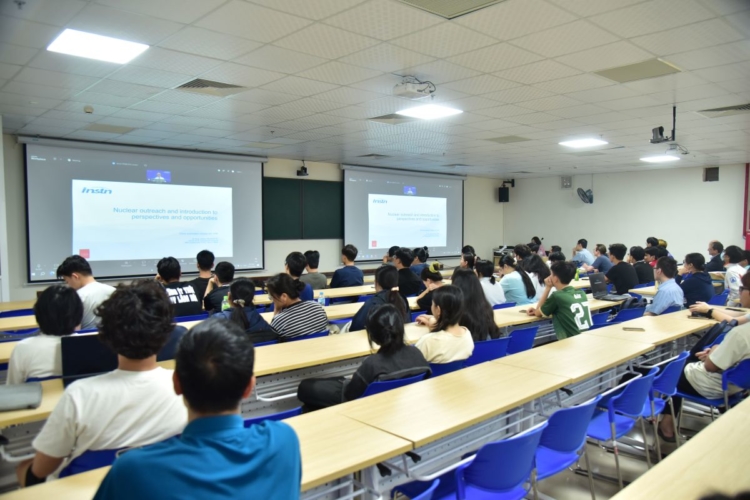
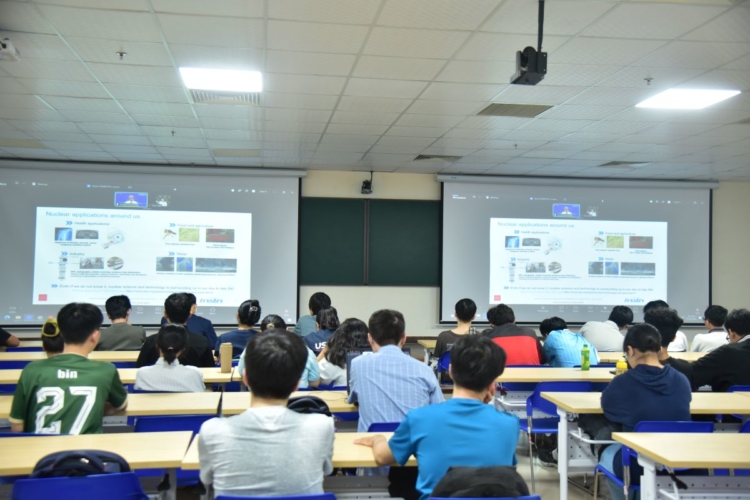
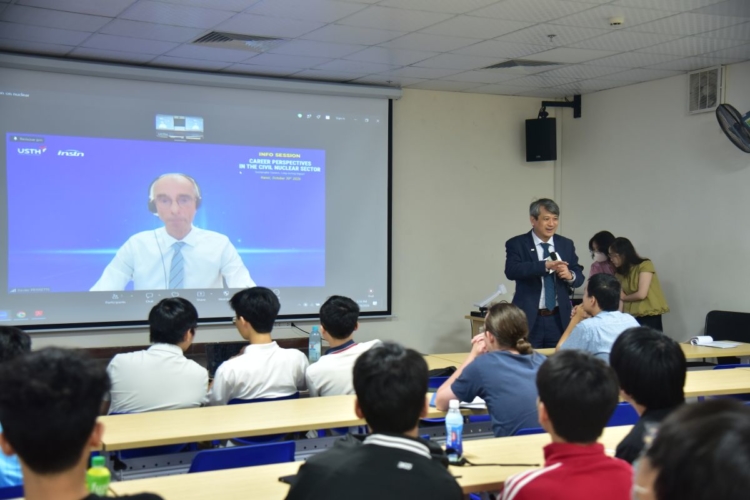
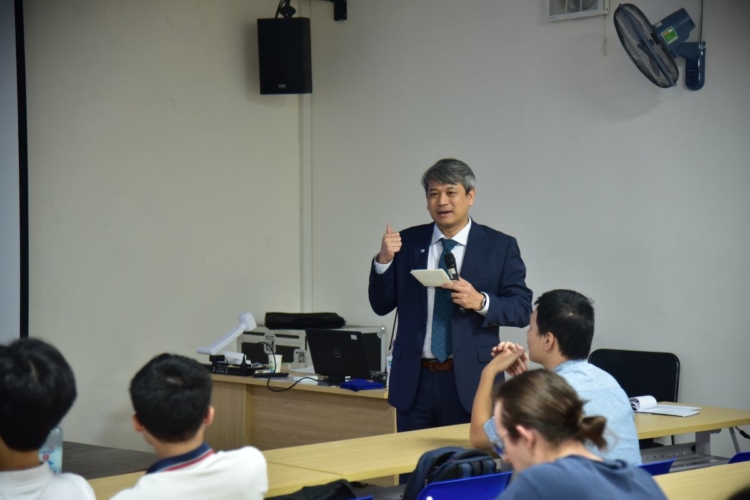
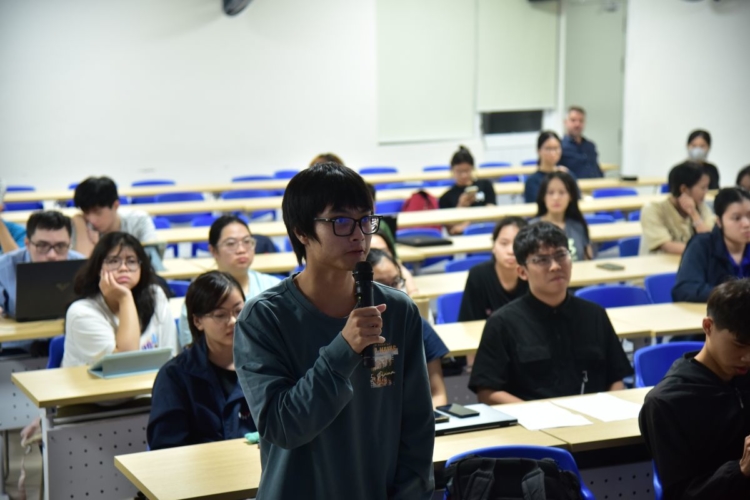
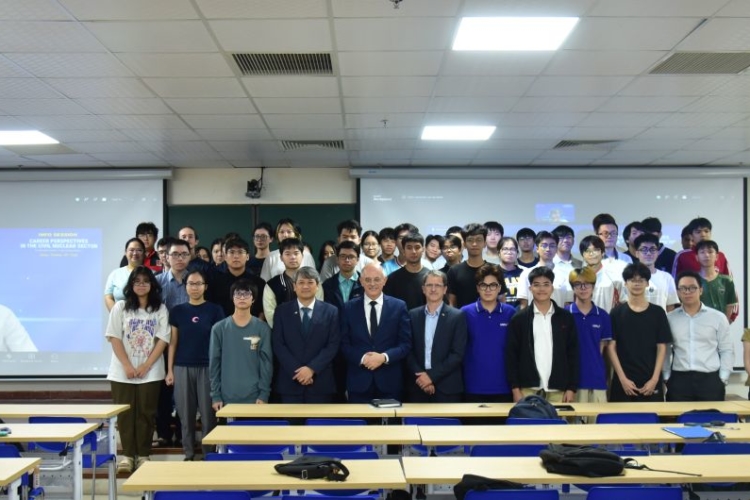
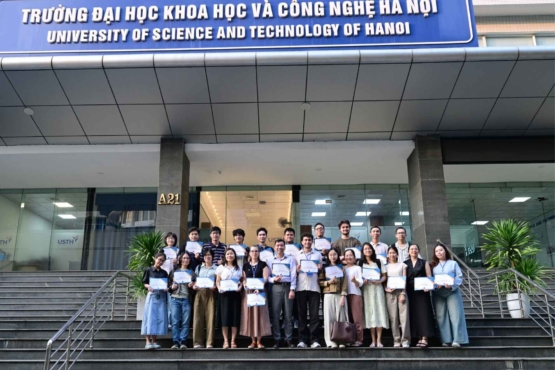
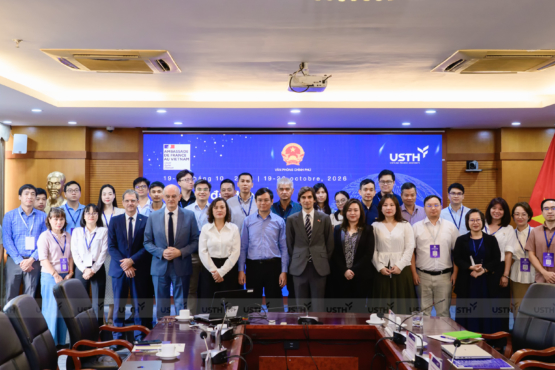
On the afternoon of October 30, 2026, the University of Science and Technology of Hanoi (USTH), in collaboration with the French National Institute for Nuclear Science and Technology (INSTN), under the French Alternative Energies and Atomic Energy Commission (CEA), organised an Info Session entitled “Career Perspectives in the Civil Nuclear Sector”, attracting a large number of students. Featuring a presentation by Mr. Xavier Perrette, Vice President for International Relations at INSTN, the session offered students an opportunity to explore the practical applications of nuclear technology and gain insights into career pathways in this promising scientific field.
Representing USTH at the event were Prof. Thierry Verdel; Assoc. Prof. Tran Dinh Phong, Vice-Rector; Prof. Patrice Estellé, Director of the Department of Research and International Affairs; and representatives from relevant departments.
How Nuclear Science addresses real-world challenges
At the session, Mr. Xavier Perrette, Vice President for International Relations at INSTN – France’s leading national training institution in nuclear technology applications under CEA – shared insights drawn from his 25 years of experience in the nuclear energy sector, including 15 years dedicated to human resource development, education and nuclear training.
Through his presentation, students gained a broader understanding of the contributions of nuclear technology to essential areas of everyday life. One of its notable strengths lies in its ability to support cancer detection, diagnosis and treatment, identify internal defects in materials without damaging the structures being inspected, and improve the processing, preservation and quality control of agricultural products and food. These techniques are therefore applied across a wide range of essential activities, from healthcare to industrial and agricultural production.
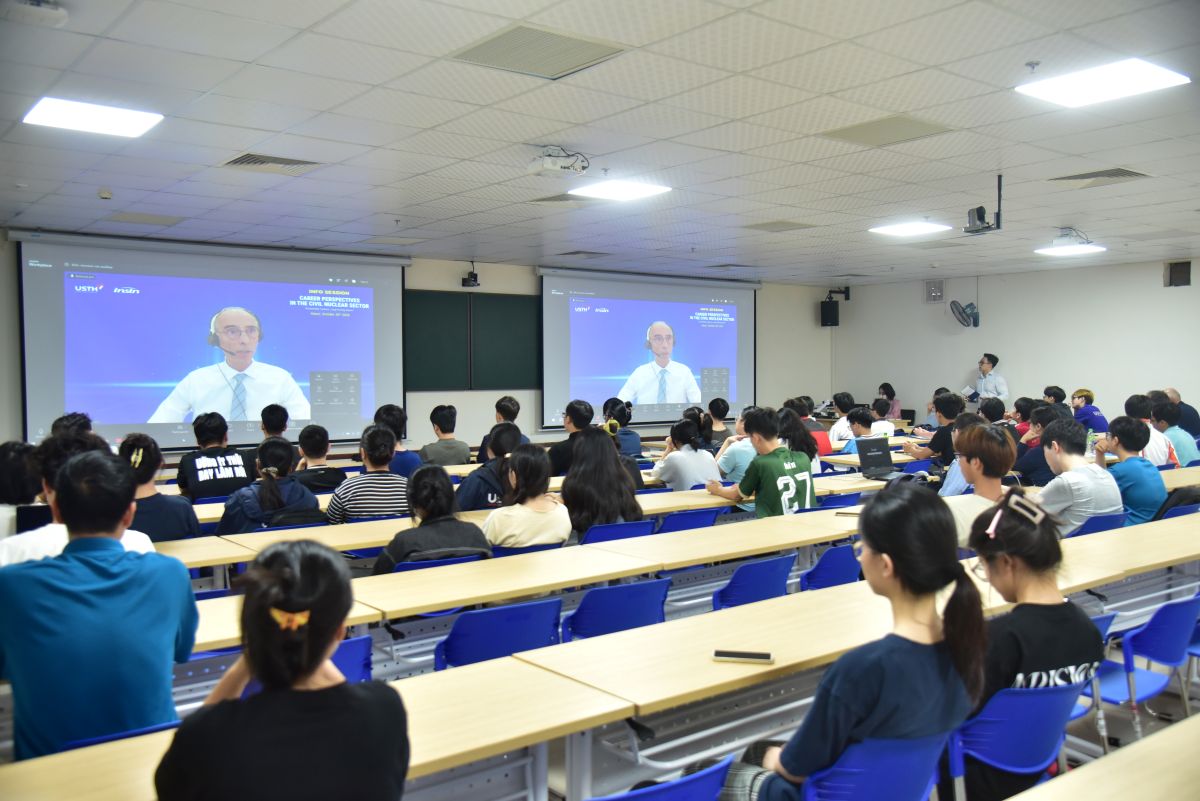
Students also learned that these applications require specialised expertise and carefully controlled implementation processes. Beyond technological development, each application must comply with rigorous procedures for monitoring, risk assessment and safety standards. In the nuclear sector, protecting people and the environment remains a fundamental principle throughout the entire process, from research and development to practical implementation.
Offering further perspectives on academic and career pathways, Assoc. Prof. Tran Dinh Phong, Vice-Rector of USTH, noted that graduates from disciplines such as Materials Science, Physics, Chemistry, Electronics and Information Technology can also explore career opportunities in the civil nuclear sector. With relevant academic foundations, supplemented by further learning and specialised training, graduates can gradually develop the competencies required for different professional roles.
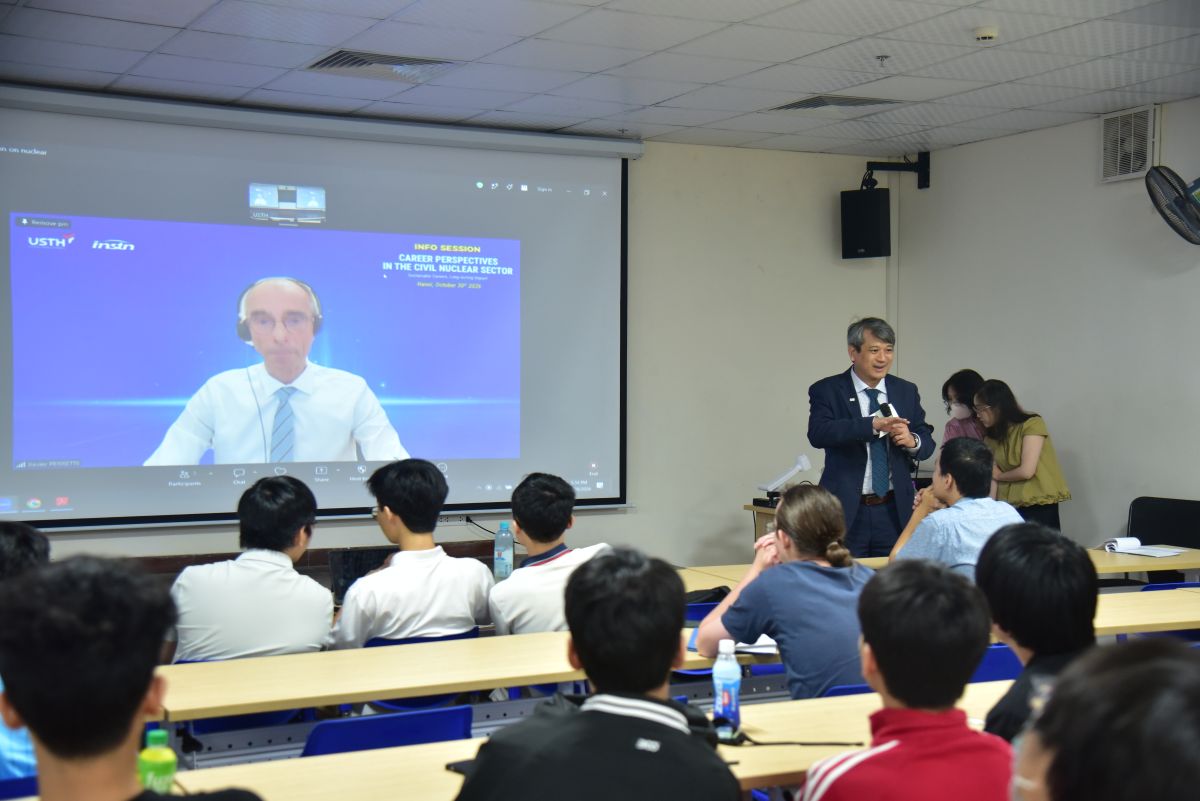
He also encouraged students to pursue their studies and research in this field with commitment and determination, while proactively strengthening their expertise to make meaningful contributions to society.
Strengthening USTH – CEA Cooperation in Nuclear Science and Technology
The event represents a concrete initiative in advancing cooperation between USTH and CEA, one of France’s leading organisations in scientific research and technological development, with a workforce of more than 20,000 staff, experts and researchers.
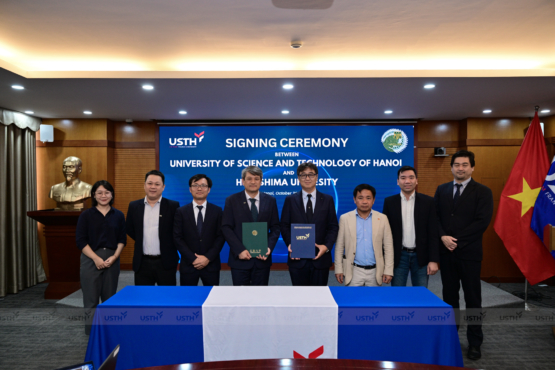
In September 2026, cooperation agreements involving USTH, the Vietnam Academy of Science and Technology (VAST) and CEA were presented in Paris in the presence of General Secretary and President To Lam. This marked an important milestone in strengthening scientific collaboration between Vietnam and France.
Through professional exchanges and academic activities such as this Info Session, the cooperation framework is being translated into opportunities for students to access specialised knowledge and practical expertise. Connections between the University, international experts and research organisations also help strengthen the links between education and scientific and technological advances, contributing to the development of a highly qualified workforce capable of responding to increasingly demanding societal needs.
For USTH, bringing international experts and perspectives closer to students not only broadens their learning opportunities but also fosters scientific thinking, a spirit of exploration and an awareness of how knowledge can be applied to address real-world challenges.