On July 6, 2026, the University of Science and Technology of Hanoi (USTH) welcomed a delegation from Seoul National University of Science and Technology (SEOULTECH), Republic of Korea, for a productive working meeting aimed at exploring future collaboration in research, academic exchange, and international education. This marked the first official visit and working session between the two institutions, opening a promising pathway for long-term cooperation and contributing to the further strengthening of academic collaboration.
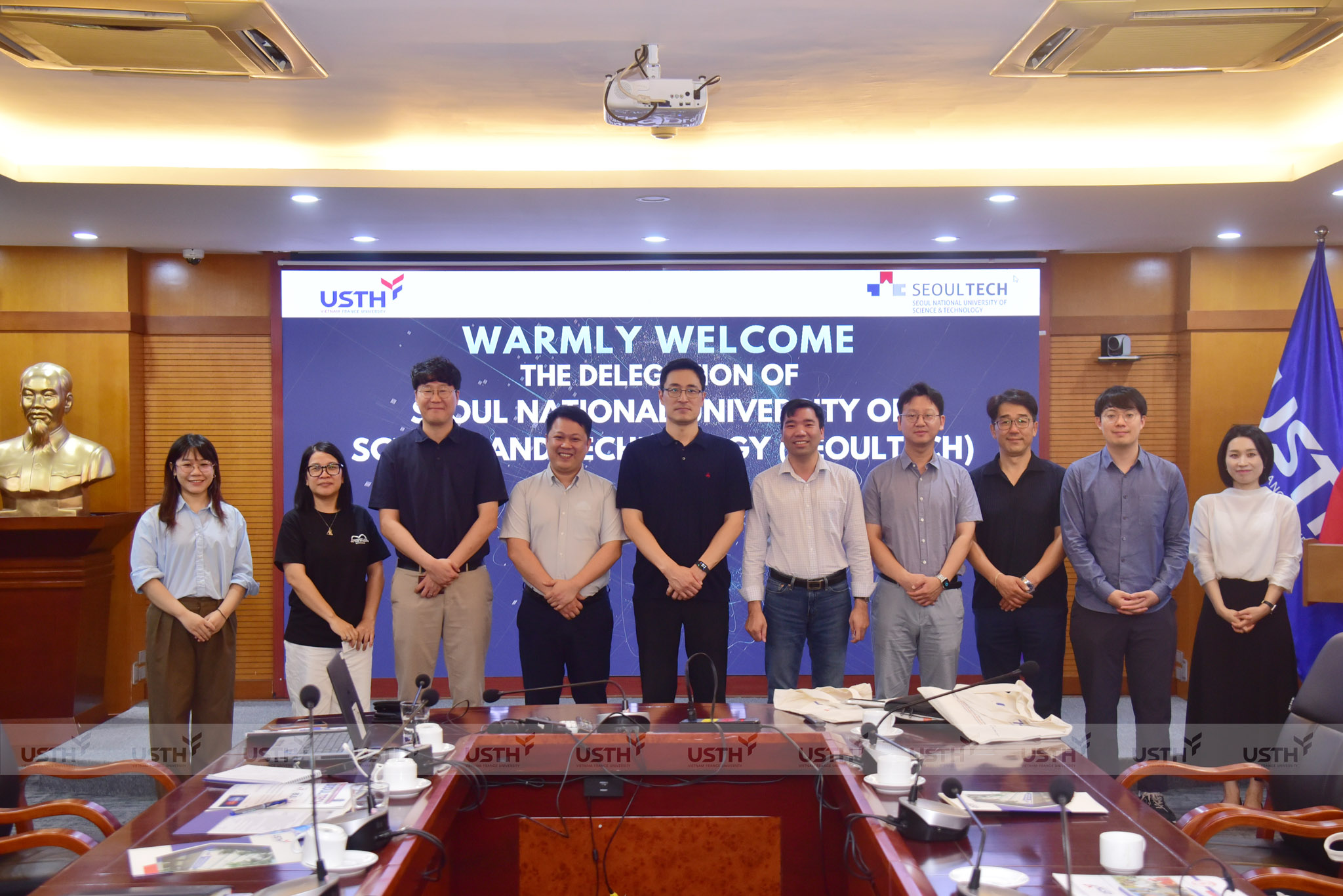
Representing USTH were Assoc. Prof. Mai Huong and Dr. Nguyen Duc Anh, Deputy Director of the Department of Chemical and Environmental Technology; Assoc. Prof. Dr. Nguyen Quang Huy, Deputy Director of the Department of Life Sciences; and Ms. Do Thi Thuy Trang, Deputy Director of the Department of Research, Innovation and International Affairs.
Representing SEOULTECH were Prof. Kyuhan Kim, Associate Director of the Office of Graduate School Innovation; Prof. Hyungjun Koo, Vice Provost of University Planning and Coordination; Prof. Hwangho Lee and Prof. Eunho Lee from Department of Chemical and Biomolecular Engineering; Ms. Julie Sunyeong Hwang, Team Manager of the Office of International Affairs; Mr. Wooyoung Shin, Director of the Global Admissions Center, accompanied by Ms. Hyelyeong Jeong, Manager of the Center; and Mr. Dongyeol Lee, Advisor to the University Network for International Education (UNIE).
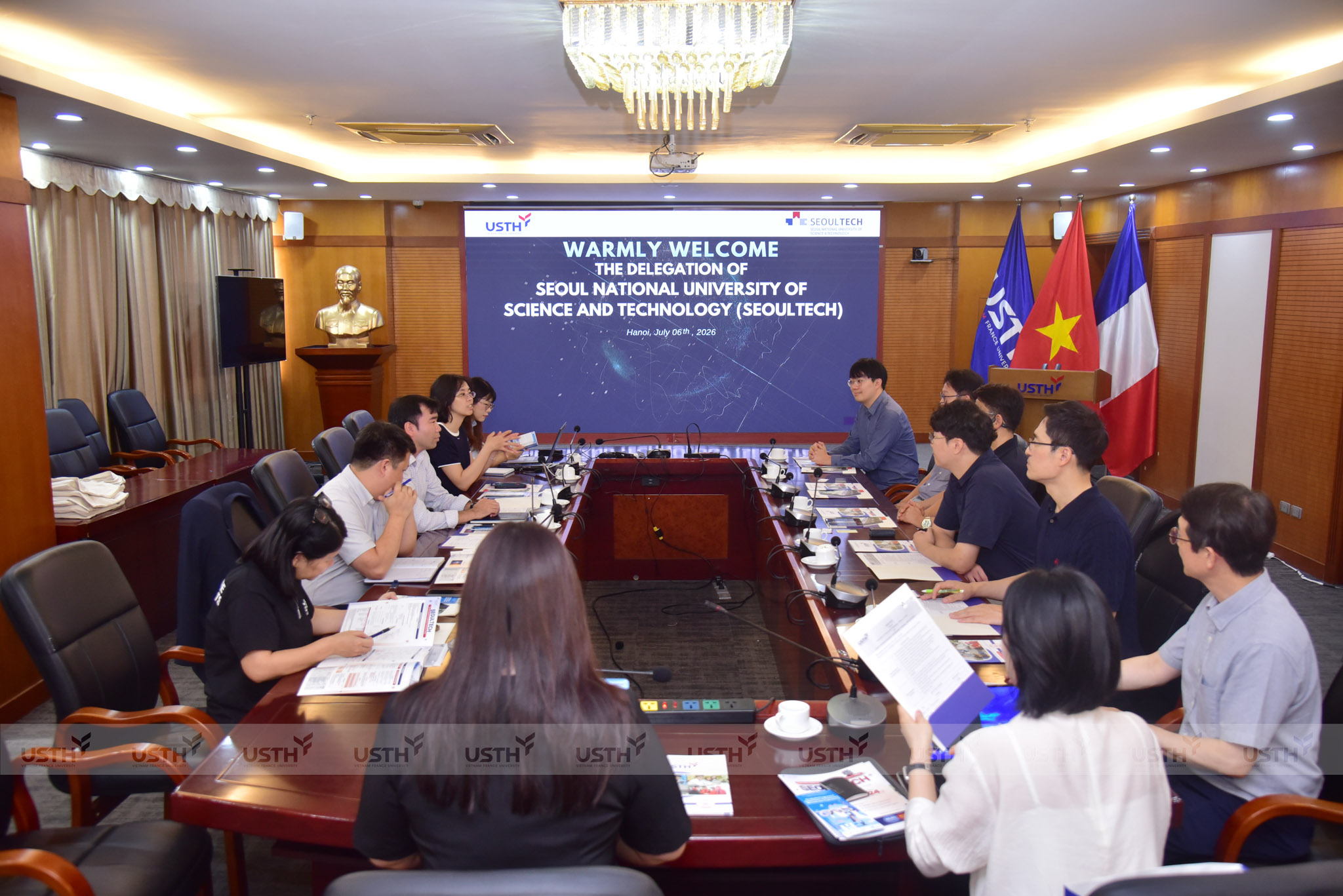
At the meeting, the two sides presented overviews of their respective education systems, development strategies, and key research priorities. SEOULTECH highlighted its key areas of expertise, including drug delivery systems and applied chemical technologies. Representatives of USTH introduced the University’s academic programmes and key research orientations in such fields as drug development, environmental technology, and interdisciplinary scientific research.
Building on the discussions, the two sides swiftly identified numerous areas of common interest and complementary strengths in education and research. Specifically, they agreed to promote student exchange programmes across multiple levels of study, from undergraduate to postgraduate education, through semester-based exchanges and research internships, thereby enhancing students’ international academic experience.
In addition, the two universities discussed opportunities for research collaboration through the sharing of facilities and laboratory infrastructure, as well as the implementation of joint research projects. Initiatives including faculty exchanges and the co-organisation of scientific seminars and conferences were also proposed to foster comprehensive cooperation.
Building on its strong internationalisation foundation, USTH delivers all of its academic programmes entirely in English while maintaining an extensive network of partnerships with international institutions. The University has also accumulated considerable experience in organising student exchange programmes with partners in numerous countries, while welcoming international students to study and conduct research at USTH. On that basis, the University expressed its desire to further expand cooperation and welcome students from the Republic of Korea to study at USTH in the coming years.
As one of South Korea’s leading national universities, SEOULTECH plays a significant role in advancing applied science, engineering, and innovation-driven education. The university is widely recognized for its strong industry connections, cutting-edge research in engineering and technology, and its commitment to nurturing globally competitive talent. With a focus on practical innovation and interdisciplinary collaboration, SEOULTECH has established itself as a dynamic institution contributing to Korea’s technological advancement and global academic engagement.
Expanding cooperative relations with leading universities around the world, including SEOULTECH, continues to reaffirm USTH’s commitment to its higher education internationalization strategy, fostering a globally connected academic environment, promoting innovation through international cooperation, and educating a new generation of scientists and engineers equipped with global competencies to meet the demands of development in an increasingly interconnected world.