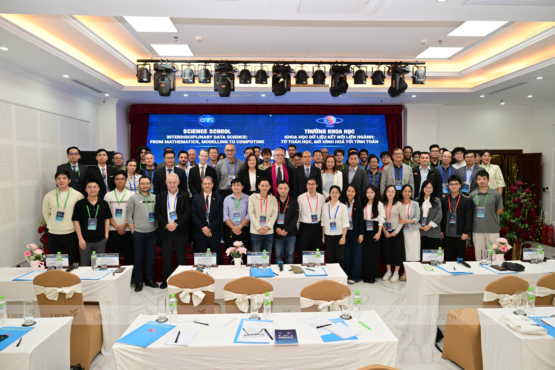
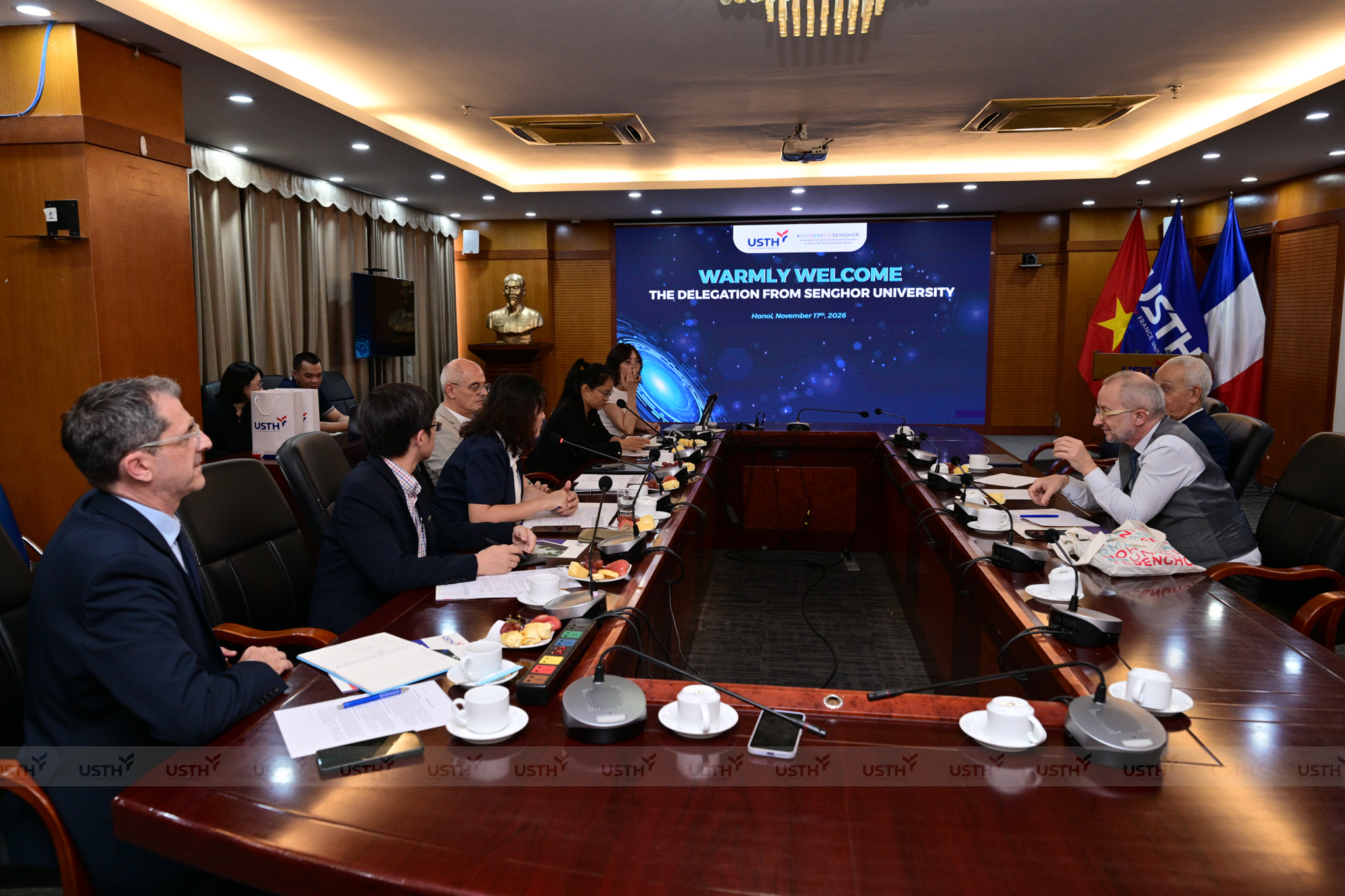
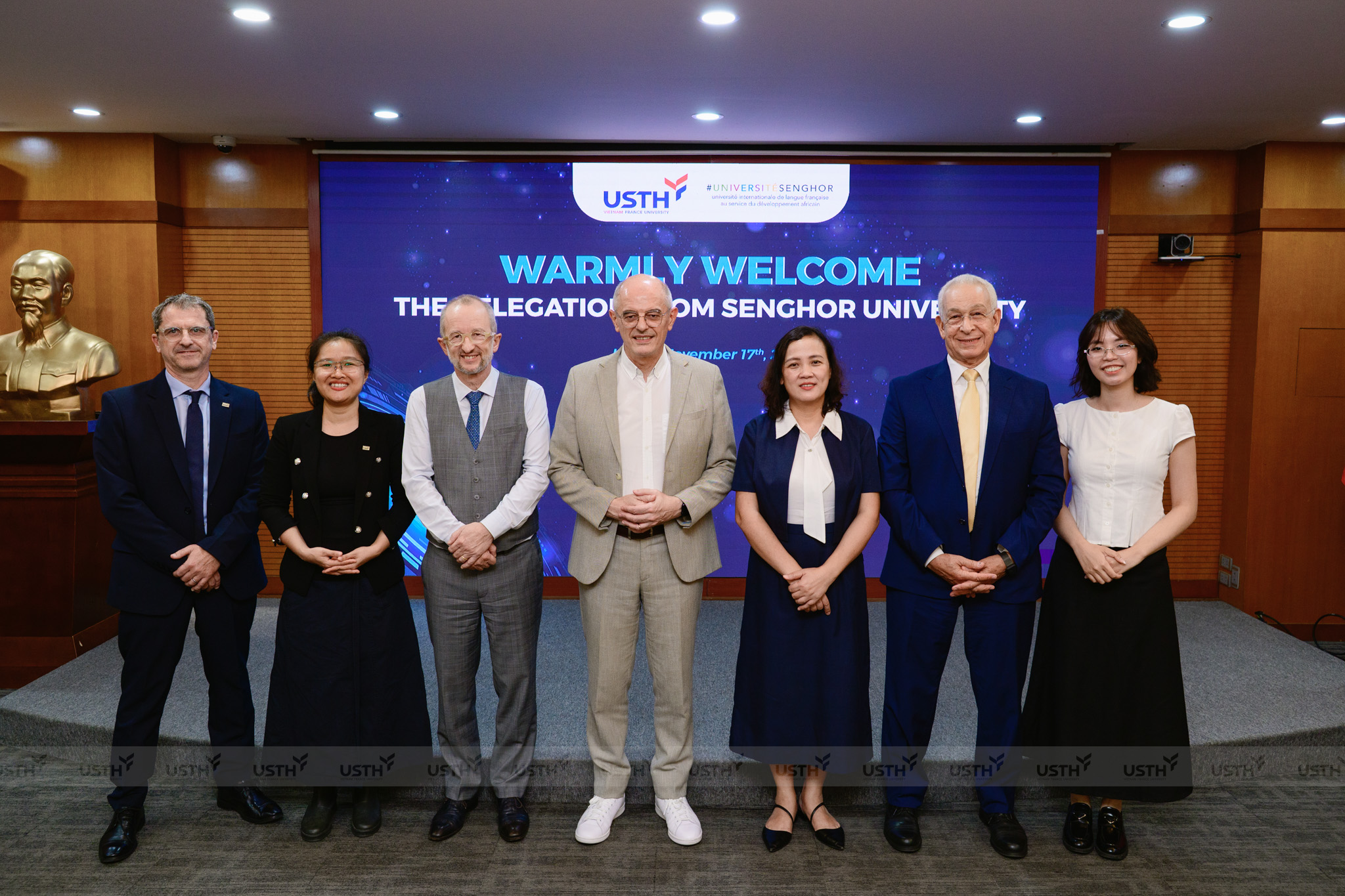
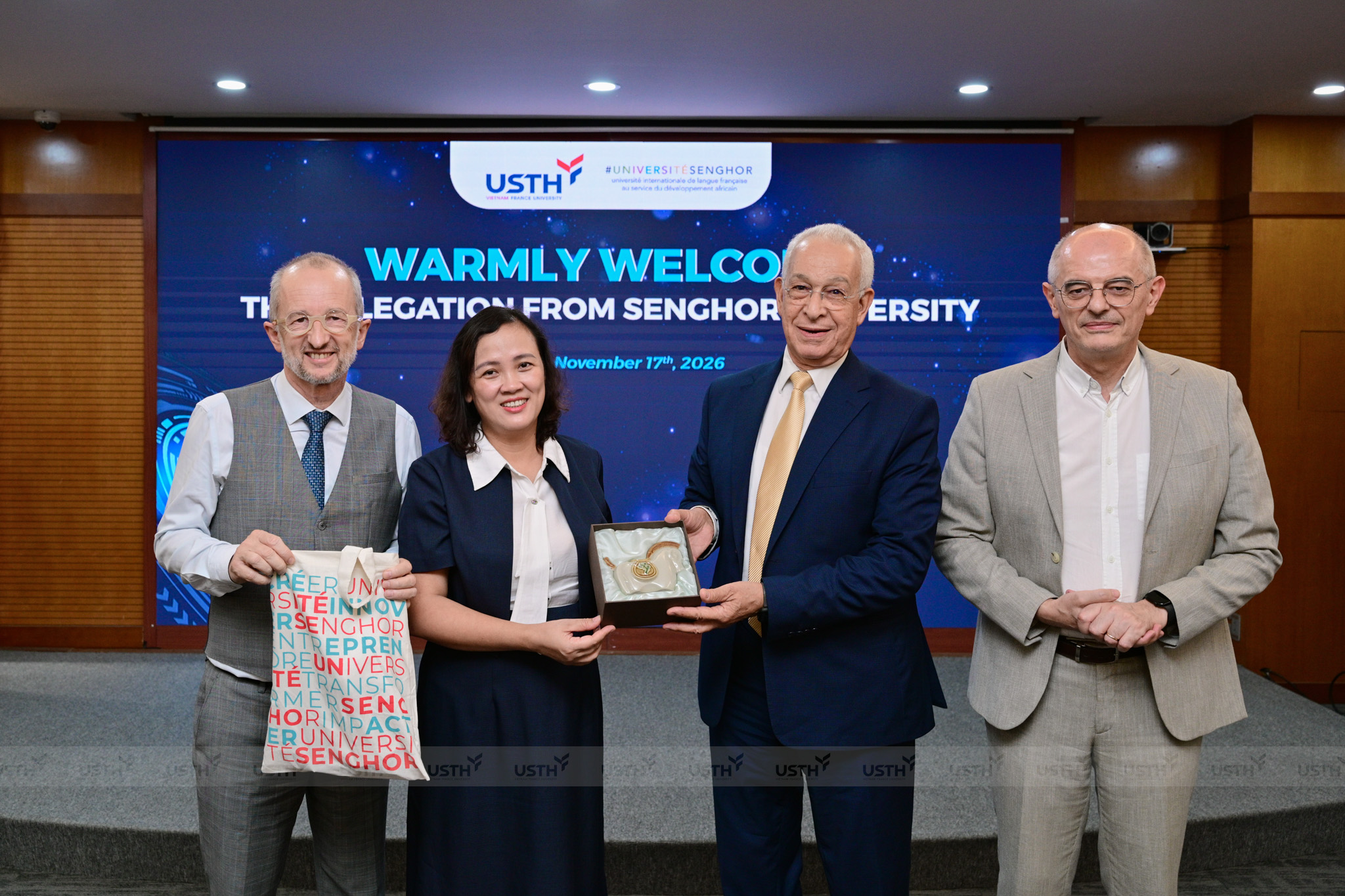
On November 17, 2026, the University of Science and Technology of Hanoi (USTH) welcomed a delegation from Senghor University (Egypt) for discussions on future cooperation in education and scientific research. The visit opened up new opportunities for collaboration between two higher education institutions that share similar development models and strong ties to the Francophone community.
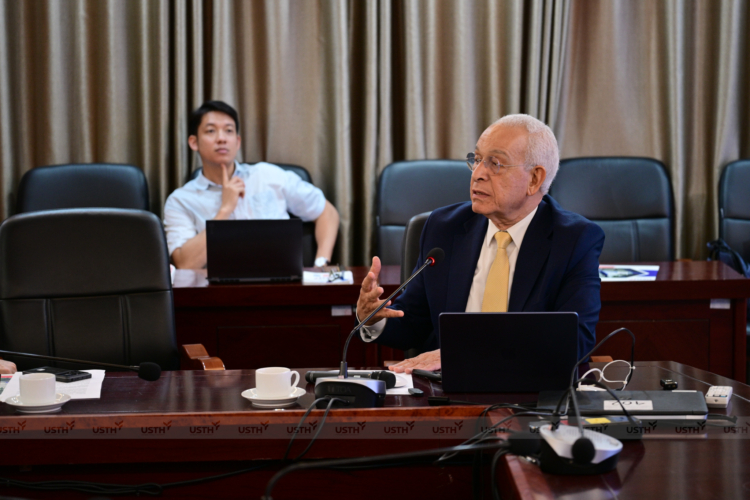
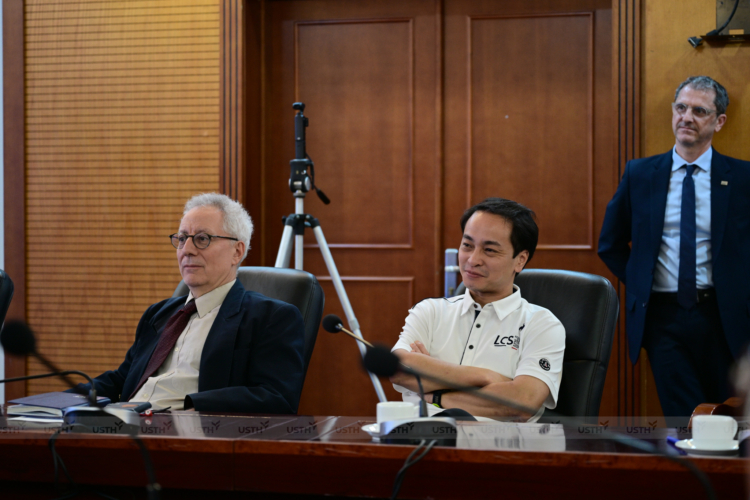
The Senghor University delegation included Prof. Jean-Marc Lavest, Rector, and Prof. Hany Helal, President of the Board and former Minister of Higher Education and Scientific Research of Egypt.
Representing USTH were Prof. Thierry Verdel, Principal Rector; Prof. Dinh Thi Mai Thanh, Rector; Assoc. Prof. Nguyen Hai Dang, Vice-Rector; and representatives of the University’s academic and administrative departments.
Building cooperation on shared understanding and mutual trust
USTH and Senghor University share a distinctive connection, as both were developed within the Franco-X university model, which is rooted in educational cooperation between France and its international partners.
Established in 2009 under an intergovernmental agreement between Vietnam and France, USTH aspires to become a leading university, with a mission to train highly qualified professionals in science and technology to support Vietnam’s development.
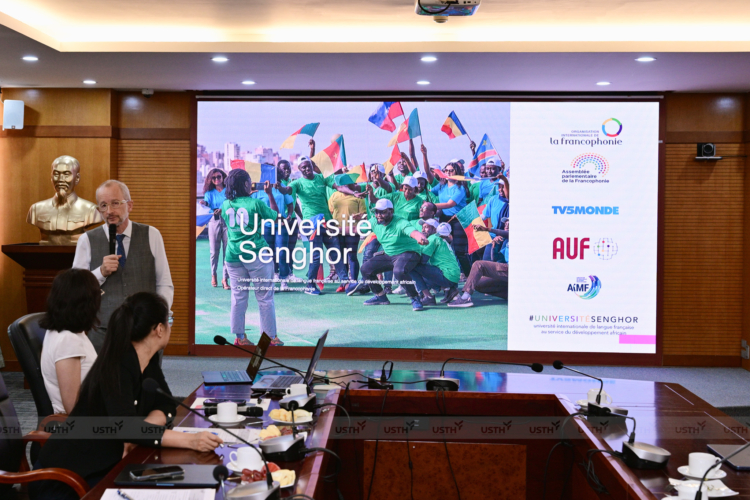
Senghor University, meanwhile, was established in 1989 in Alexandria, Egypt, through cooperation between the Egyptian government and partners within the Francophone community. It welcomed its first students in October 1990. The University specializes in postgraduate education, preparing highly qualified professionals to address the development needs of Francophone countries, particularly in Africa, in fields such as health, environment, culture, governance, and development management.
Beyond their similarities in institutional models, the two universities share a particularly close connection through their rectors, both of whom have played significant roles in the development of USTH and Senghor University.
Their first-hand knowledge of both institutions, including their academic environments, governance structures, and strategic priorities, provides a strong foundation for advancing cooperation built on mutual understanding and trust.
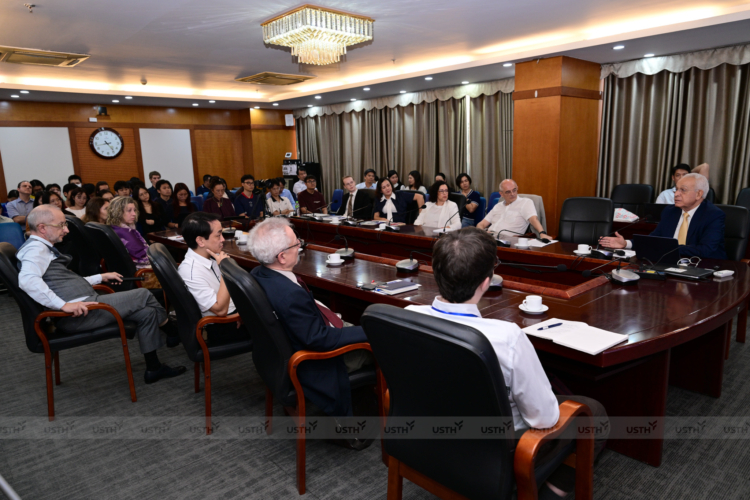
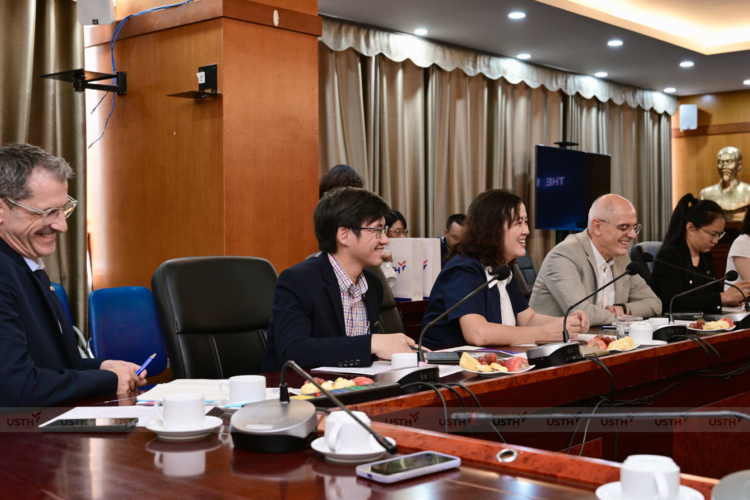
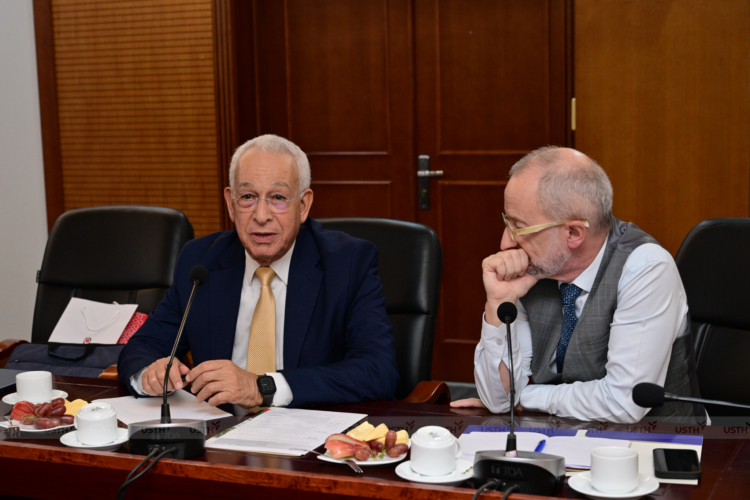
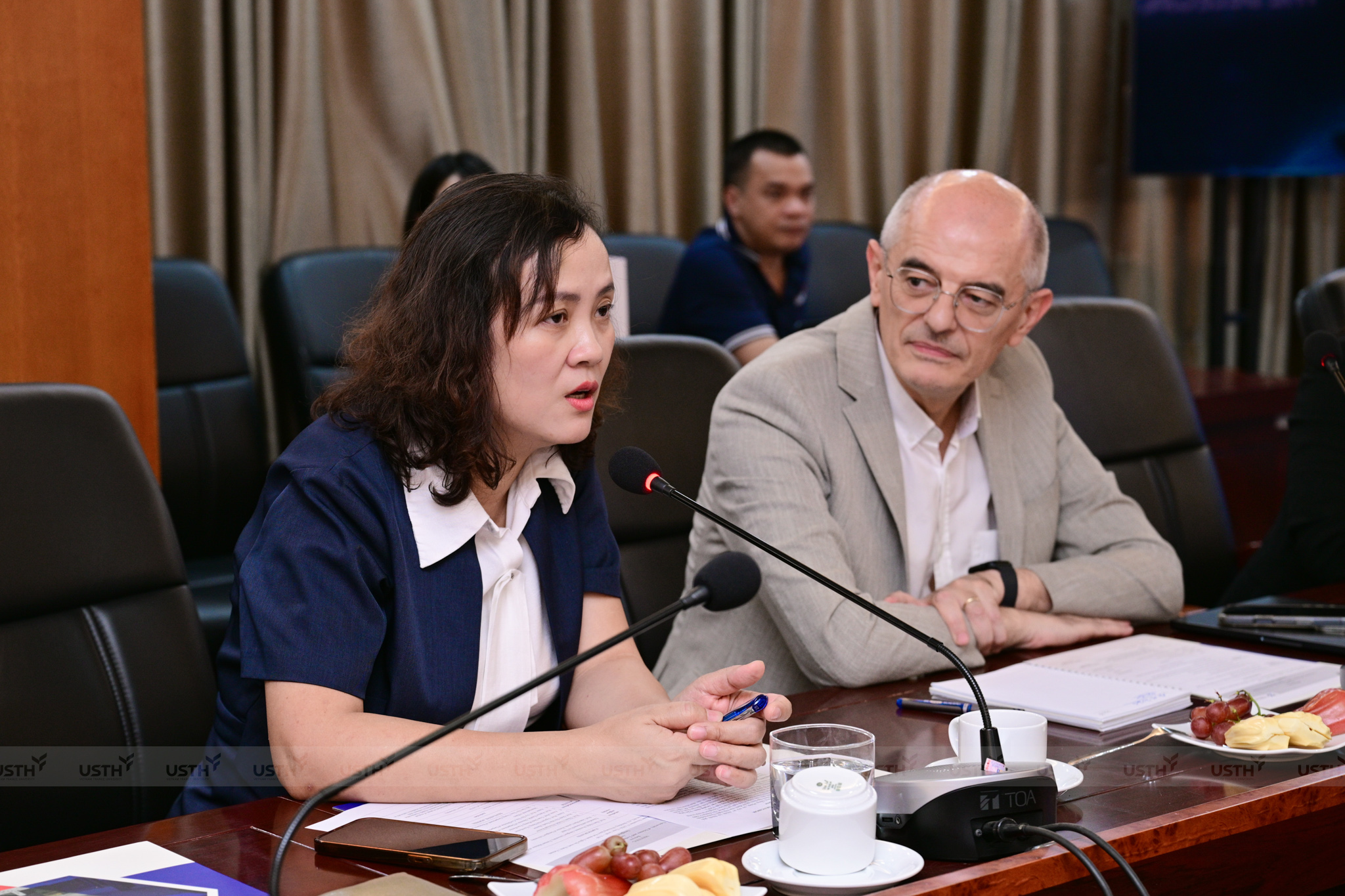
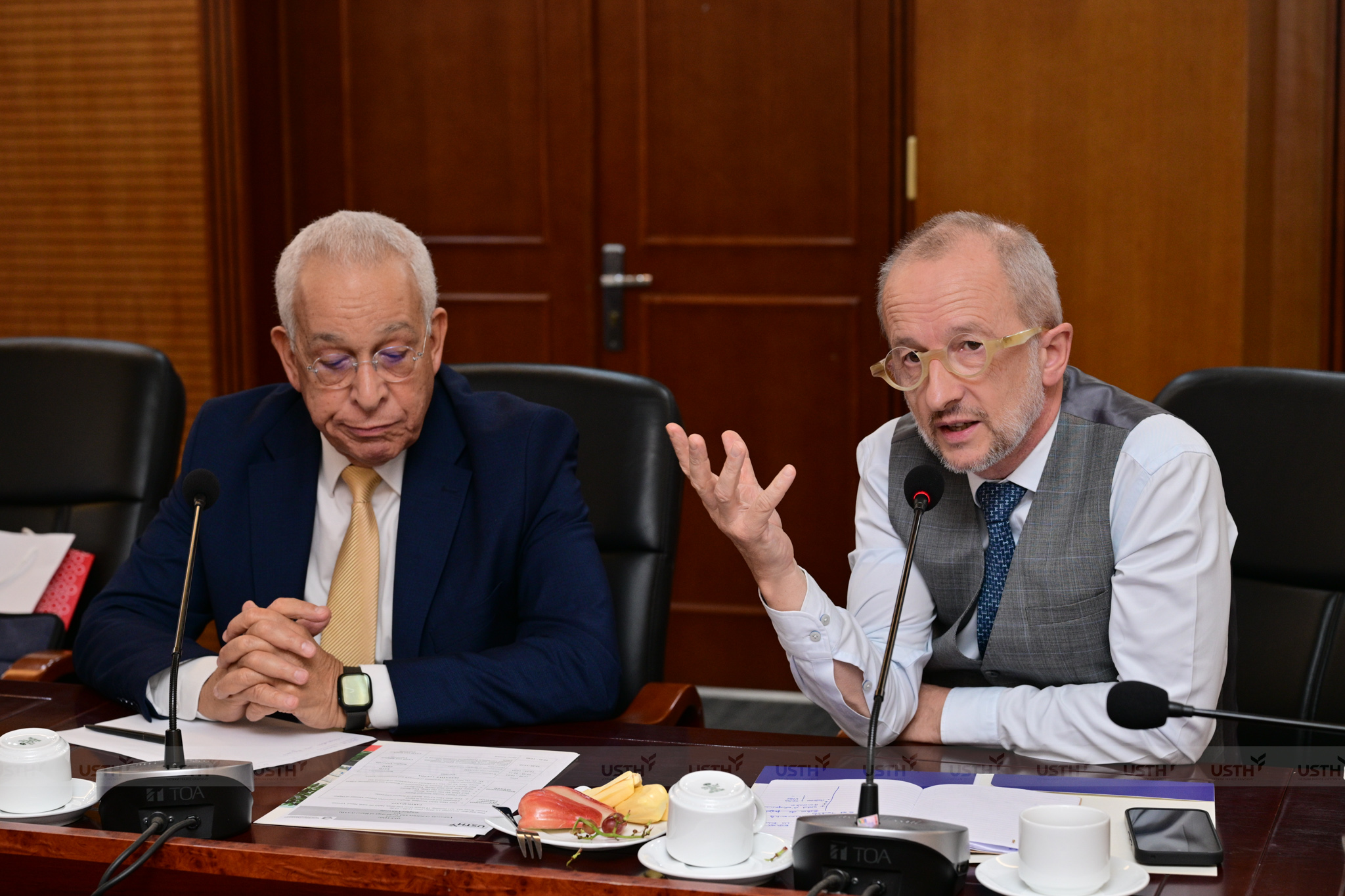
During the meeting, representatives of both universities presented their respective strengths in education, scientific research, and international partnerships. They also explored potential areas of cooperation aligned with their institutional priorities and complementary expertise.
Faculty and student exchanges emerged as a promising avenue for future collaboration. Such initiatives could strengthen academic ties between the two institutions, enable faculty members to share teaching and research experience, and offer students opportunities to study and engage in multicultural academic environments.
The meeting took place shortly after the 20th Francophonie Summit, held in Phnom Penh, Cambodia, on November 15–16, 2026. Against this backdrop, closer ties between USTH and Senghor University offer opportunities to expand academic and research networks across the Francophone world.
Uncovering the mysteries of the Great Pyramid through modern science
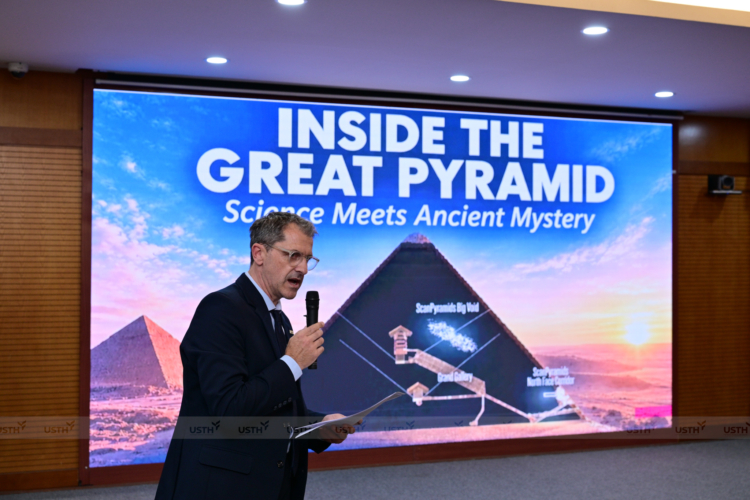
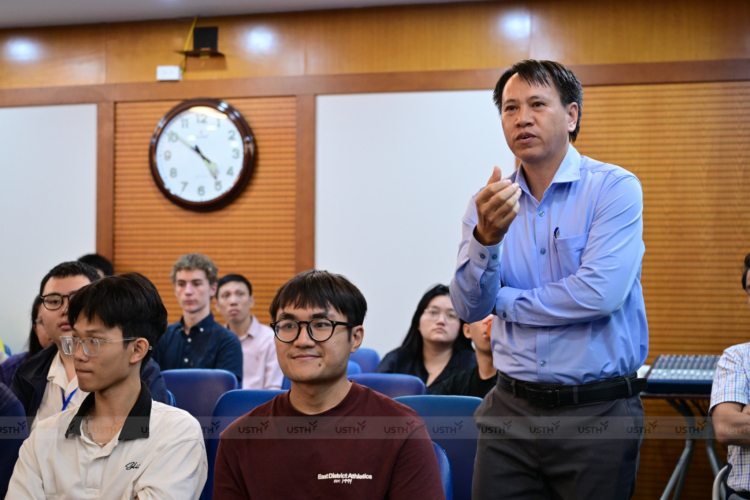
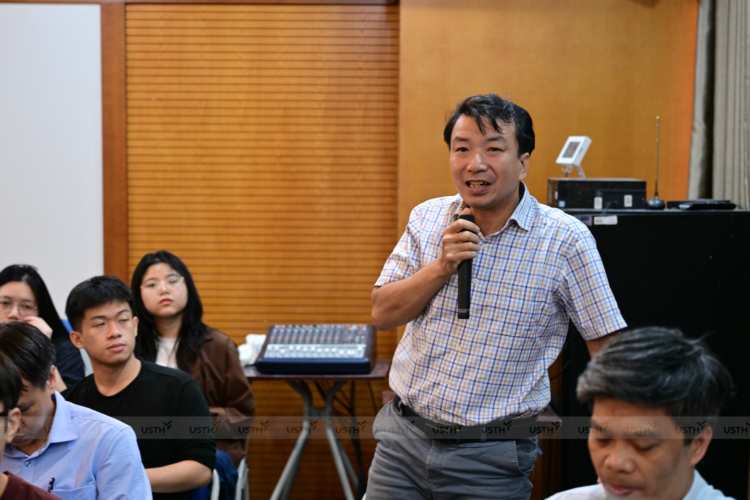
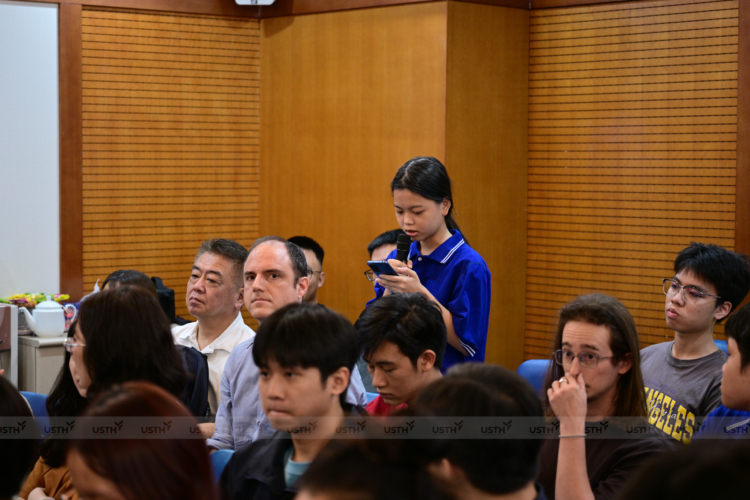
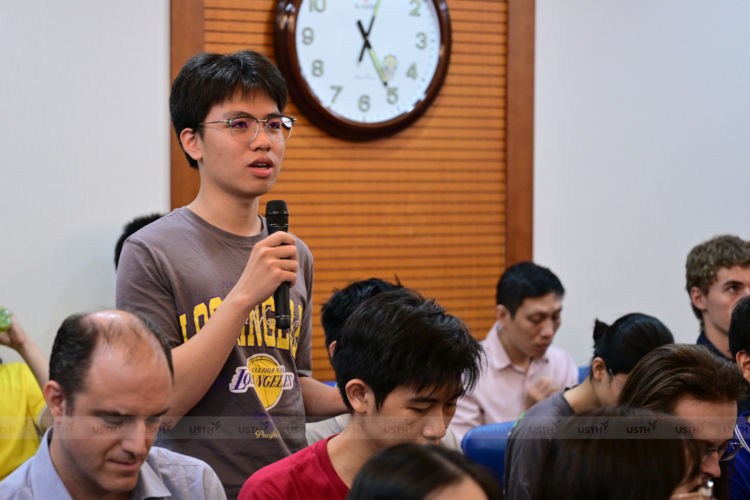
As part of the visit, Prof. Hany Helal, President of the Board of Senghor University and former Egyptian Minister of Higher Education and Scientific Research, delivered a public lecture entitled “Inside the Great Pyramid: Science Meets Ancient Mystery,” attracting strong interest from USTH faculty members and students.
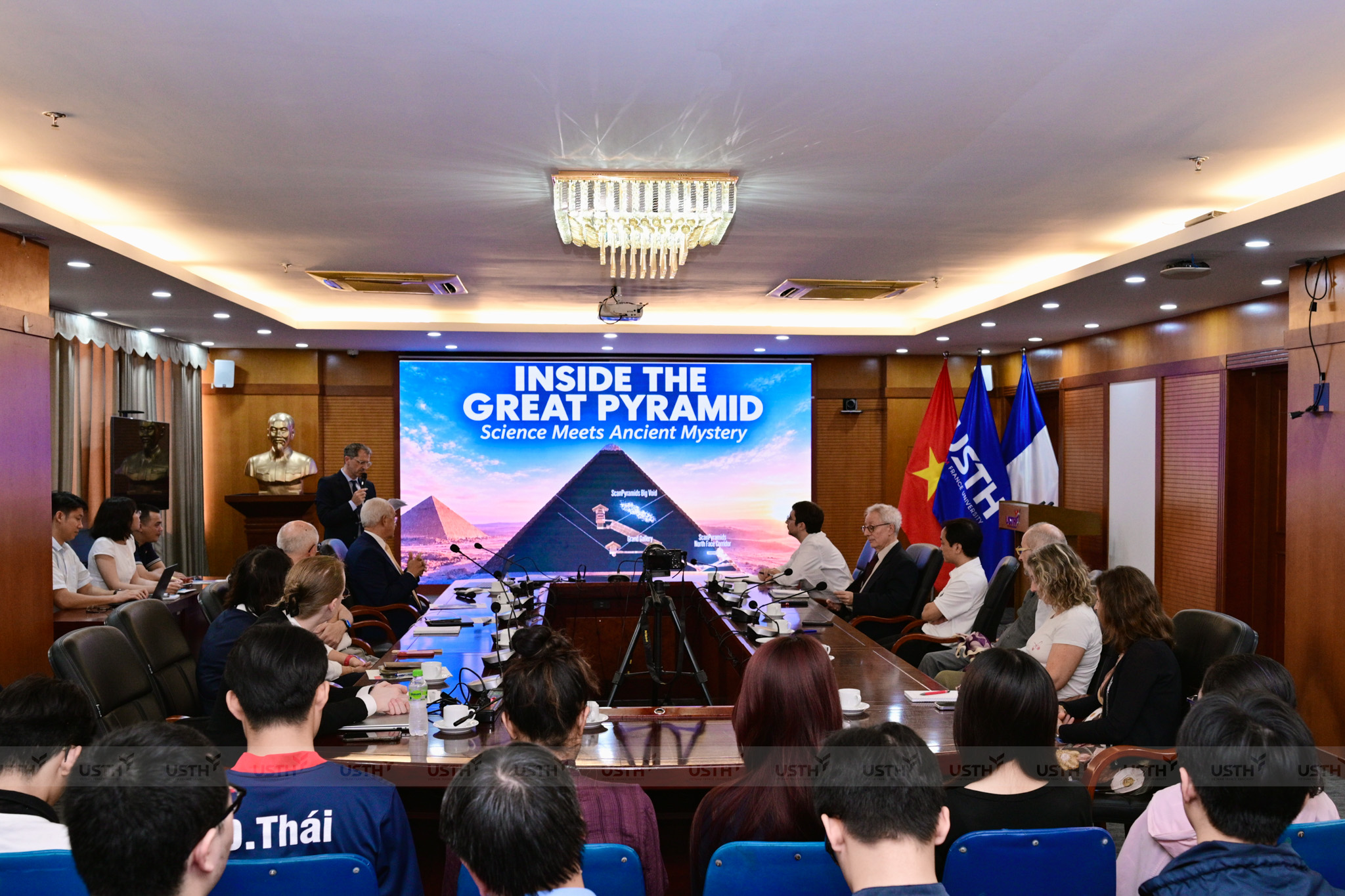
A distinguished Egyptian professor specializing in engineering and rock mechanics, Prof. Helal has also been involved in leading and coordinating ScanPyramids, an international research project bringing together scientists from countries including Egypt, France, Japan, Germany, and Canada.
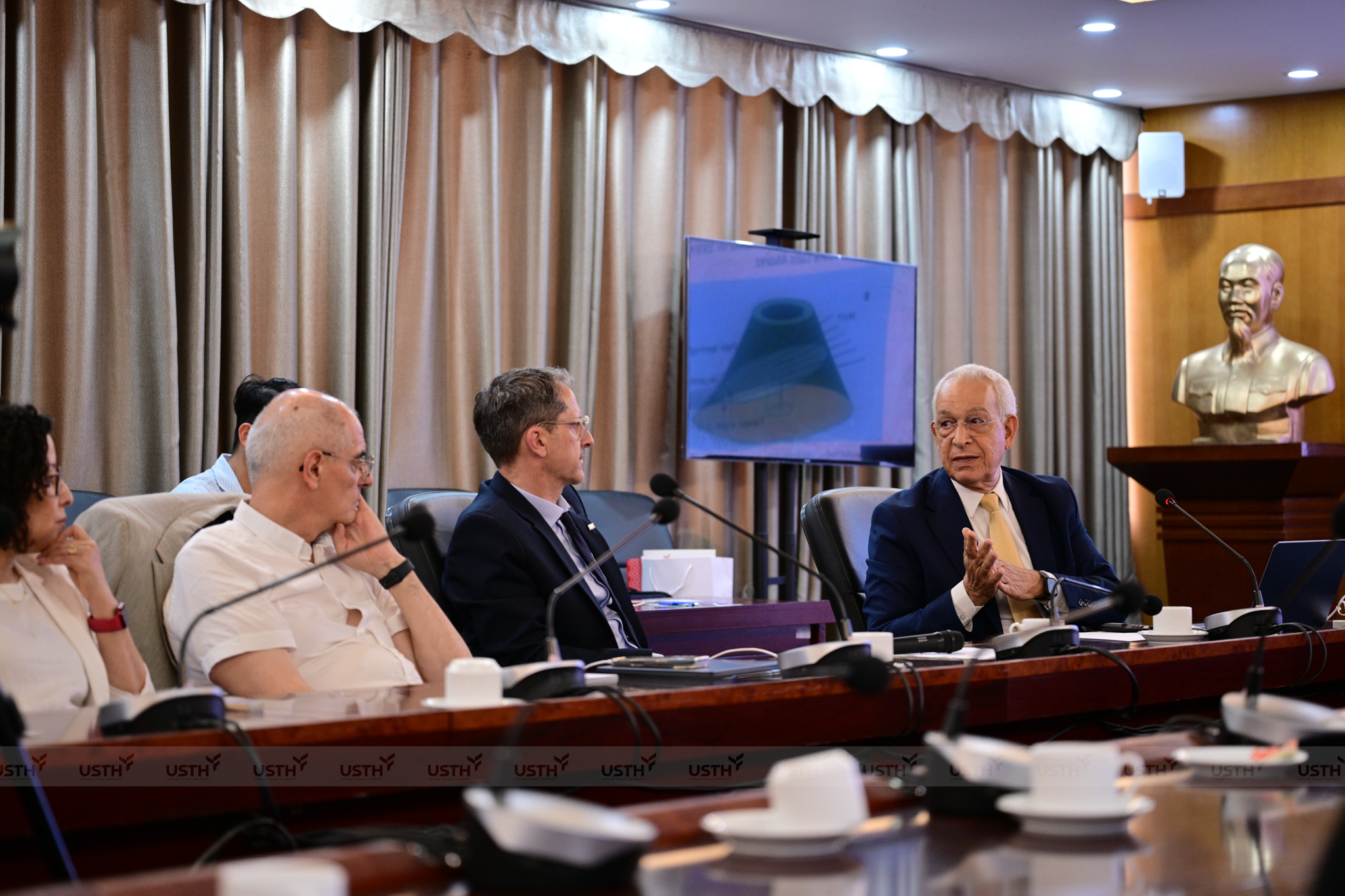
During the lecture, Prof. Helal highlighted key findings from the ScanPyramids project, which employs non-invasive technologies to investigate the internal structure of the Great Pyramid of Khufu in Giza, Egypt, without compromising the integrity of the more than 4,500-year-old monument.
One of the most remarkable techniques presented was muography, an imaging method that uses muons, subatomic particles produced when cosmic rays interact with Earth’s atmosphere, to investigate variations in material density inside the pyramid. By combining muography with infrared thermography and other advanced surveying techniques, researchers have been able to identify previously unknown internal structures.
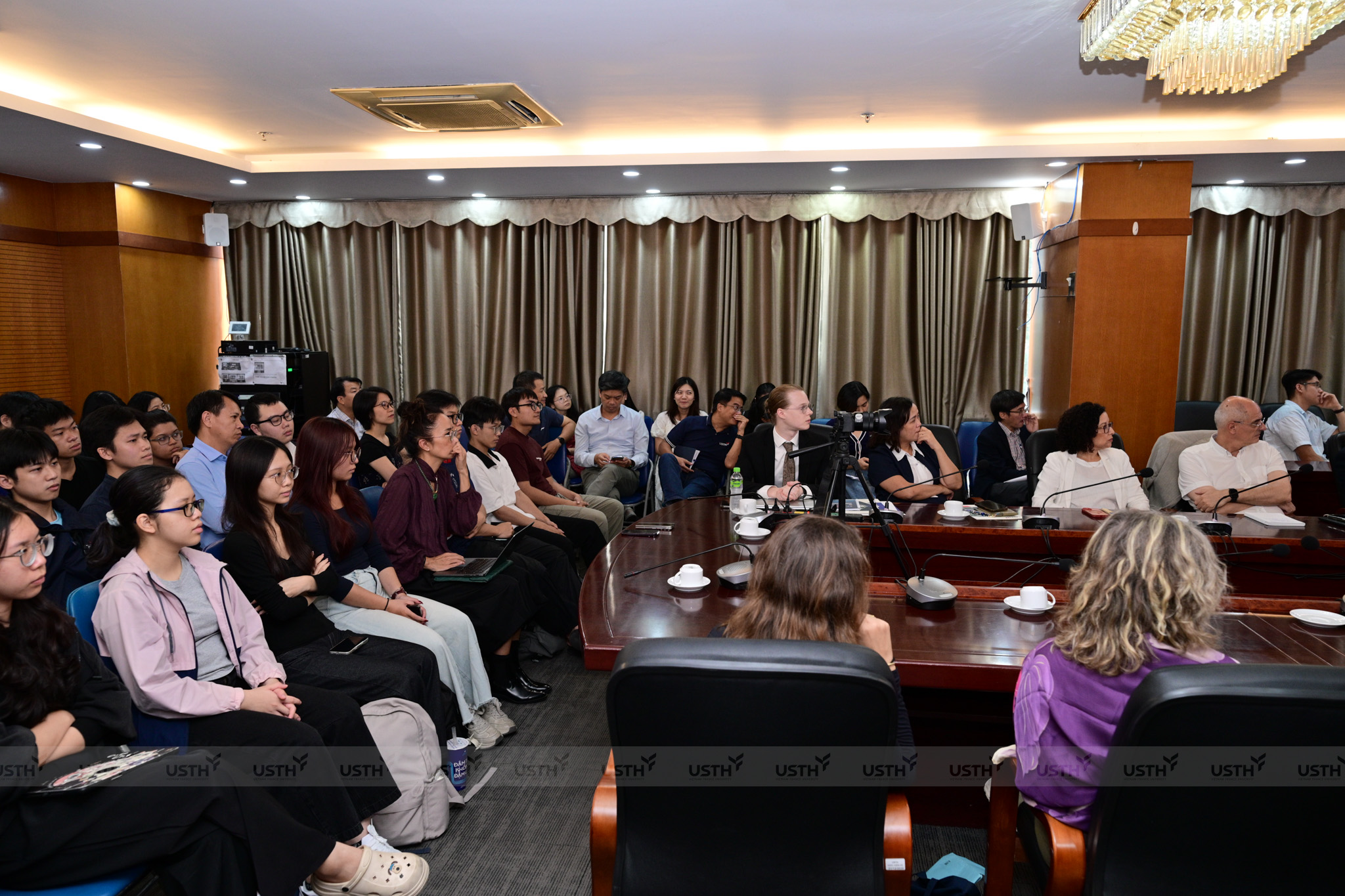
Among the project’s most significant discoveries was the identification of a large hidden void, known as the Big Void, announced in 2017, followed by the discovery of an approximately nine-metre-long corridor behind the pyramid’s northern face in 2023. These findings demonstrate how modern physics, advanced imaging technologies, and heritage research can work together to shed new light on the mysteries of ancient civilizations.
Drawing on these scientific discoveries, the lecture offered USTH faculty members and students valuable insights into how modern science and technology can address interdisciplinary challenges. It also highlighted emerging research opportunities at the intersection of natural sciences, technology, and cultural heritage preservation.
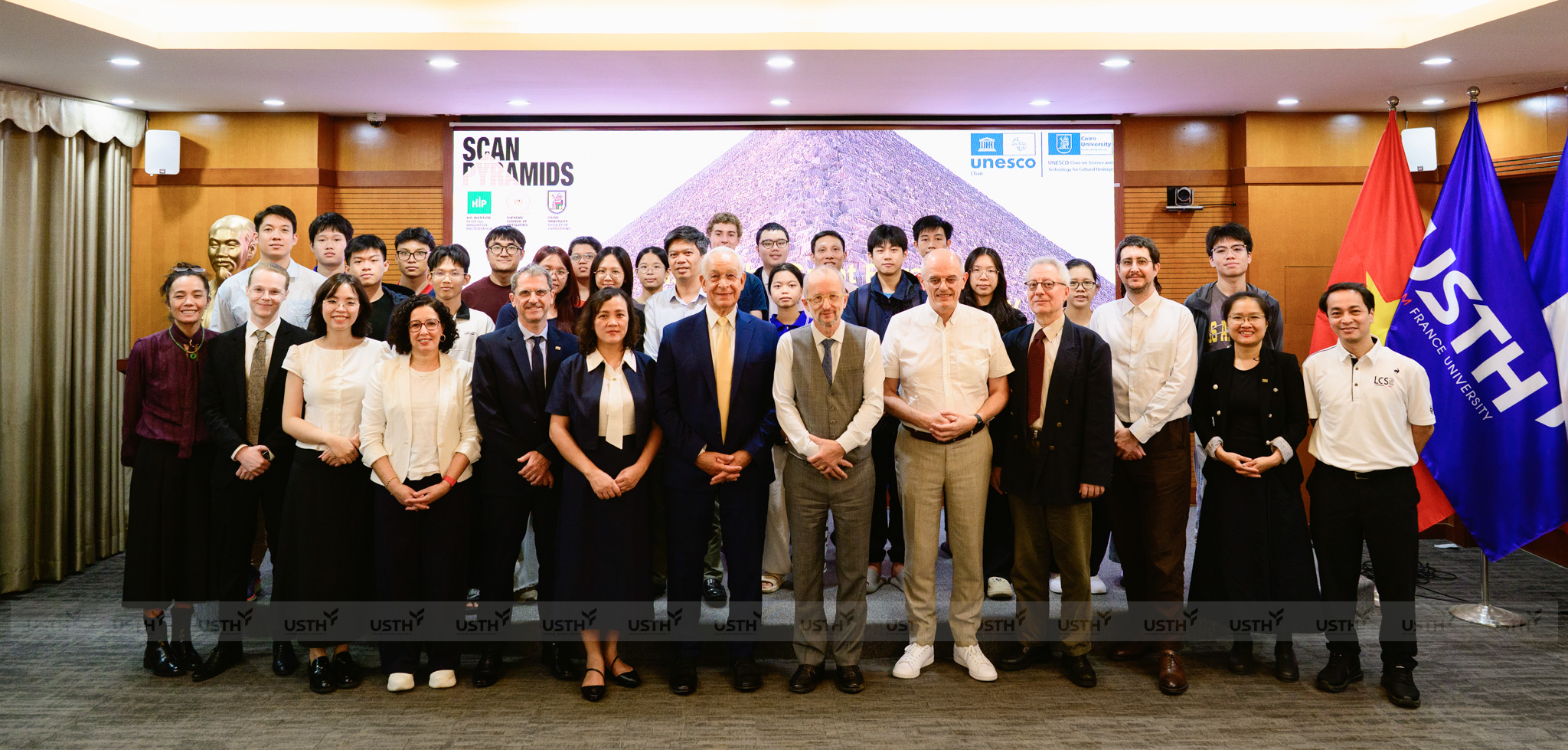
The visit by the Senghor University delegation provided an opportunity for both institutions to deepen their understanding of each other’s strengths and strategic priorities while laying the groundwork for future academic collaboration. With their shared institutional characteristics and international outlook, USTH and Senghor University are well positioned to explore cooperation opportunities, further strengthening educational and scientific ties across the Francophone community.