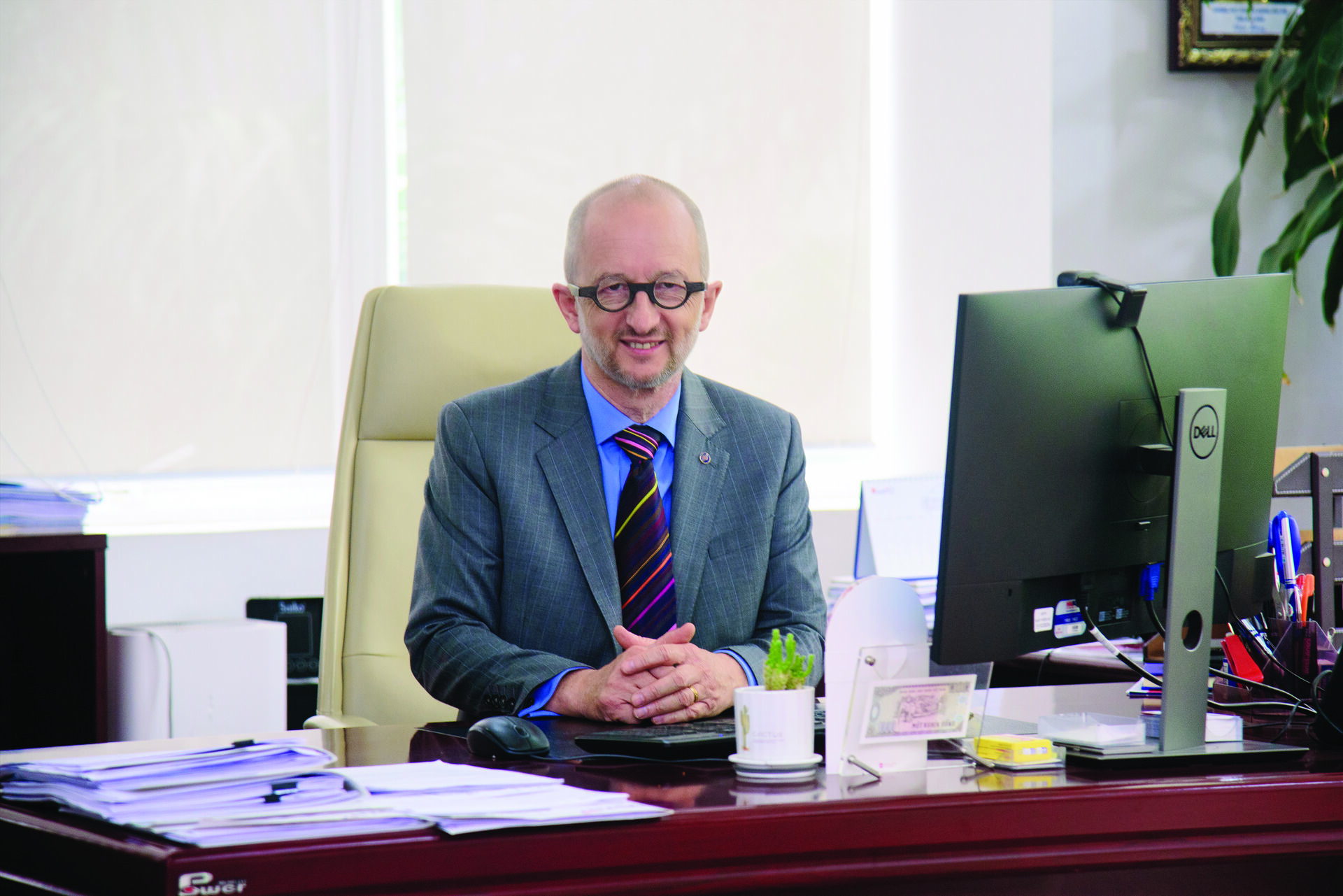
At the crossroads of Vietnam’s aspiration for transformation through science and technology and international standards, the University of Science and Technology of Hanoi (USTH) continues to grow and advance strongly. From student recruitment, quality accreditation, research and innovation to the expansion of academic programs aligned with Vietnam’s development strategy, Prof. Jean-Marc Lavest, Principal Rector of USTH, shares insights into the university’s achievements and the challenges ahead.
Could you share some of USTH’s recent major achievements?
Prof. Jean-Marc Lavest: The 2025–2026 academic year marks a particularly dynamic phase in USTH’s development, reflecting strong and comprehensive growth in many aspects. USTH’s rise to sixth place among Vietnam’s leading universities, while maintaining second position among institutions specializing in science and technology, represents not only a significant milestone but also clear evidence of the university’s transformation from a young institution into a reputable actor within Vietnam’s higher education system.
At the same time, this rapid growth brings new demands and challenges, particularly in increasing the number of enrollment while strengthening institutional structures and enhancing university governance. In 2025, USTH welcomed 1,200 new students across bachelor’s, master’s, and doctoral programs, bringing the training scale close to 4,000. Importantly, this growth is not only quantitative but also reflects an improvement in the quality of recruitment. Approximately 70 percent of admitted students selected USTH as their first or second choice, demonstrating growing trust among students and families in the university’s academic environment.
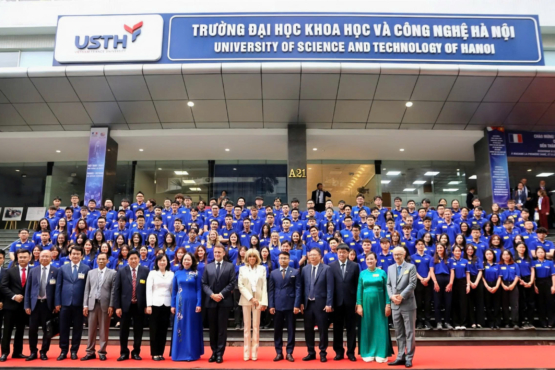
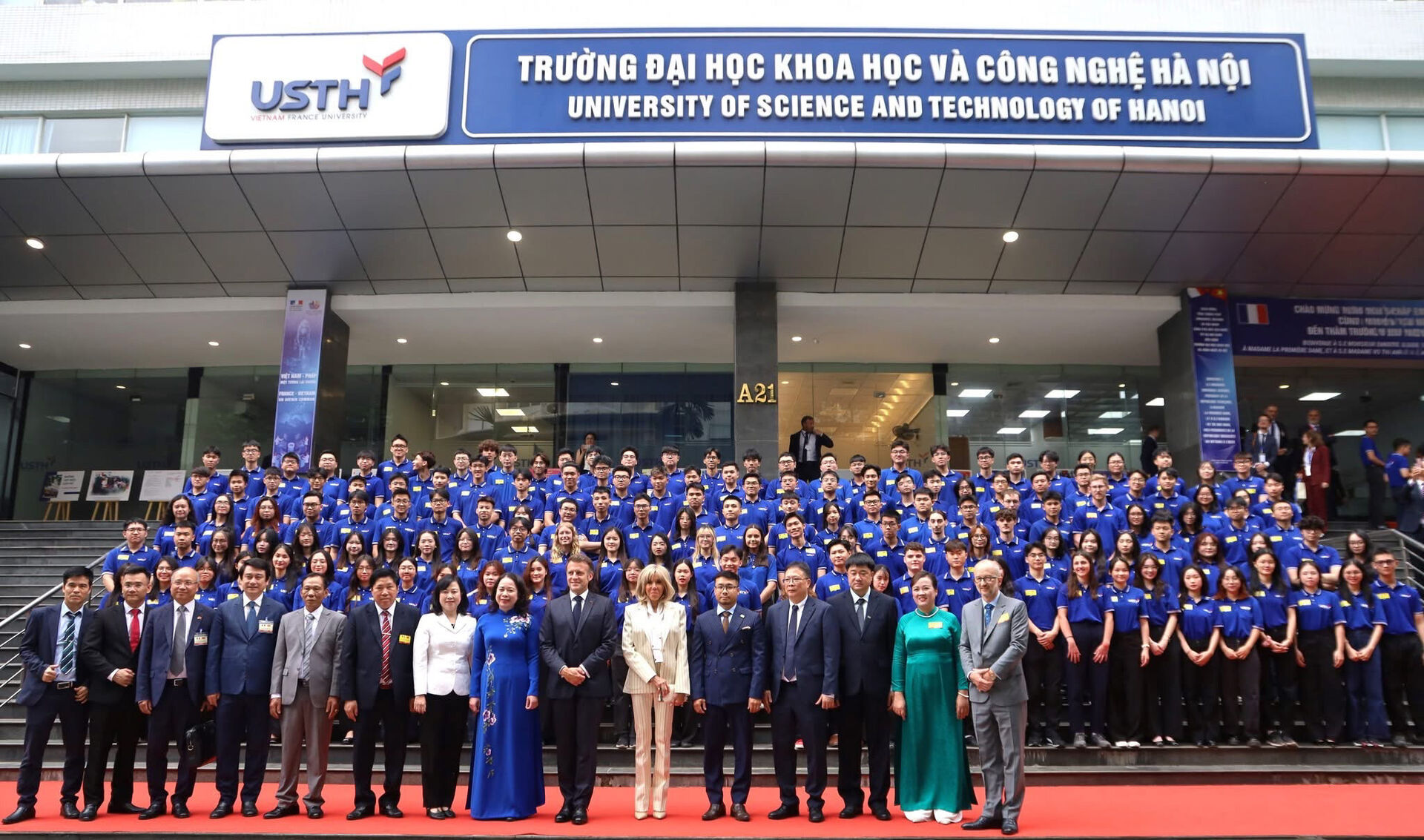
In 2025, USTH was honored to welcome the French President Emmanuel Macron and former Vietnamese Prime Minister Pham Minh Chinh to USTH. Their visits reaffirmed the university’s role in training high-quality human resources in science and technology while further strengthening the strategic partnership between Vietnam and France.
In an increasingly internationalized higher education landscape, USTH continues to attract students from around the world. The university hosted 150 international students, mainly from France for internships, academic exchanges, and research activities, while 120 USTH students participated in exchange programs in France and other countries. These two-way mobility initiatives are an essential part of our identity, reflecting both the quality of our training and the strength of our international partnerships.
Research remains a strategic pillar of USTH’s development. To date, the university has produced more than 1,000 publications in international scientific journals, with an annual output of 150 to 200 papers and an average research productivity of 1.4 SCIE-indexed publications per lecturers-researchers. This is an important indicator not only of scientific productivity, but also of the university’s growing international visibility.
What evaluation and accreditation approaches has USTH adopted to enhance quality?
Prof. Jean-Marc Lavest: Quality assurance plays a central role in USTH’s development strategy. Sometimes accreditation is seen simply as to obtain a label, but for us, it brings much deeper values. It is a substantive process of being evaluated by independent and international experts, which helps us to identify our strengths and areas for improvement.
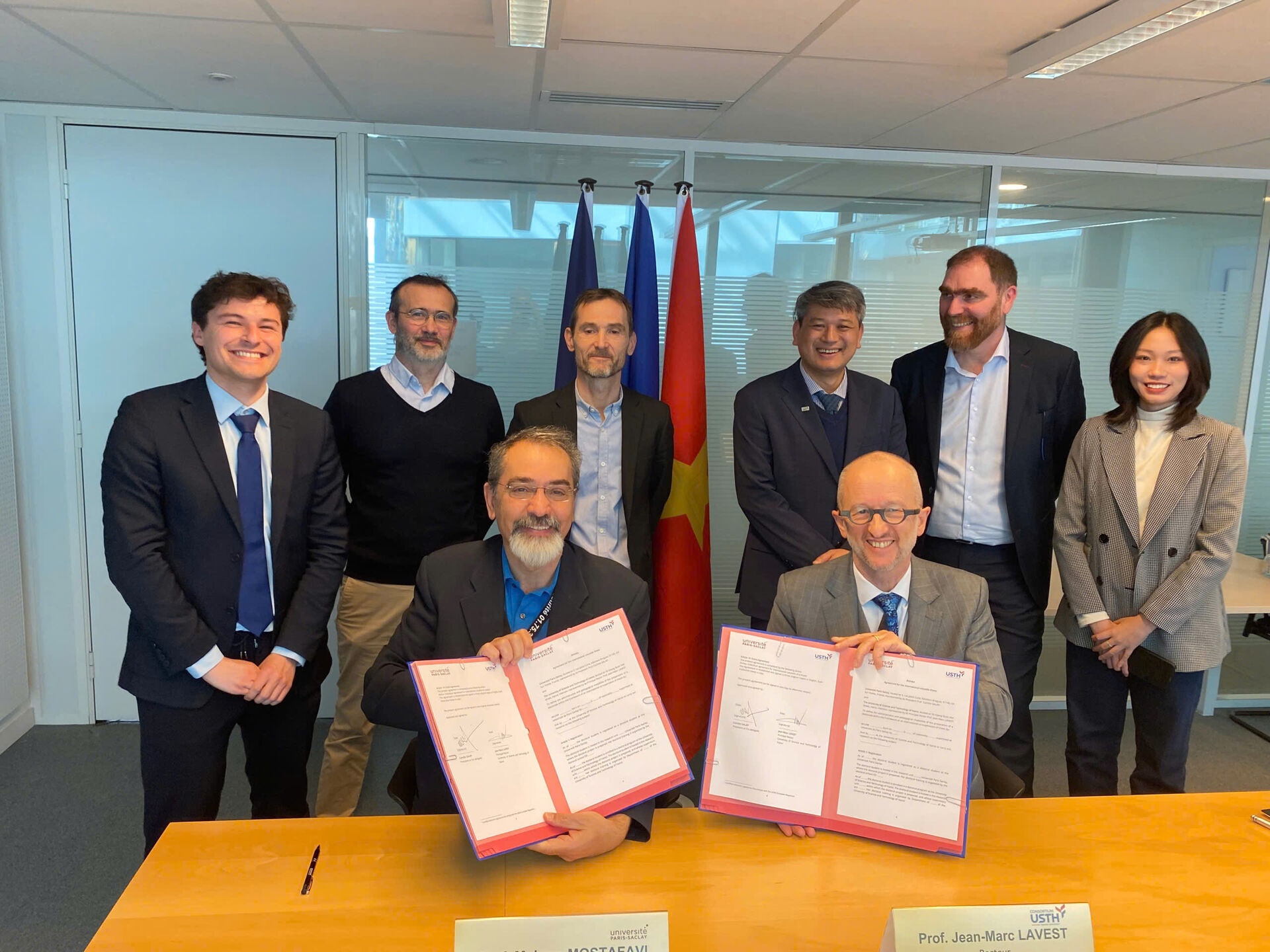
USTH has chosen to work with HCERES, a French accreditation organization recognized in Vietnam. We have been awarded institutional accreditation by HCERES for the period 2023–2028, which means USTH meets international standards across governance, training and research.
We aim to achieve international accreditation for all of our academic programs. Up to now eight programs have already been accredited, and we have set a target of obtaining accreditation for four new programs each year.
Accreditation is valuable in two complementary ways. First, it allows us to benchmark our activities against international standards and practices. Second, it provides concrete and actionable recommendations for improvement. This external perspective is essential, as it encourages continuous reflection, adaptation, and enhancement of our academic programs.
For this reason, accreditation is not simply a requirement for a university; we consider it a strategic governance instrument for strengthening our internal quality assurance system while reinforcing USTH’s credibility nationally and internationally.
Could you share USTH’s development direction for the coming years?
Prof. Jean-Marc Lavest: USTH’s development has been following a consistent vision: to become a leading university in Vietnam while affirming a distinctive international identity in training and research.
USTH has been steadily consolidating its position within Vietnam’s higher education system. In 2026, the university reached sixth place among Vietnam’s leading universities.
Our next objective is to enter international rankings. Preparations are underway for participation in major global rankings, including the QS Asia University Rankings, with the ambition of being listed by the 2027–2028 academic year.
At the same time, USTH continues to expand its international network. Beyond our long-standing French collaborations, USTH is strengthening cooperation with universities and research institutes in countries with advanced scientific and technological ecosystems such as Japan, South Korea, and Germany, through double programs, joint research projects, and faculty and student exchanges.
We are also placing strong emphasis on developing academic programs aligned with Vietnam’s emerging needs. Training high-quality human resources in science and technology has been at the core of USTH’s mission since its establishment. Our academic orientation is closely linked to Vietnam’s strategic development priorities, including nuclear energy, transport and logistics, and mineral resources.
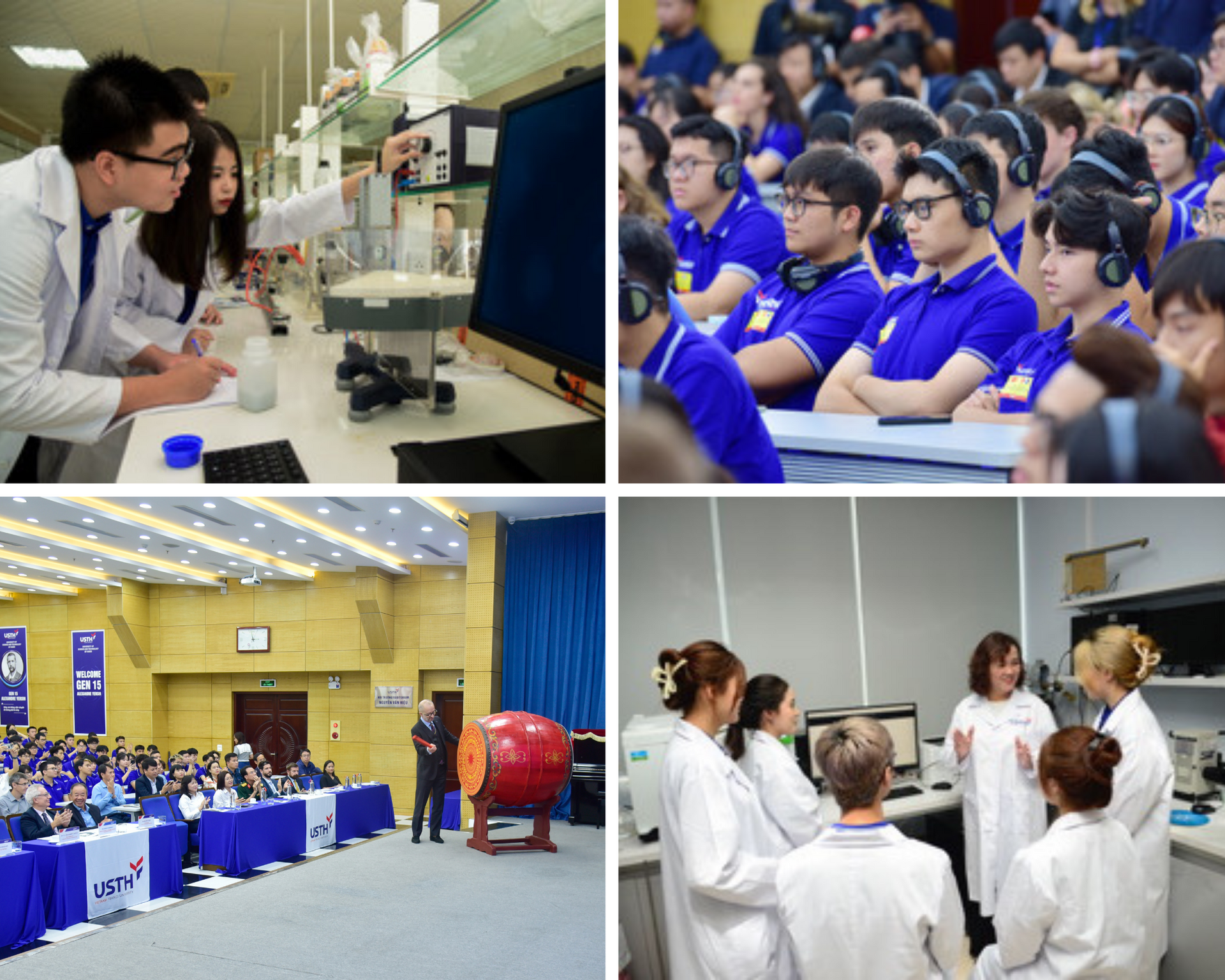
Besides, USTH continues investing in infrastructure to enhance conditions for learning, teaching, and research. In addition to our existing facilities, we have brought into operation the 2H building on the campus of the Vietnam Academy of Science and Technology, featuring state-of-art classrooms and laboratories, as well as open co-working space for students.
2026 marks your final year as Principal Rector of USTH. What priorities will you focus on during this period?
Prof. Jean-Marc Lavest: Although I am in the final year of my mandate, my core priorities remain unchanged. The focus is not on launching new personal initiatives, but on consolidating and strengthening the ongoing directions.
Our priorities remain clear: continuing accreditation efforts with HCERES, expanding our international partnerships, developing new academic programs, strengthening student recruitment, and building high qualified academic staff. To support our growth and further enhance academic quality, USTH continues to implement policies to attract talented academics and researchers with international teaching and research experience.
The construction of our campus in Hoa Lac High-Tech Park is currently underway and remains a strategic project for USTH’s long-term development.
For a university, every decision must be made with long-term vision, careful planning, and consistent implementation.
My priority is to ensure that USTH has a strong foundation so that it is well prepared for future challenges and can continue to enhance its position in the years ahead.
How do you assess USTH’s achievements in recent years?
Prof. Jean-Marc Lavest: What USTH has achieved today is the result of the shared commitment and collective efforts of our faculty, staff, and students. We have also benefited from the strong support of our governing body, the Vietnam Academy of Science and Technology, as well as from the close and longstanding cooperation between Vietnam and France.
Behind these achievements is the often quiet but tireless dedication of our faculty, researchers, and administrative and technical staff. Their commitment has laid the foundation on which USTH has grown and continues to develop.
In a university, decisions take time to show their full value and impact. What we are building together today will shape the foundation for the next stages of USTH’s development.
Ultimately, USTH’s strength does not lie only in rankings or accreditation. It lies in a shared vision and collective ambition, grounded in the partnership between Vietnam and France, to educate new generations of scientists and young professionals with expertise, a sense of responsibility, and a commitment to contributing to the country’s development.
Source: Le Courrier du Vietnam