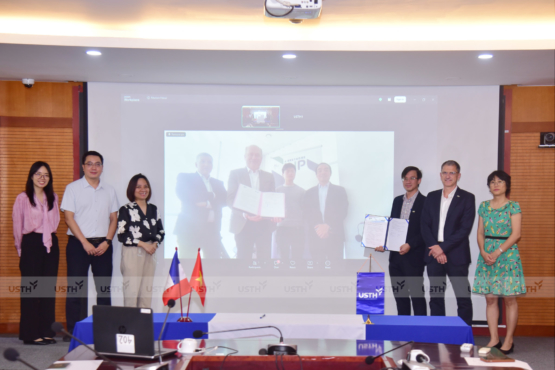
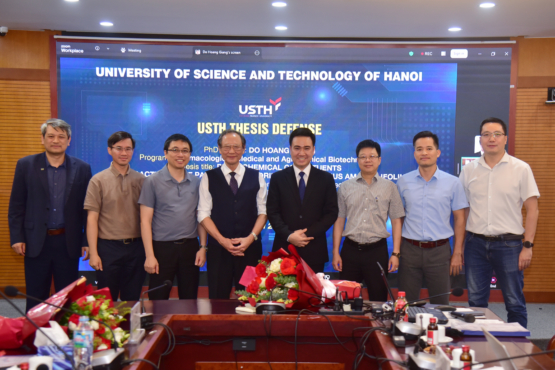
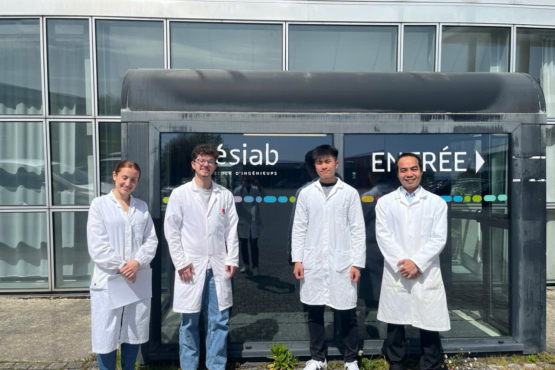
Three-month research internships at universities and research institutes in France and Italy have provided students from the Food Science and Technology (FST) programme at the University of Science and Technology of Hanoi (USTH) with valuable opportunities to engage in international research environments, strengthen scientific mindset and enhance professional expertise. The programme also reflects USTH’s expanding international academic network, which continues to create outstanding learning and research opportunities for students.
From USTH to leading European Universities and Research Institutes
In early May 2026, nearly 20% of final-year students from the Food Science and Technology (FST) program at USTH officially embarked on their journey abroad. Selected through a highly competitive process, these outstanding students earned placements at prestigious universities and research institutes in France and Italy, gaining first-hand experience in world-class academic environments before graduation.
Such international opportunities are made possible through the strategic partnerships established by USTH and its School of Life Sciences. Thanks to a strong network of collaborations with leading European professors and research institutions, the University has steadily strengthened its international reputation while showcasing the academic quality and research capabilities of its FST students. These long-standing partnerships continue to open doors for students to join internationally recognised research laboratories and universities.
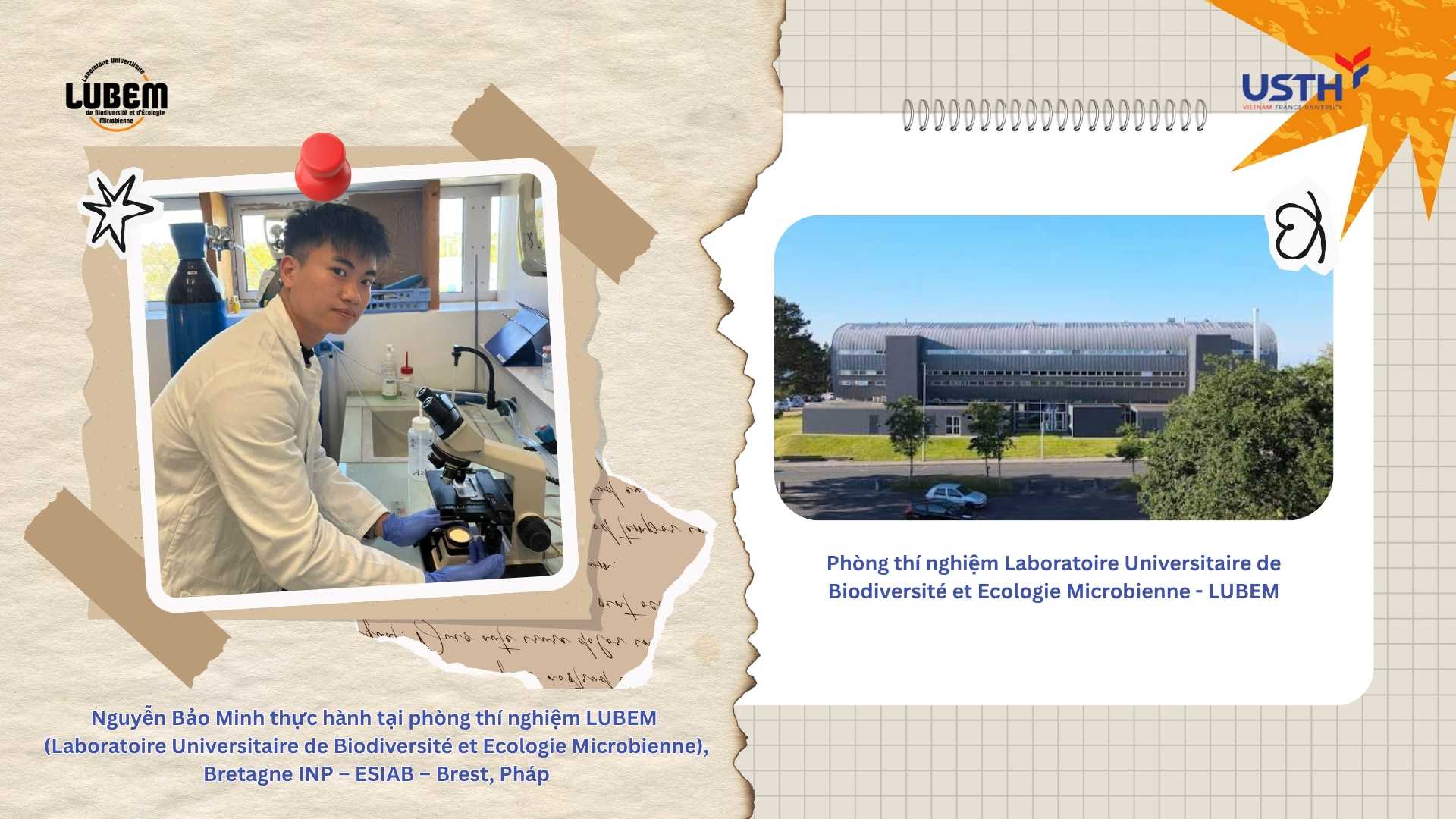
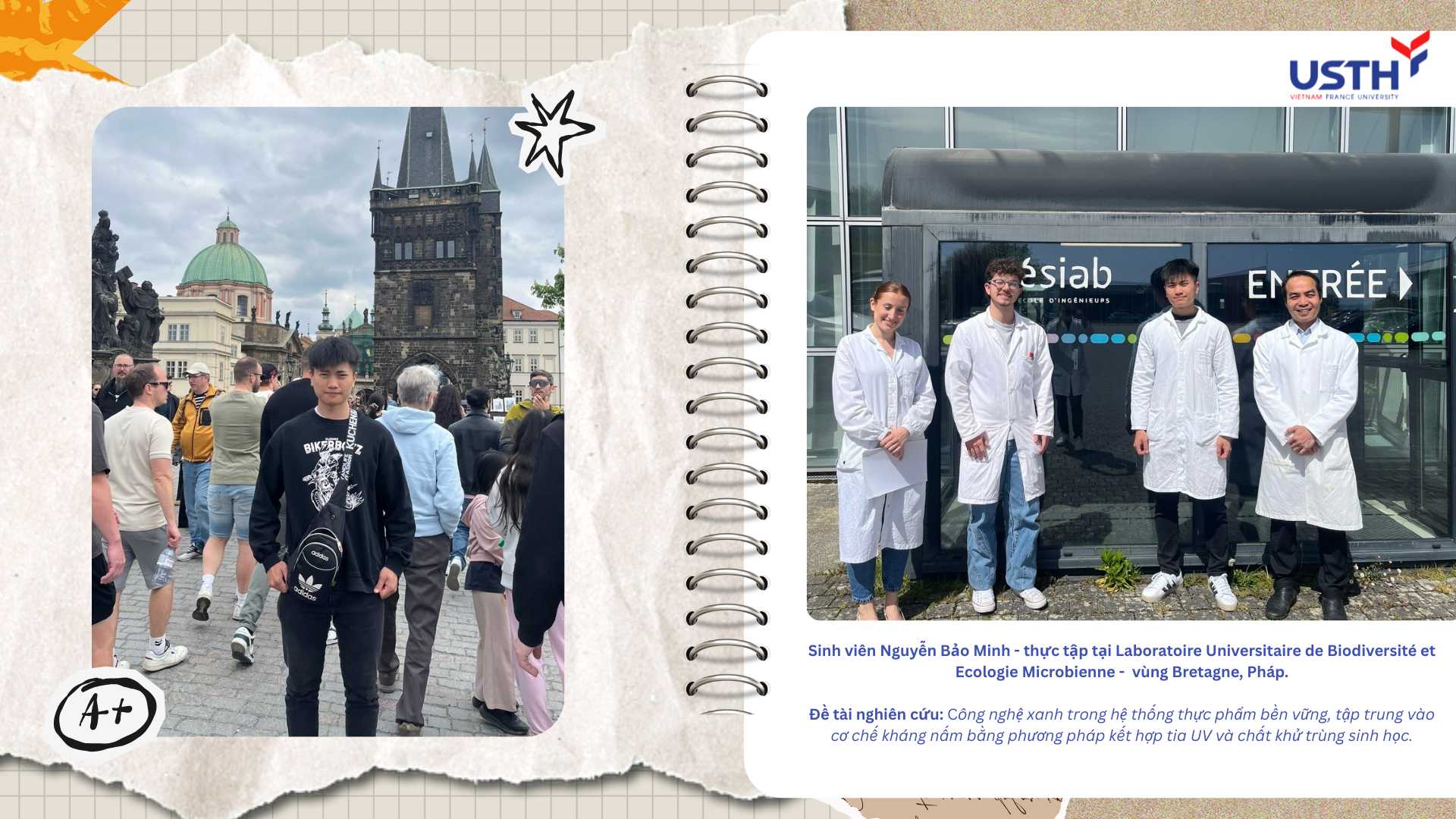
In France, a group of USTH interns is conducting research at the Laboratoire Universitaire de Biodiversité et Ecologie Microbienne (LUBEM), a leading research laboratory under the Université de Bretagne Occidentale (UBO). Rather than focusing solely on laboratory techniques, LUBEM is renowned as one of Europe’s leading centers for deciphering harmful microbiota and addressing the challenges of food preservation and spoilage prevention.
One of the programme’s greatest strengths lies in its close collaboration with ADRIA, one of France’s leading food technology centres, where scientific research is closely connected with industrial applications. Within this professional research environment, USTH students are directly involved in projects developing sustainable food preservation technologies, including the combination of ultraviolet (UV) treatment and biological disinfectants as environmentally friendly alternatives to conventional chemical preservatives. Through these projects, students gain invaluable insight into the entire research and innovation process, from laboratory experiments to real-world industrial applications.
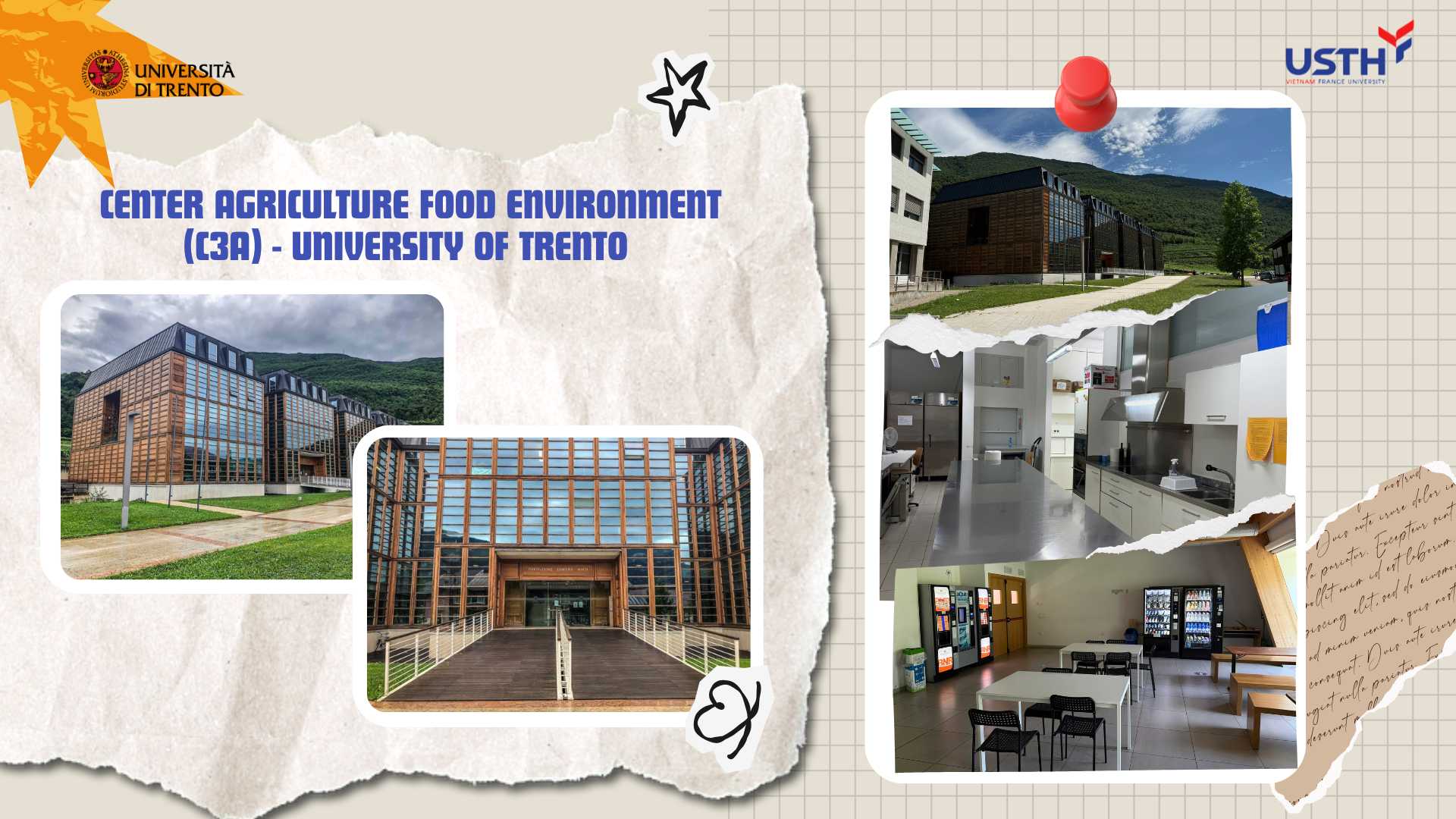
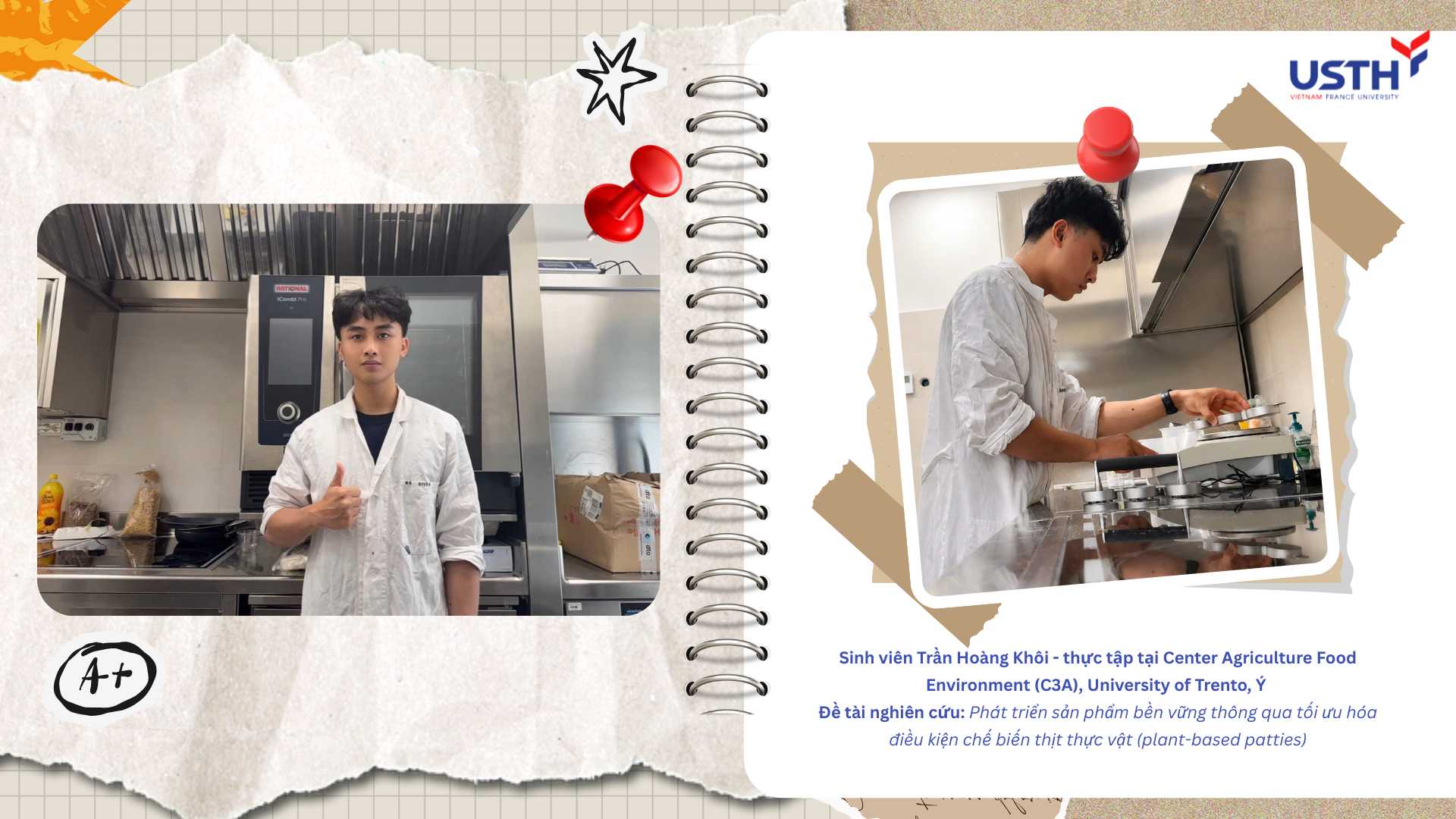
Beyond France, USTH’s international collaboration network also extends to Italy through partnerships with leading higher education and research institutions. One of them is the Center Agriculture Food Environment (C3A) at the University of Trento, which is ranked among Italy’s leading institutions in Agriculture, Forestry and Veterinary Sciences (Censis Rankings) and placed in the 251–300 range worldwide for Life Sciences in the Times Higher Education World University Rankings 2026. C3A operates in close partnership with the Fondazione Edmund Mach, one of Europe’s most prestigious agricultural research and technology transfer institutes. Together, they offer an open and interdisciplinary research environment where scientific discovery goes hand in hand with technological innovation.
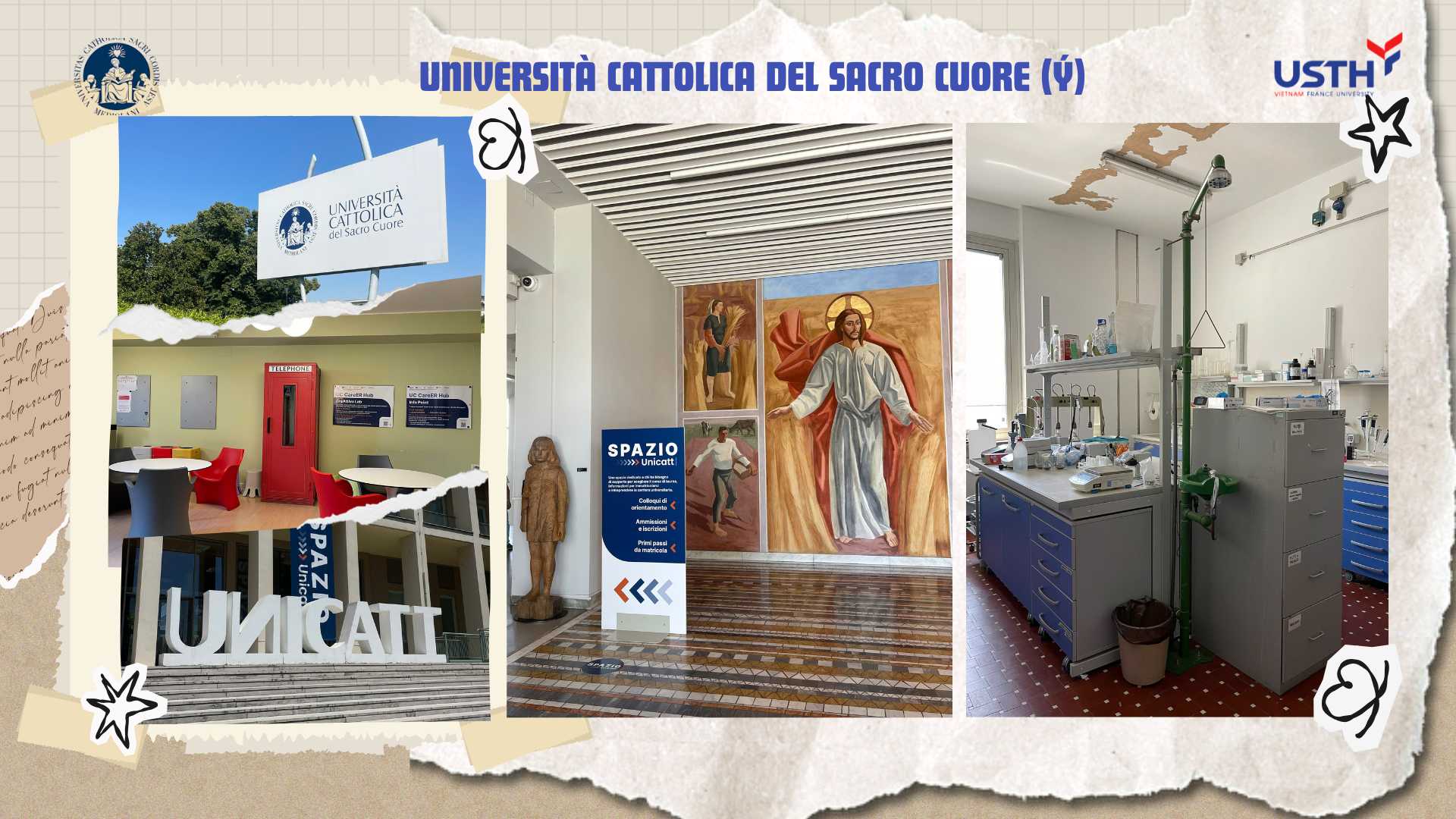
Another milestone in USTH’s international cooperation is its comprehensive partnership with the Università Cattolica del Sacro Cuore, the largest private university in Europe. According to the Times Higher Education World University Rankings 2026, the University is ranked among the world’s top 401–500 institutions and is widely recognised for its strengths in Life Sciences, Agriculture and Food Science. Through this partnership, USTH students have the opportunity to undertake research internships, work alongside leading international scientists and gain hands-on experience with cutting-edge technologies shaping the future of food science.
Hands-on research experience in European Laboratories
Securing an international research internship requires far more than academic ambition. To meet the rigorous selection standards of partner institutions in France and Italy, USTH Food Science and Technology students undergo thorough preparation and demonstrate strong academic performance, research potential and professional competence.
Before departing for Europe, students work closely with Dr Pham Hoang Nam, Head of the Food Science and Technology Department at USTH, as well as professors from the host institutions, to develop research proposals addressing current scientific and industrial challenges. Rather than undertaking conventional laboratory exercises, they are encouraged to explore emerging research topics with practical applications, laying a solid foundation for their internship projects.
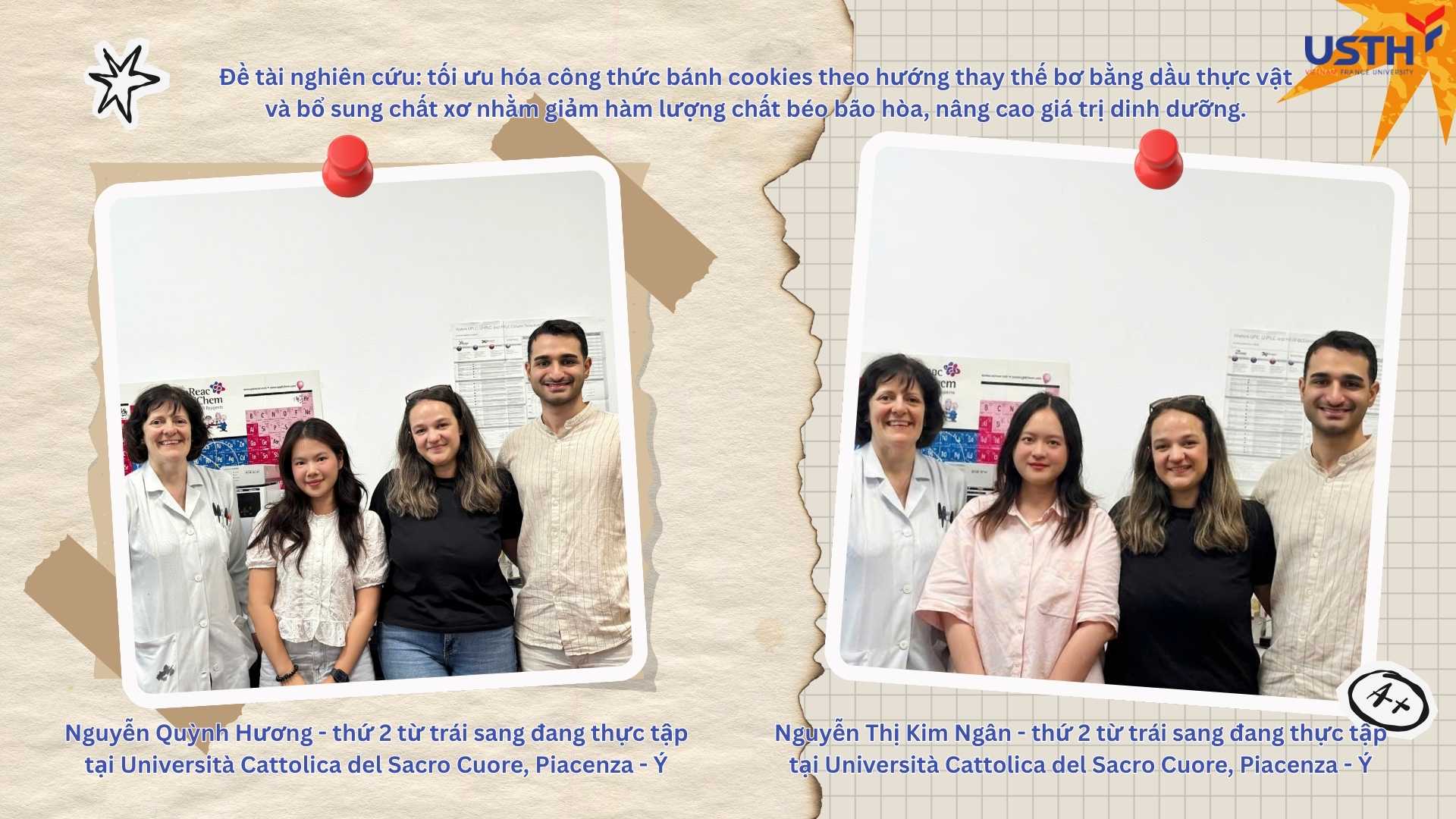
While enthusiasm and initiative are important qualities, they must be supported by strong academic achievements and English proficiency. Students selected for international internships are expected to demonstrate an outstanding academic record that meets the admission criteria of overseas universities and research institutes. Equally important, USTH’s English-medium learning environment enables students to communicate confidently in academic and professional settings, allowing them to integrate quickly into international research teams.
In addition to academic knowledge, USTH places strong emphasis on developing students’ professional skills and research readiness. During their internships, students work full-time in research laboratories, typically from 9:00 a.m. to 5:00 p.m., contributing directly to ongoing scientific projects. Thanks to extensive laboratory training at USTH, familiarity with advanced scientific equipment, and comprehensive instruction in laboratory safety procedures, they are well prepared to adapt quickly to new facilities and research protocols.
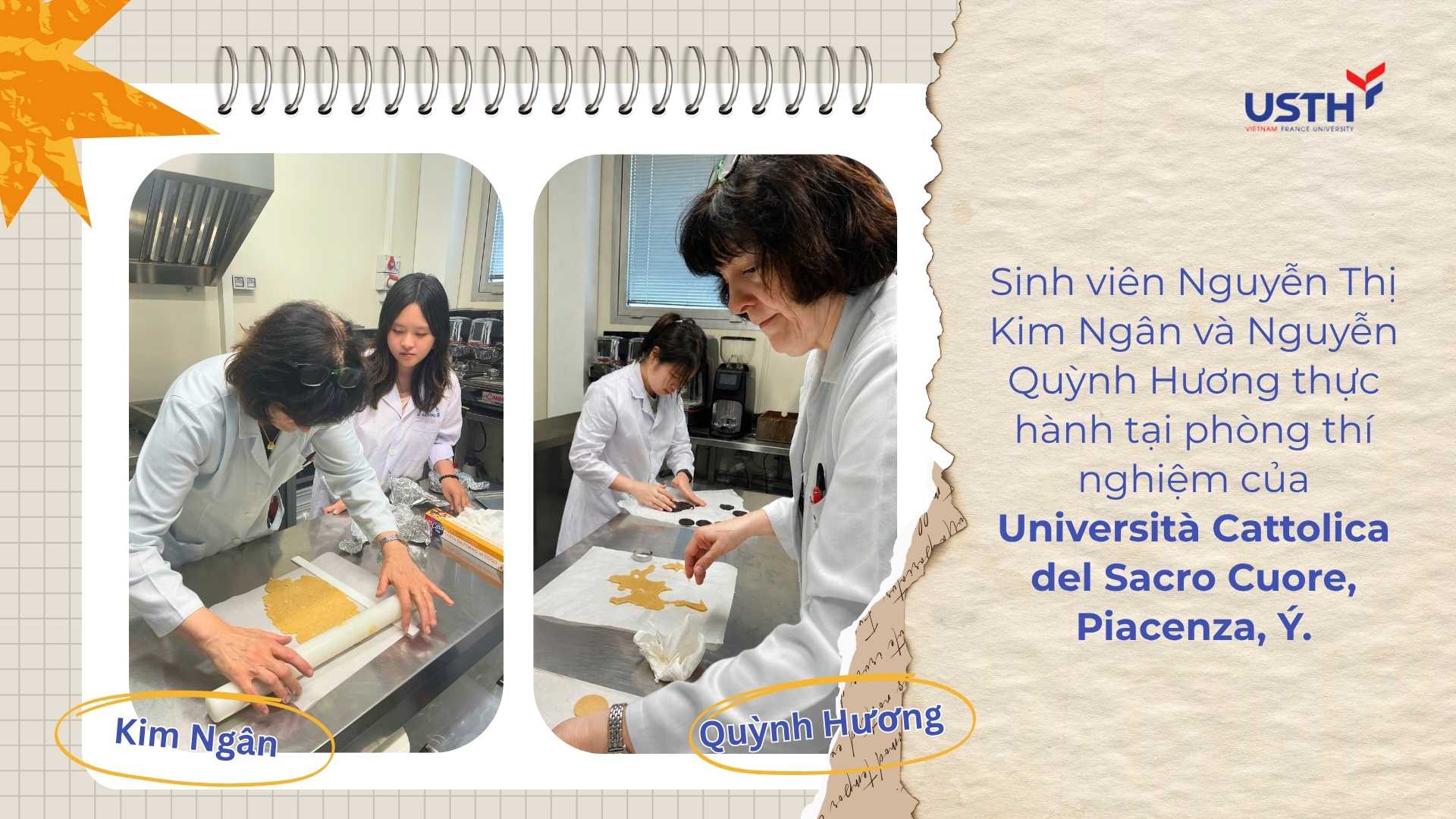
Beyond strengthening their technical expertise, the internships also foster independent research, teamwork, and problem-solving skills. From designing experimental protocols and analysing data to presenting research findings and exchanging ideas with international scientists, every stage of the internship helps students gain a deeper understanding of scientific research while preparing them for future academic and professional careers.
Adapting and thriving in an international research environment
Moving to Europe for a research internship marked an exciting new chapter for the students, while also presenting them with new academic, cultural and personal challenges. From adapting to the unpredictable summer weather in France to adjusting to the significant temperature differences between day and night in northern Italy, every experience encouraged them to become more independent and resilient.
Although English was the primary language used in laboratories and academic settings, students also embraced the opportunity to learn basic expressions in French and Italian and made use of translation applications to communicate more effectively in their daily lives. These small efforts not only helped them adapt more quickly but also enriched their experience of living and studying abroad.
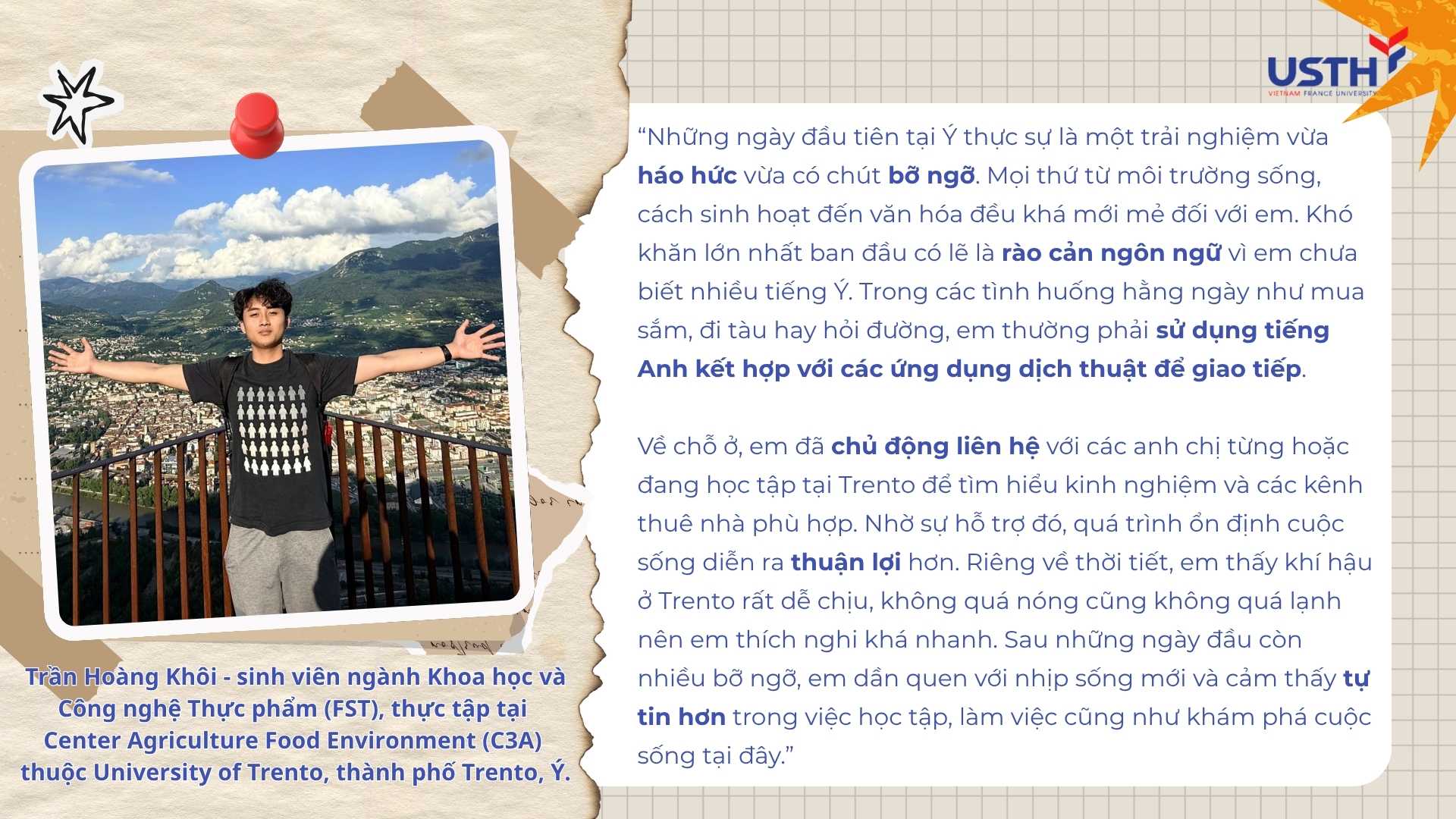
A key factor in helping the students settle into their new environment was the comprehensive support provided by USTH, academic staff and the University’s alumni network. Before departure, the Office of Research, Innovation and International Affairs, together with the Department of Life Sciences, assisted students with administrative procedures, including visa applications, insurance arrangements and pre-departure training covering laboratory safety and essential research skills.
For Nguyen Bao Minh, the transition to France was made significantly easier thanks to the support of Associate Professor Ho Van Son, the first expert from the INP Bretagne Network to join USTH and a lecturer in the University’s Master’s Programme in Food Safety and Quality Assurance (FSQA). From preparing administrative documents and finding accommodation to connecting students with the Vietnamese community in France, Associate Professor Ho Van Son provided invaluable guidance throughout the process. Upon arriving in Brest, Minh was personally welcomed and introduced to both the research environment and daily life, allowing him to settle in quickly and begin his internship with confidence.
The USTH alumni community also plays an important role in supporting new generations of students. Nguyen Quynh Huong shared that advice from senior students who had previously completed internships at the Università Cattolica del Sacro Cuore helped her gain a clear understanding of the research environment and secure suitable accommodation well before the programme began.
For the students, the internship extends far beyond academic training. Living and conducting research abroad has strengthened their independence, adaptability and problem-solving abilities—essential qualities for future scientists and engineers in an increasingly globalised world.
Lessons from international internships for the next generation of FST students
The three-month internships in France and Italy have provided FST students with far more than advanced scientific knowledge and laboratory experience. They have also offered valuable lessons in initiative, adaptability and intercultural collaboration—qualities that will continue to benefit them throughout their academic and professional journeys.
Reflecting on their experience, the students emphasise that careful preparation, both academically and personally, is essential for making the most of an international internship. Furthermore, foreign language proficiency is considered the “key” to fully leveraging study-abroad opportunities. Yet, most important of all is the willingness to step out of one’s comfort zone and embrace the working methods and scientific mindsets found in multinational research teams.
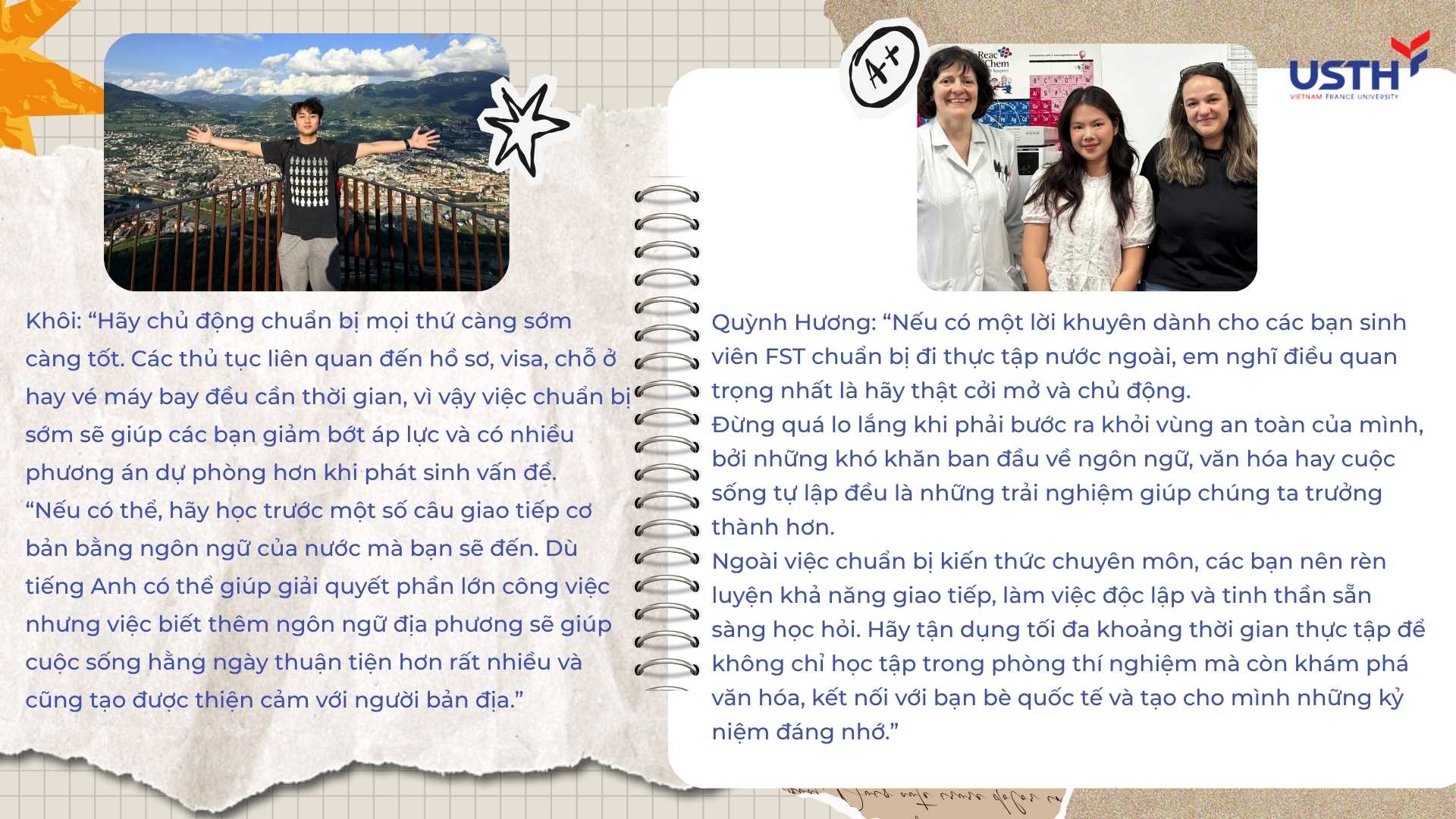
These internships represent more than a memorable milestone in each student’s university journey. They also demonstrate USTH’s educational philosophy, which integrates research excellence with international collaboration. Through an extensive network of partnerships with leading universities and research institutes worldwide, the University enables students to engage with cutting-edge research, develop independent scientific thinking, and build a strong foundation for future careers in academia and industry.
For high school students passionate about food science and its real-world applications, the achievements of today’s FST students illustrate what is possible through a USTH education. Beyond classroom learning, students have opportunities to conduct research in international laboratories, collaborate with renowned scientists in France, Italy and other European countries, and graduate with both the scientific expertise and global perspective needed to succeed in an increasingly interconnected world.
Your international journey in Food Science and Technology could begin at USTH!