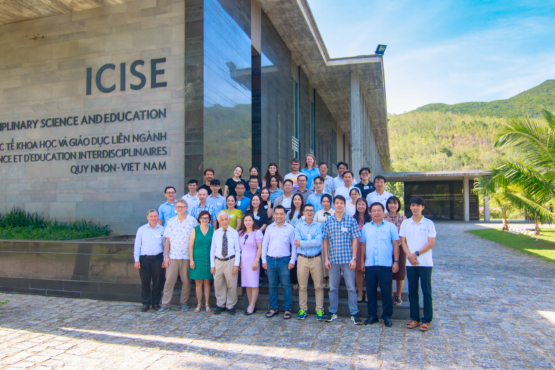
Continuing the mission to strengthen Vietnam’s space science capabilities, the 5th Vietnam School on Earth Observation (VSEO-5) officially opened on October 13, 2025, at the International Center for Interdisciplinary Science and Education (ICISE) in Quy Nhon, focusing on the innovative field of satellite-based ocean monitoring.
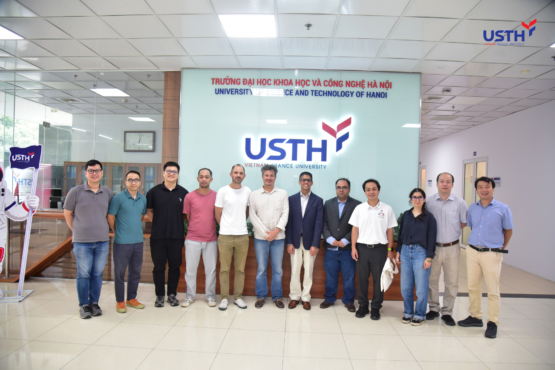
Gathering nearly 50 scholars and researchers from Vietnam, France, and the Philippines, this year’s school centered on the theme: “Monitoring the ocean colour using remote sensing data.” Running from October 13 to 17, the program provided a comprehensive platform for participants to delve into the transformative potential of Earth observation in understanding marine ecosystems. The VSEO-5 is a flagship collaborative initiative organized by the Rencontres du Vietnam, ICISE, with contributions from French institutions (including CNES, CNRS, IRD, and universities) and Space and Earth Sciences department of USTH (University of Science and Technology of Hanoi).

A Strategic Milestone in Vietnam’s New Era of Science
The opening of VSEO-5 took place in a particularly special context for the nation’s scientific community. Speaking at the ceremony, Prof. Tran Thanh Van, founder of the Rencontres du Vietnam and ICISE, highlighted that 2025 marks a turning point following the recent launch of a major national reform. He noted that with the introduction of Resolution 57, science and technology have been officially positioned as the foundation for national development in Vietnam’s “New Era.”

In this unique context, Prof. Van emphasized that the school’s mission to bring international scientists to Vietnam to share the latest discoveries has become more vital than ever. By fostering an open atmosphere for collaboration, VSEO-5 serves as a concrete step in attracting global talent and nurturing the high-tech workforce required for the country’s ambitious development goals.
Bridging Satellite Data with Marine Conservation
In the face of global climate change, satellite remote sensing has emerged as an indispensable tool for Vietnam. VSEO-5 addressed this by providing specialized training on “ocean colour,” a scientific indicator that reveals the concentration of phytoplankton, suspended solids, and organic carbon in seawater. By observing these parameters from space, scientists can estimate optical-biological and biogeochemical changes, which are essential for monitoring seawater quality and species characteristics in coastal areas.
The curriculum was meticulously designed to bridge the gap between theory and practice. Participants engaged in deep-dive sessions on the theoretical foundations of ocean radiance and participated in guided lab work focused on processing complex satellite data. Furthermore, practical field exercises allowed the researchers to validate remote sensing models with real-world marine conditions, ensuring that the knowledge gained could be directly applied to Vietnam’s unique coastal challenges and resource management.
The Hub of International Expertise and USTH’s Vision
VSEO-5 served as a high-level forum featuring renowned scientists such as Prof. Cédric Jamet and Prof. Hubert Loisel from the Laboratory of Oceanography and Earth Sciences, University of Littoral Côte d’Opale (France); Prof. Sylvain Ouillon, Head of the representative office of the French National Research Institute for Sustainable Development (IRD) in Vietnam; Remote Sensing Expert from GFD Company Dinh Ngoc Dat; and Assoc. Prof. Nguyen Thi Thu Ha from the University of Science, Vietnam National University.

First launched in 2018 through a collaboration of French and Vietnamese scientists, the VSEO series has grown steadily each year, with the Department of Space and Earth Sciences of USTH playing a key role as a co-organizer. USTH hopes that through initiatives like VSEO, young researchers in Vietnam will have greater opportunities to learn from leading experts in remote sensing and Earth observation, thereby helping to cultivate the next generation of scientists for Vietnam.
The success of VSEO-5 reaffirms USTH’s commitment to being a leader in space science education, fostering the talent needed to tackle environmental challenges and contribute to the sustainable development of the nation in this new era of scientific growth.