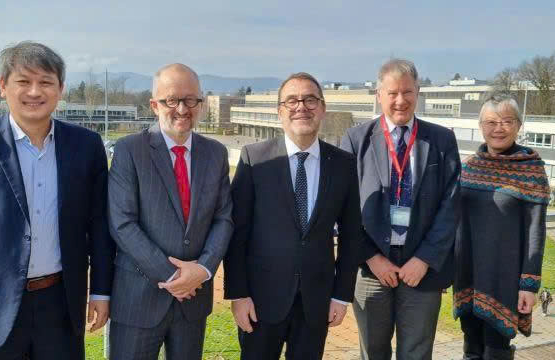
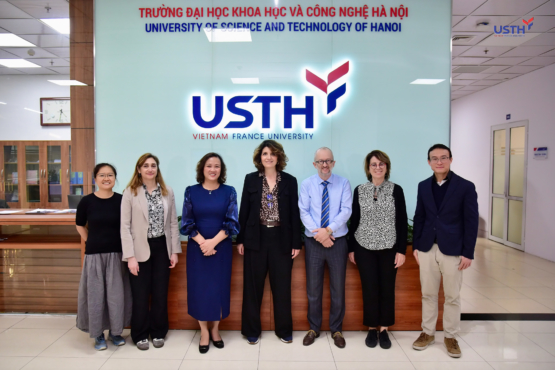
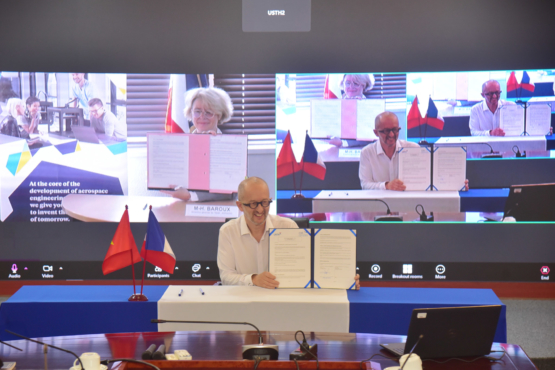
On November 7, 2025, the University of Science and Technology of Hanoi (USTH) and the Institut National des Sciences et Techniques Nucléaires (INSTN) — part of the French Alternative Energies and Atomic Energy Commission (CEA) — officially signed a cooperation agreement to jointly develop education and research programs in the field of energy, with particular emphasis on nuclear energy.
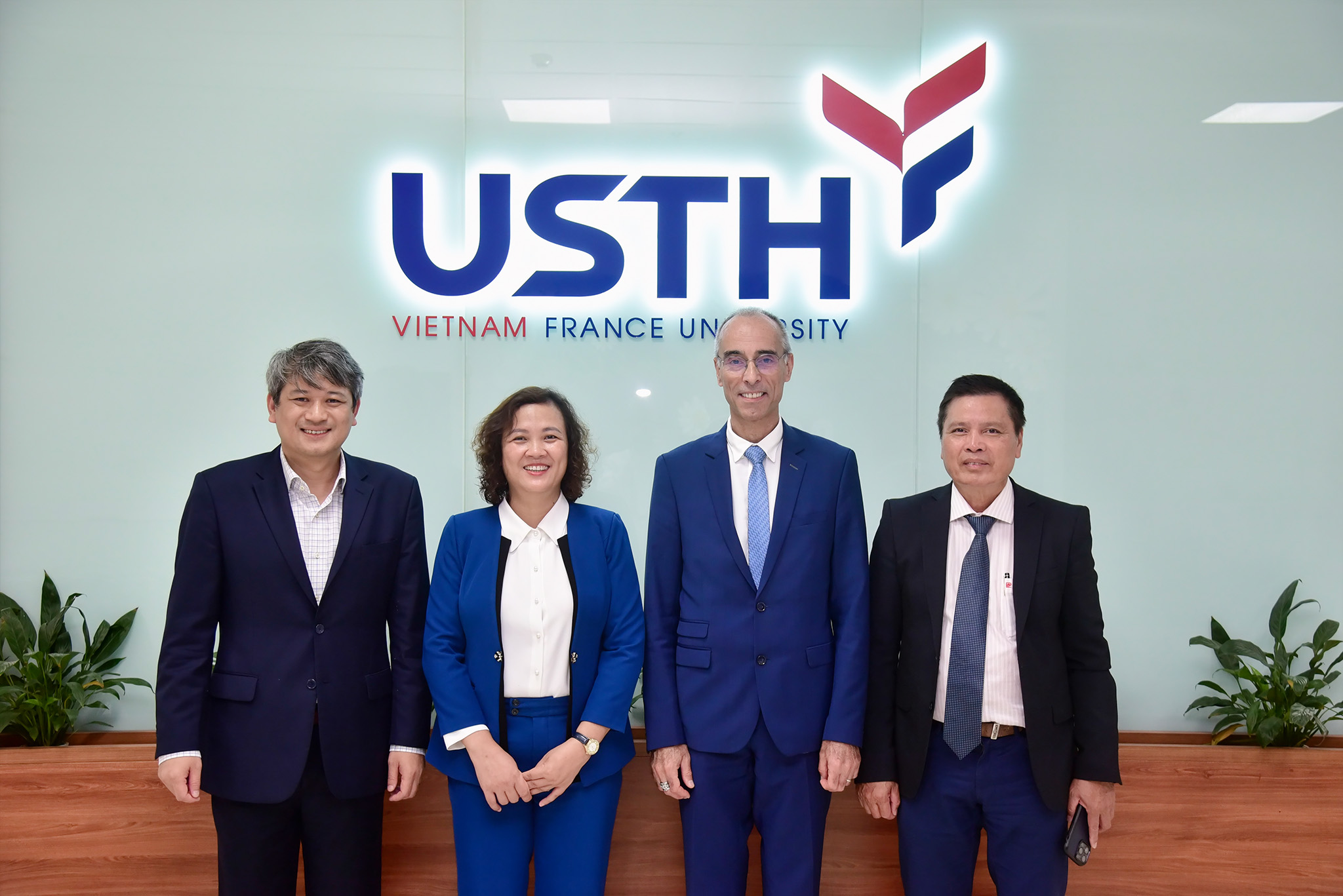
Representing INSTN at the signing ceremony were Prof. Tran Quoc Tuan – Professor at INSTN (Université Paris-Saclay), Research Director, Senior Scientist, and International Expert at the CEA, and Mr. Xavier Perrette – Vice President for International Relations at INSTN, CEA. On behalf of USTH, Prof. Dinh Thi Mai Thanh – Rector and Assoc. Prof. Tran Dinh Phong – Vice-Rector, attended and signed the agreement.
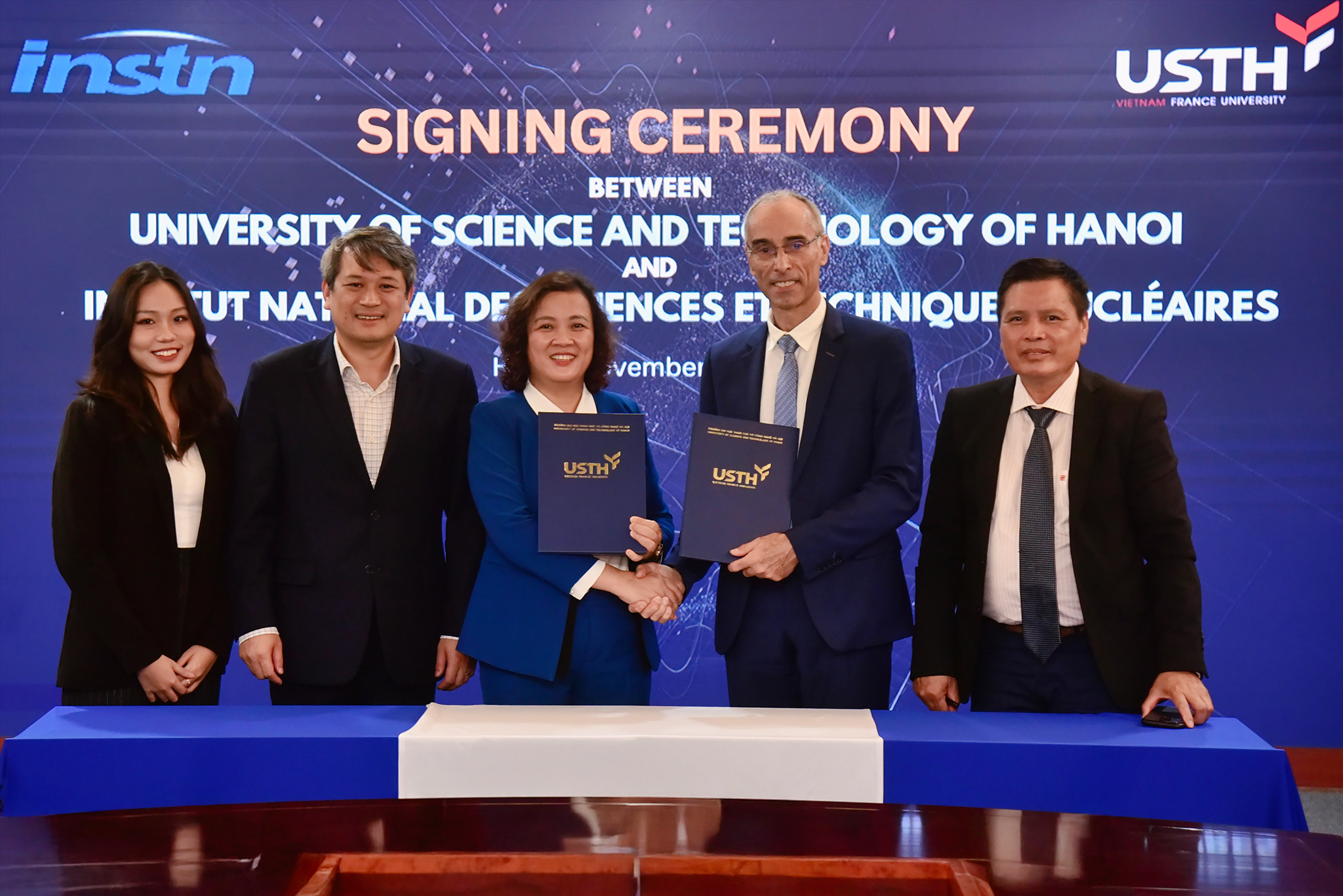
The signing was conducted based on the Memorandum of Understanding between the Vietnam Academy of Science and Technology and the CEA, signed on June 6, 2025, which aims to strengthen collaboration in training, research, and knowledge transfer between two leading institutions of science and technology in Vietnam and France.
In their remarks, representatives of both institutions expressed their pleasure at this important milestone in the partnership between USTH and INSTN. They shared the belief that the agreement would open up numerous opportunities for deeper cooperation in training and research, thereby contributing to the development of high-quality human resources that support Vietnam’s national energy security strategy and sustainable development goals.
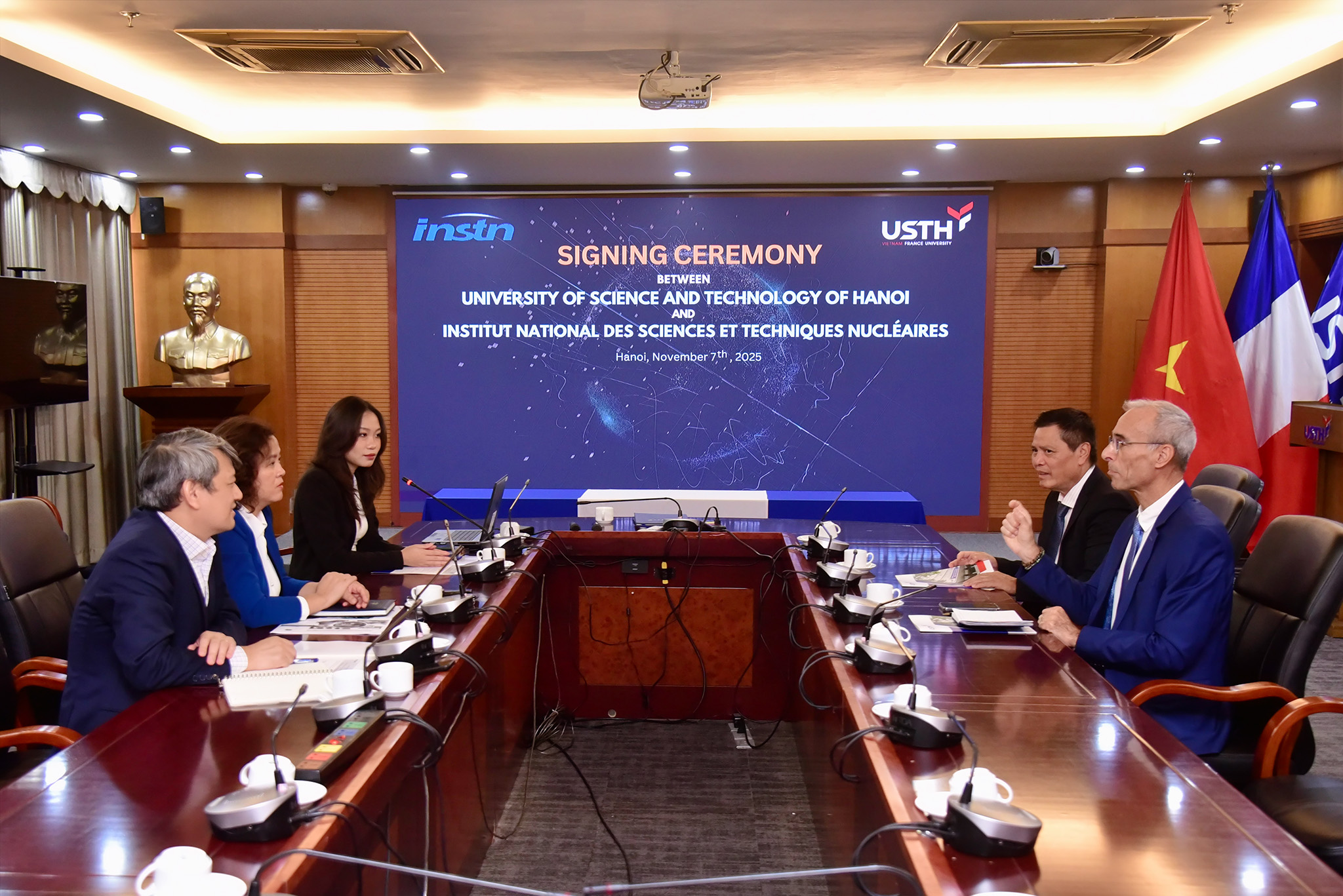
The agreement establishes a comprehensive framework for collaboration in training, focusing on nuclear energy and nuclear engineering, renewable energy, and modern energy systems and technologies. Both institutions will cooperate to develop and deliver high-quality academic programs, promote the exchange of students and lecturers, organize specialized training courses and workshops, develop teaching materials and online learning tools, and enhance the communication activities on the outcomes of their cooperation.
A central objective of the partnership is to jointly develop a Bachelor’s Program in Nuclear Engineering at USTH. This program is designed to equip students with solid theoretical knowledge, practical skills, and proficiency in both English and French, enabling them to pursue Master’s or Engineering programs in Nuclear Energy in France.
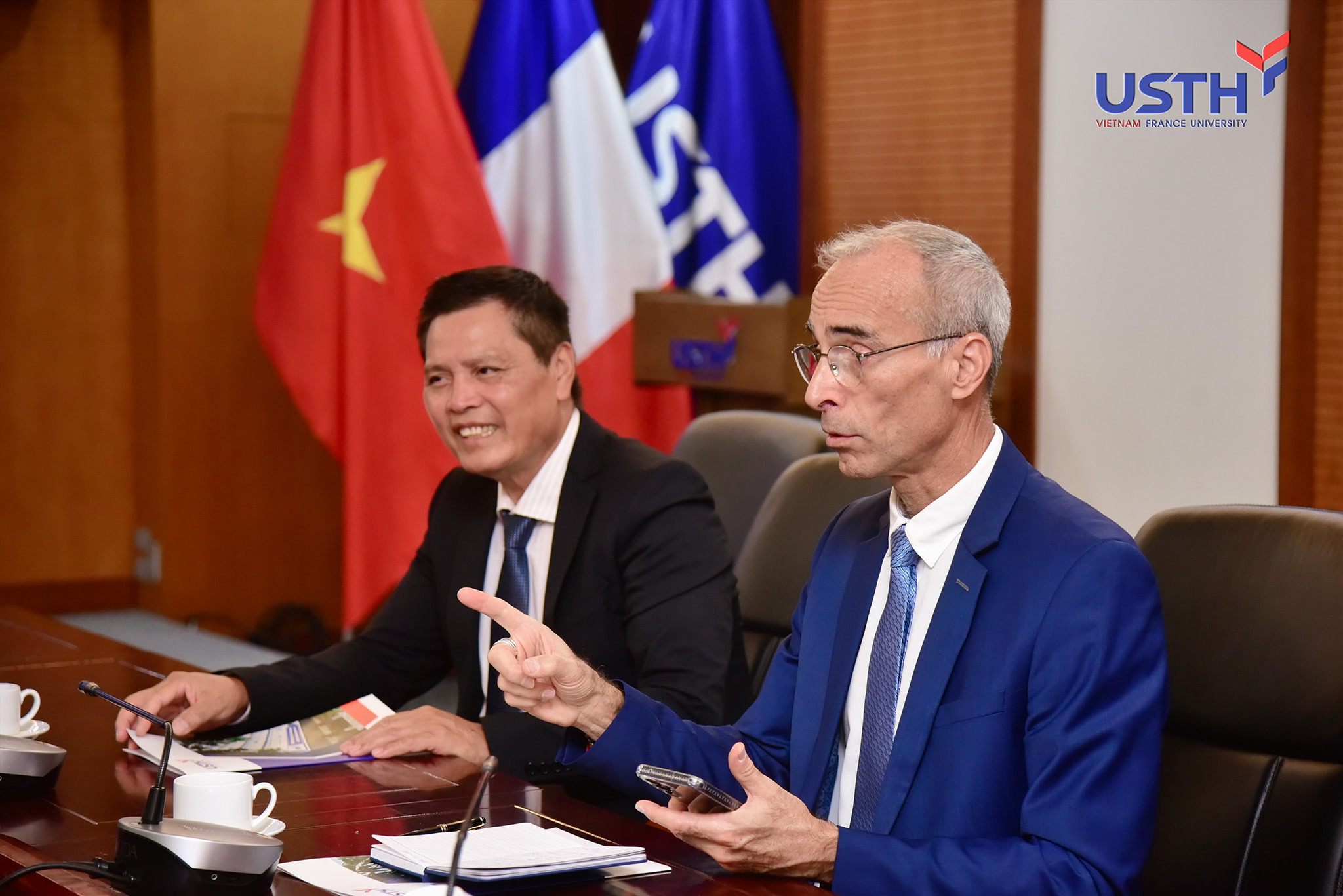
After graduation from USTH, students will have multiple study pathways. They may continue with Master’s programs in Nuclear Energy at partner institutions of INSTN, such as Université Paris-Saclay, Institut Polytechnique de Paris, Université PSL (Paris Sciences et Lettres), ISTP, or CNAM, with the support of the EDF Group. They may also pursue the Nuclear Technology Engineering Program jointly organized by INSTN and the École des Mines de Saint-Étienne, which combines theoretical study with practical experience in companies or at Conservatoire National des Arts et Métiers (CNAM). For those completing a Master’s program at USTH, another opportunity is to enroll in the one-year post-Master’s specialized engineering program “Diplôme d’ingénieur spécialisé en Génie Atomique (GA)” at INSTN.
It is expected that each year, INSTN will welcome approximately five USTH students into its Master’s or Engineering programs in the nuclear field, and from two to five students into the post-Master’s specialized engineering program Diplôme d’Ingénieur Spécialisé en Génie Atomique.
This cooperation is consistent with Resolution No. 70-NQ/TW, issued on August 20, 2025, by the Politburo of Vietnam, on “Ensuring national energy security until 2030, with a vision to 2045.” The resolution identifies nuclear power as a strategic direction to ensure energy balance and promote sustainable development. According to this resolution and related guidance from the Ministry of Industry and Trade and the Ministry of Science and Technology, Vietnam will prioritize the development of education and research in nuclear technology, radiation applications, materials, and radiation safety, in preparation for the future reactivation of the national nuclear power program. One of the key national objectives is to train between 25,000 and 35,000 engineers and specialists in the energy sector, with a particular focus on nuclear energy.
Recognizing the significance of this goal, and in alignment with its mission to train high-quality human resources in science and technology for Vietnam, USTH is actively developing the curriculum, infrastructure, teaching staff, and domestic and international collaboration networks necessary to establish the Bachelor’s Program in Nuclear Engineering. The first intake is expected in the 2026–2027 academic year, marking a direct contribution to the national objective of safe and sustainable energy development.
INSTN, a higher education and advanced training institution under the CEA, serves as France’s national center for professional training in nuclear science and technology, new energy technologies, and biomedical applications.
The cooperation agreement between USTH and INSTN not only lays a solid foundation for establishing and developing an internationally standardized Nuclear Engineering program in Vietnam, but also enables USTH to gain direct access to the advanced knowledge, technology, and training experience of France, a country with one of the world’s most developed nuclear industries.