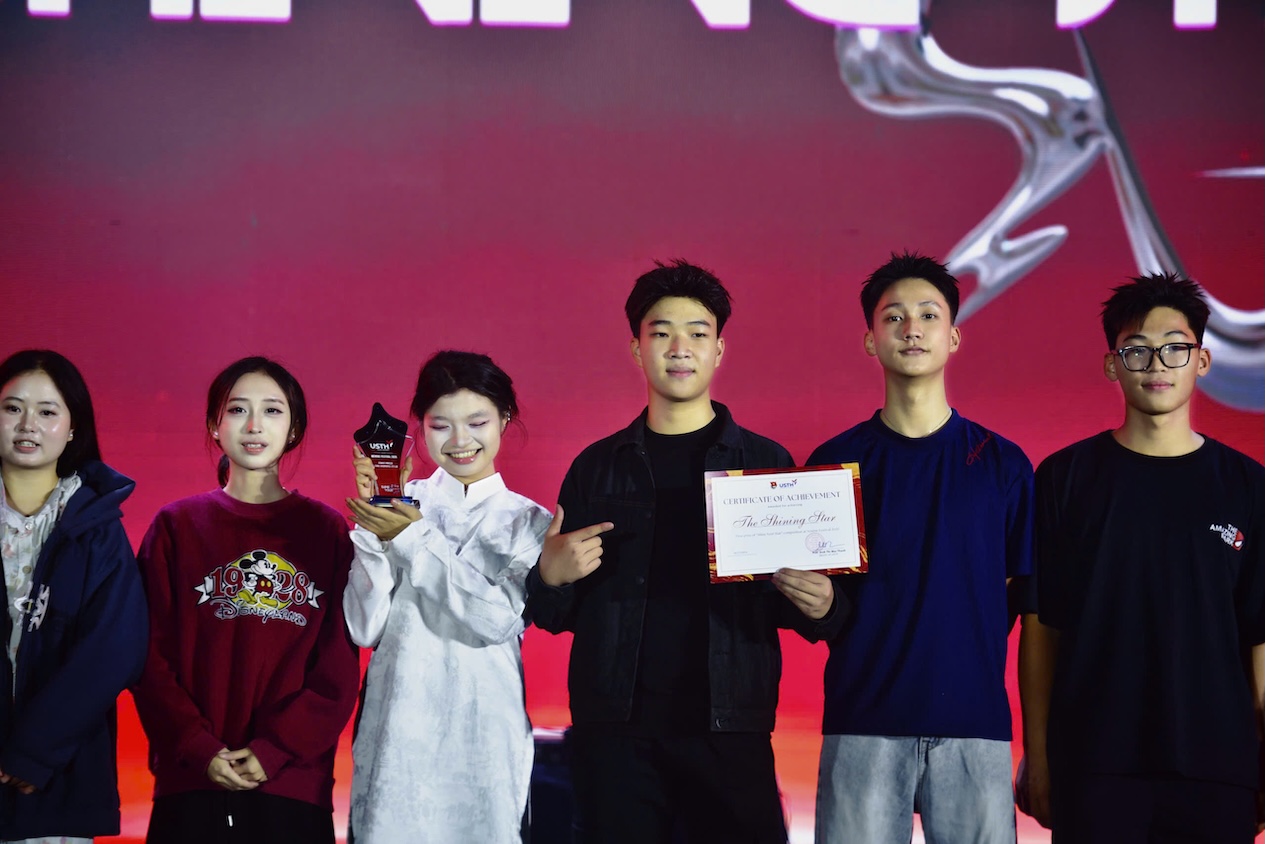
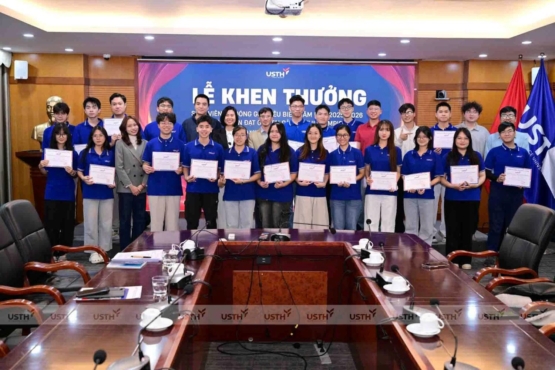
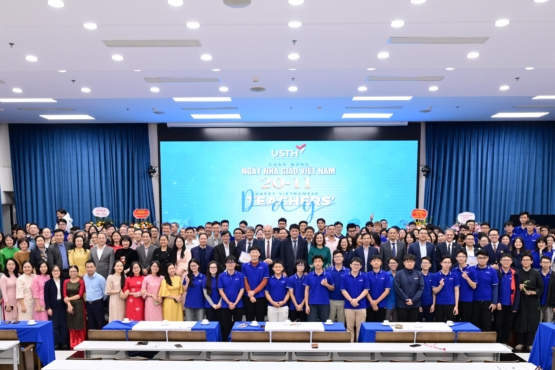
To familiar songs about Hanoi, the 12 students of Team Trạm brought conical hats, loose-fitting áo dài and contemporary dance to a performance lasting nearly eight minutes. Most had never met before joining the team representing USTH’s Department of Advanced Materials Science and Nanotechnology. Together, they learned to keep time, support one another and tell the story of Hanoi as they saw it. Their mashup, Hà Nội và tôi (Hanoi and I), went on to win First Prize at Shine Your Star 2026.
A Shared “Trạm” for 12 Students
Team Trạm came together while preparing for Newbie Festival 2026. The Department of Advanced Materials Science and Nanotechnology brought together 12 students from the same program but different year groups to create its entry for Shine Your Star. Before then, most had never met, worked together or shared a stage.
The name “Trạm”, meaning “station” or “stop”, emerged during a group brainstorming session. At first, the members simply thought of it as a place where different emotions could meet through music. That idea came before the Hà Nội và tôi mashup and took on greater meaning as the 12 students spent more time rehearsing and building the performance together.
Team leader Trịnh Minh Anh was also responsible for the vocals and choreography. She had initially planned to combine Đi đâu để thấy hoa bay with Tìm về (Cha tôi người ở lại), but felt the arrangement was not quite right for Newbie Festival’s young audience. She kept listening and exploring other possibilities, eventually finding a new direction in songs associated with Hồng Nhung, an artist who has greatly influenced her musical taste.
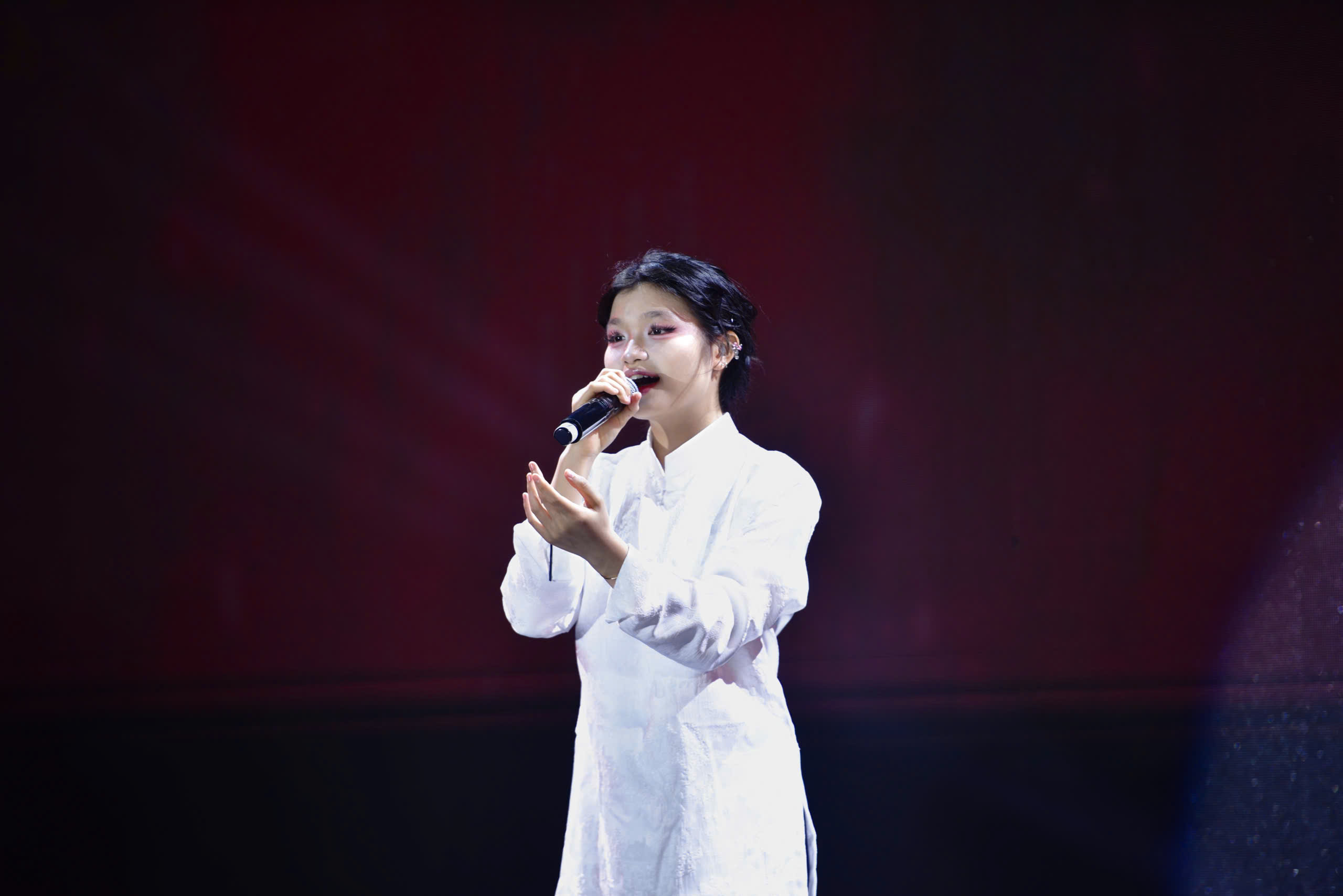
Changing the music meant rebuilding a performance the team had already begun to prepare. Even so, the other members supported Minh Anh’s proposal and trusted her to lead its artistic direction. Their confidence encouraged her, while making her more mindful of every decision: behind one person’s idea stood the time and effort of 11 others.
The new mashup brought together four songs: Nhớ về Hà Nội, Có phải em mùa thu Hà Nội, Ngẫu hứng sông Hồng and My Dream (Giấc mơ của tôi). Through songs made familiar by Hồng Nhung’s voice, the team explored different images of Hanoi, from memories of wartime and the years of peace that followed to the dreams of a generation growing up in the city today.
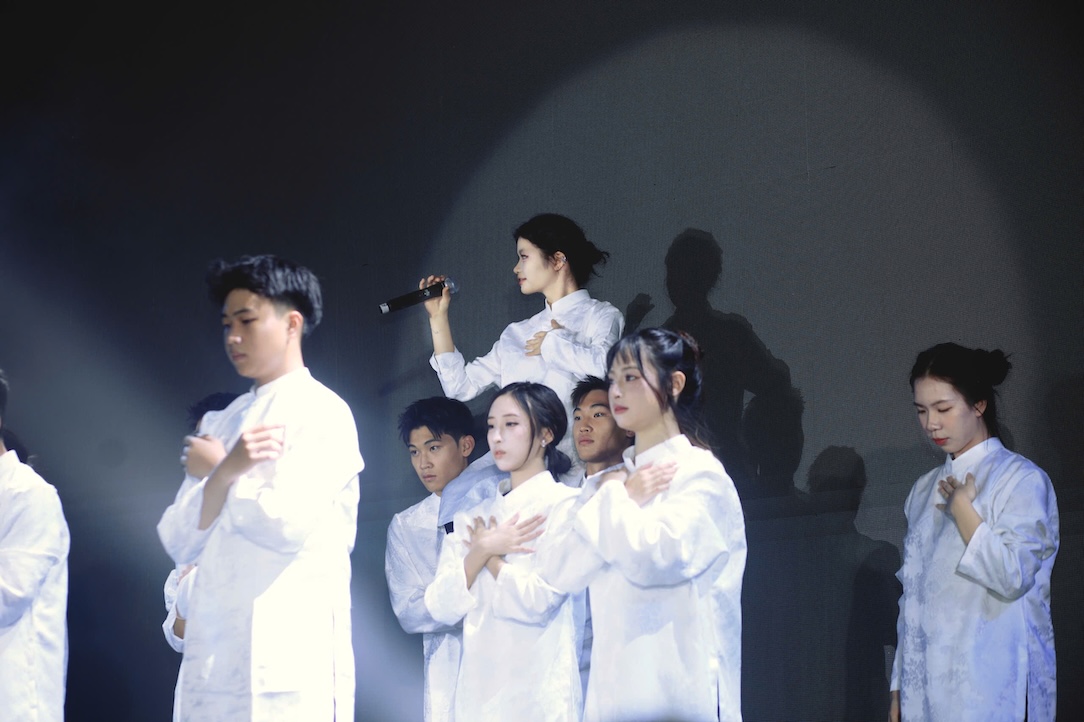
Hanoi through conical hats and áo dài
The story on stage began in the wartime years, followed Hanoi’s renewal in peacetime and settled into childhood memories. The team let the songs carry the narrative, using contemporary dance to connect those different periods.
Against the slower music, every movement was easy to see. An arm raised too soon, a misplaced step or a conical hat turned the wrong way could interrupt the sequence of images. The dancers had to watch one another closely and remember where everyone stood so that all 12 could move together.
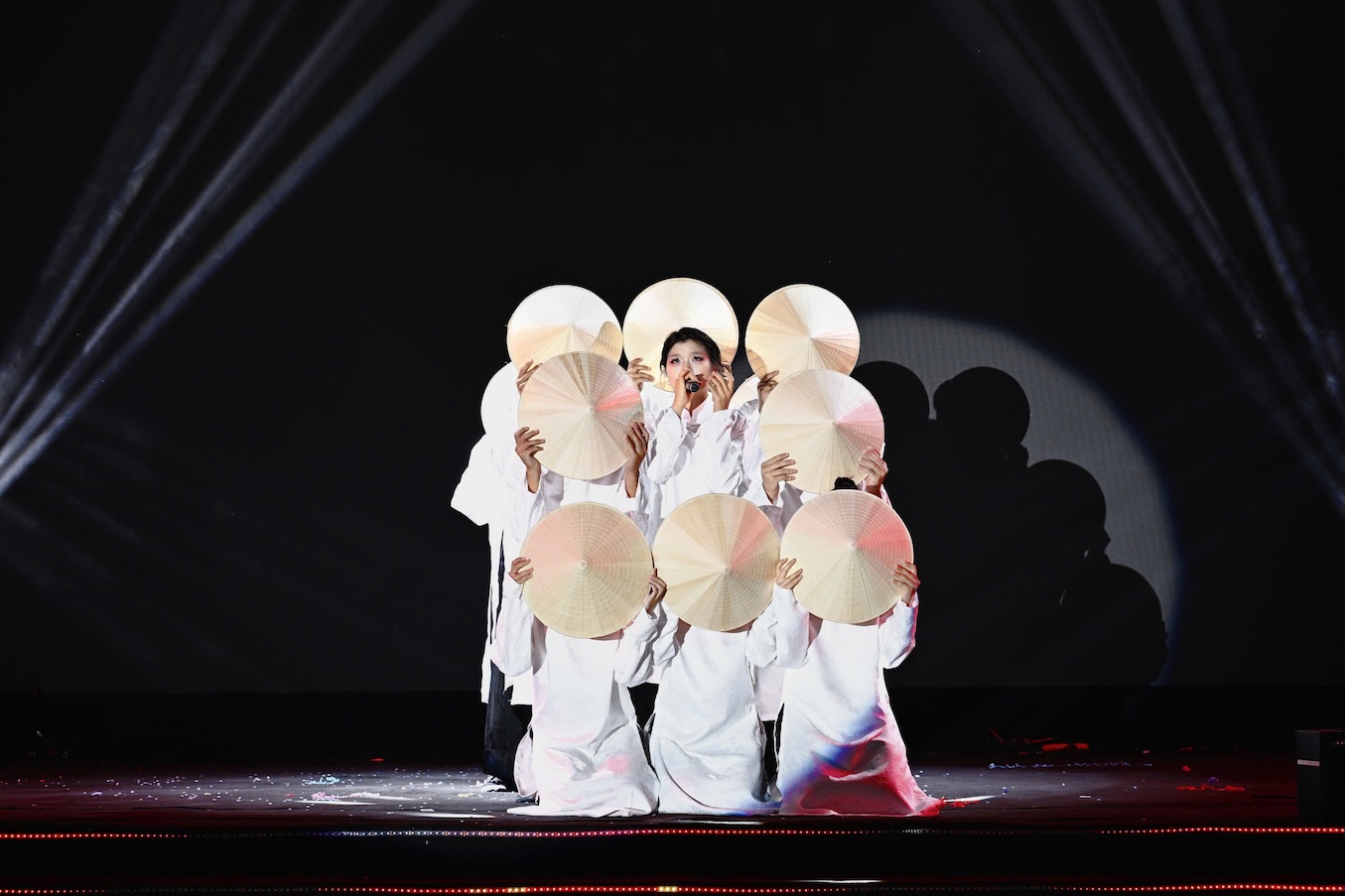
The conical hats were chosen for more than their visual appeal. They evoked the familiar, understated imagery of Hanoi and northern Vietnam across the wartime and peacetime scenes. Minh Anh chose loose-fitting áo dài for their simplicity and for the freedom they gave the dancers to turn, lower their bodies and perform lifts. As the music moved towards calmer moments, the flowing fabric softened the scene.
This was Minh Anh’s first time choreographing a piece nearly eight minutes long. Her background in singing helped her imagine the emotional arc of the mashup, but translating music into movement presented a different challenge. As most team members had never trained in dance, even a short sequence had to be broken down, rehearsed slowly and only then set to the music.
At one point, the rehearsal room was lit five evenings a week. From 6 p.m. to 9 p.m., the team repeated transitions and lifts, stopping after each attempt to adjust hand positions, body direction and timing. The music would end and start again while the group kept counting beats and working through the same passages.
The lifts proved especially demanding because they required several dancers to move in close coordination. The person being lifted had to hold steady; the dancers supporting them had to raise them at the right moment; and those around them had to keep the formation moving with the music. With each attempt, the 12 students learned to trust one another a little more.
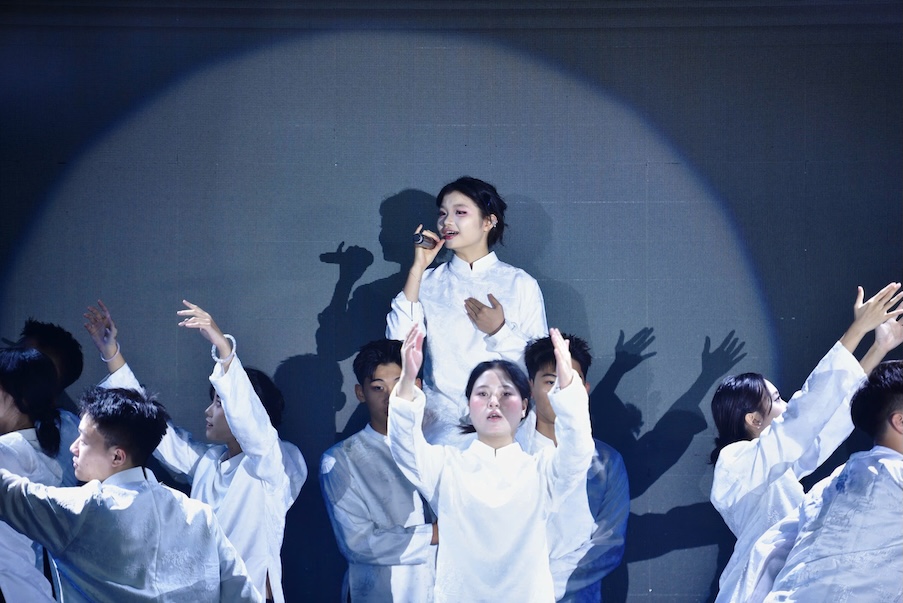
Bringing the performance together under the stage lights
The pressure was still there on the night of the final. With only about 30 minutes left before their performance, Trạm ran through the full piece once more. Some members stepped into the wrong positions, while others forgot where they needed to be. Transitions they had rehearsed many times suddenly felt uncertain. Minh Anh later described it as a nerve-racking moment the team still talks about.
With little time remaining, the group focused on mistakes that could disrupt the formation. Each member went over their positions, looked to the teammates they had rehearsed beside for weeks and prepared to step on stage.
When the opening notes sounded, the positions fell into place. Movements that had caused trouble in rehearsal landed on the beat, and the lifts flowed as the dancers supported one another. Conical hats, áo dài and measured movements carried the audience through nearly eight minutes of storytelling about Hanoi.
“Everyone was completely focused and gave 200%,” Minh Anh recalled. For her, the greatest joy was seeing the team complete the whole piece after that difficult final run-through.
Then Trạm’s name was announced as the winner of Shine Your Star. First Prize recognized Minh Anh’s decision to change direction, the rehearsals that stretched until 9 p.m. and the coordination the 12 students had built together. Even after the competition, the members hoped to return to the rehearsal room with a new piece. “We want to keep working together and making art,” Minh Anh said.